Make Me Sweat: Full Body Workout

Standard
Please follow and like us:
Pin Share

Hi Everyone!

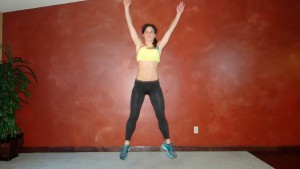
Today’s workout is a Full Body Workout with Cardio Intervals. I filmed this workout in sections so you can complete it together, or in parts. For the cardio intervals I chose running, but I have also included a Jump Rope Interval Workout and/or a Bombshell Cardio Fat Burn Workout, that can be used for the cardio portion of this workout.

Completing one round of this workout, with the cardio intervals, takes 20 Minutes. Equipment: 2 Dumbbells, Interval Timer, and a treadmill or jump rope. If you don’t have weights you can complete this routine with body weight only. I planned on filming this workout outdoors, and using a track, but we got an unexpected rain storm today.

I am re-incorporating running into my workout program. I want to get my 5K speed back, and use my training as a solid foundation for a Half Marathon this fall. I have done two Half Marathons, both with limited training, and I would like to see what I can do with the proper running foundation.

I hope you enjoy this workout! Let me know what you think of the format. Do you like having the sections split so you can combine/repeat as needed, or do you prefer one longer video?

Melissa

New Workout:

Part 1: Lower Body

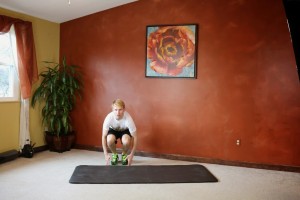
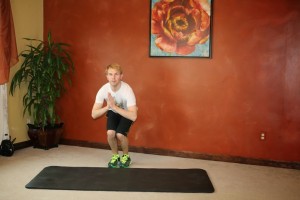
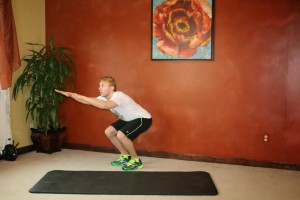
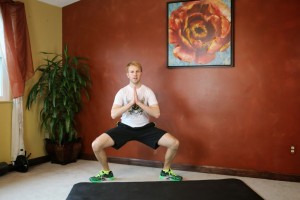
  1. Squat
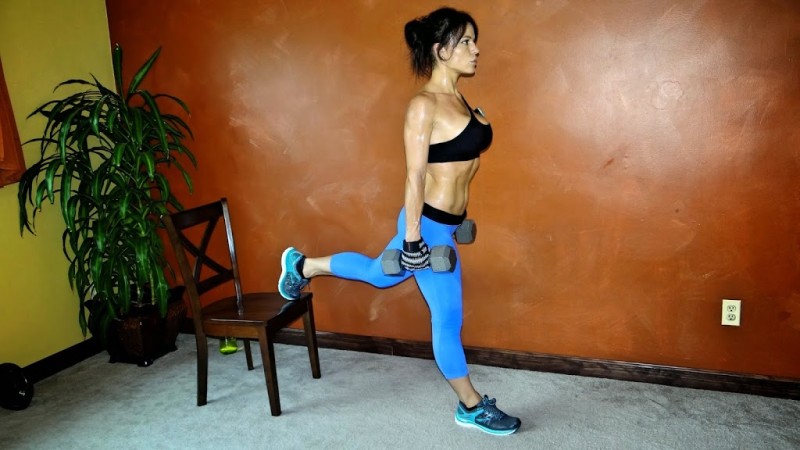
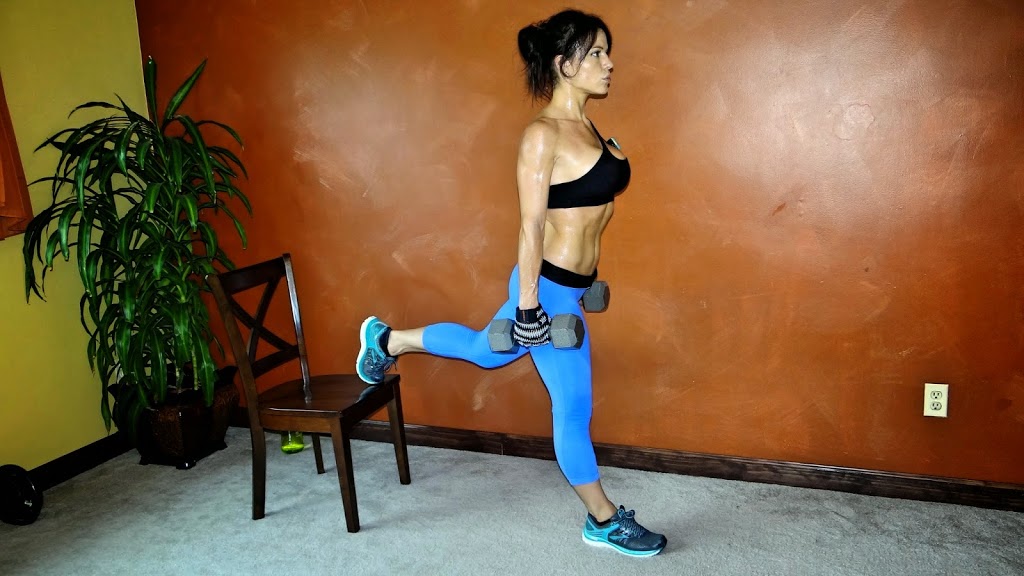
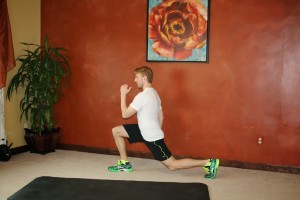
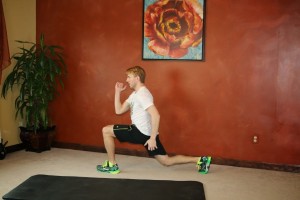
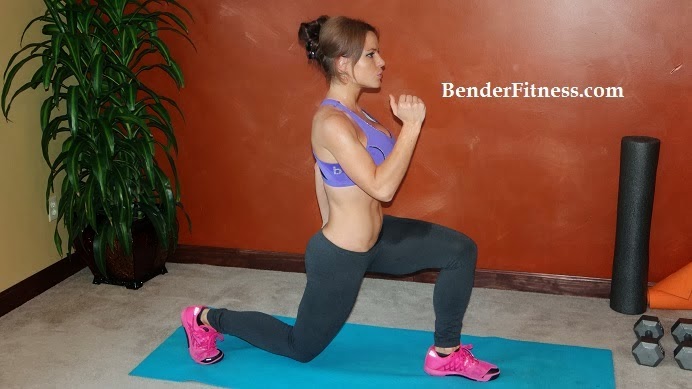
  2. Lunge (Alternating)
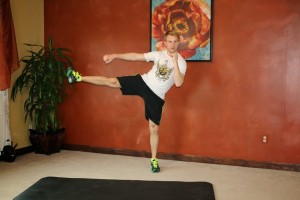
  3. Forward Leg Pulse (right)
  4. Forward Leg Pulse (Left)
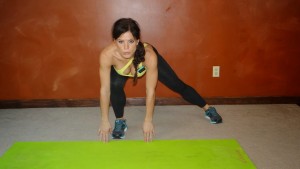
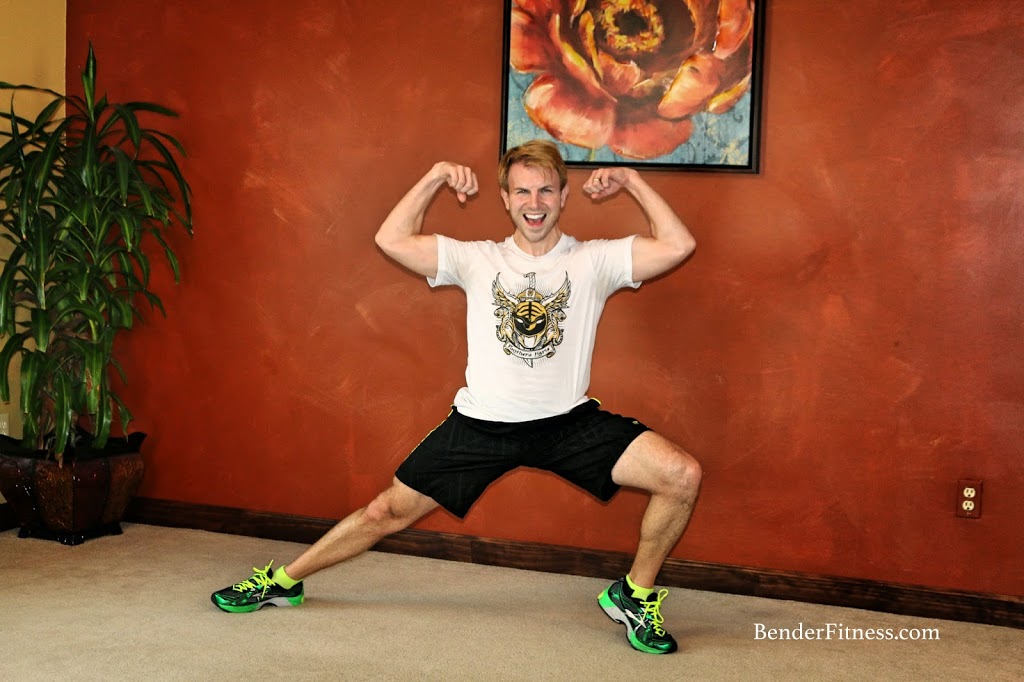
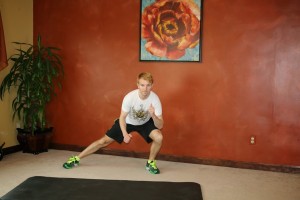
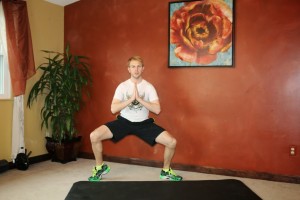
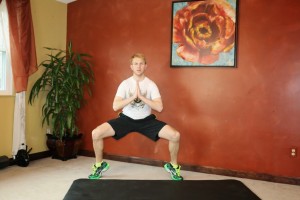
  5. Side Lunge (Alternating)

Cardio Interval: Run, Jump Rope or Bombshell Fat Burn (video below)

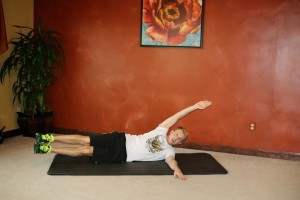
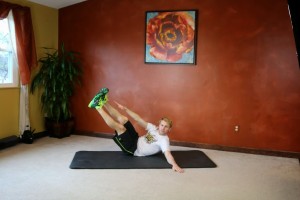
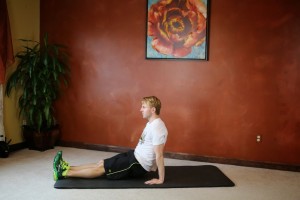
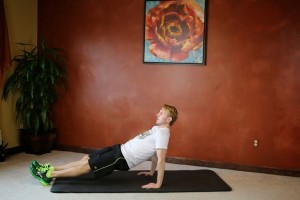
Part 2: Core Interval

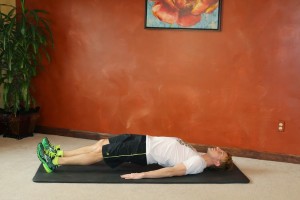
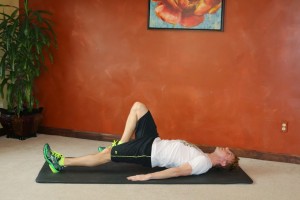
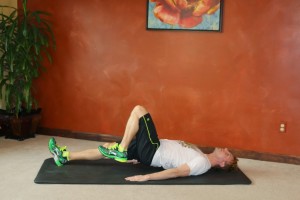
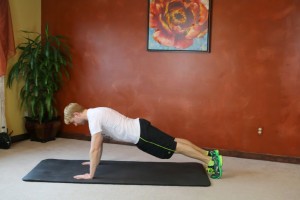
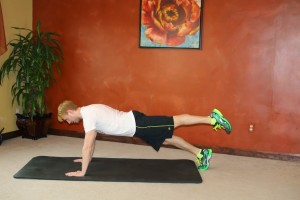
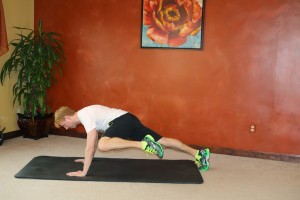
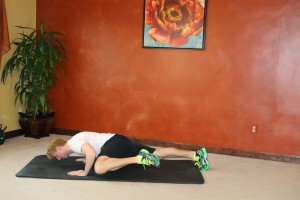
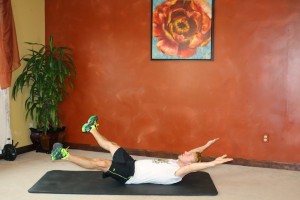
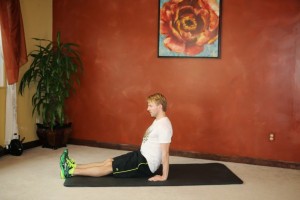
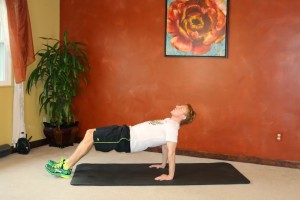
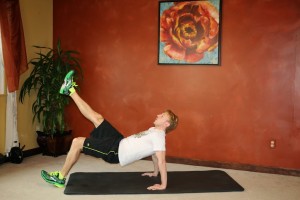
  1. Hip Lift
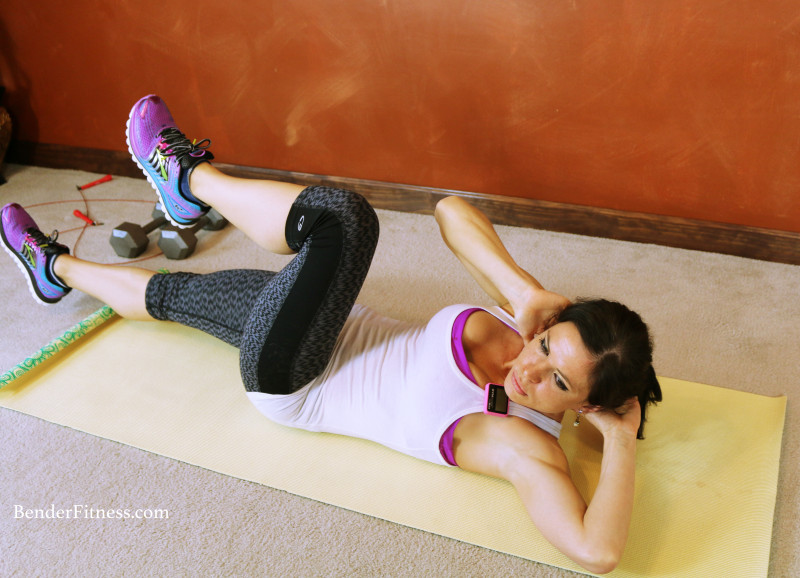
  2. Bicycle
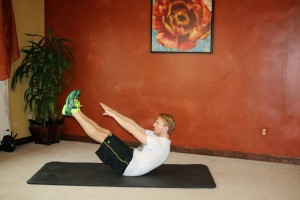
  3. Rock the Boat
  4. Cheek to Cheek
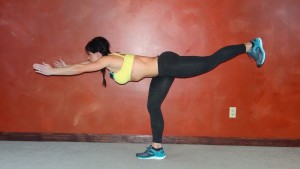
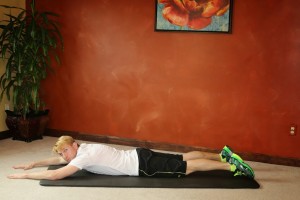
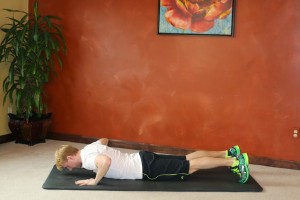
  5. Superman

Repeat Cardio Interval

Repeat Full Workout 1-3X


Alternate Cardio Option:

Bombshell Fat Burn

BodyRock Bootcamp-Week 4 Workout Schedule

Standard
Please follow and like us:
Pin Share

Hi Everyone!

It’s time to incorporate Week 4 of my BodyRock.tv workout series into this week’s workout schedule!

With each of these workouts you can incorporate up to 30 Minutes of Cardio. Remember to listen to your body, and take rest breaks as needed. This is a suggested schedule, but you can always modify your workouts to fit your lifestyle and your personal needs.

I will also be posting new workouts this week, so be sure to check back for the latest workouts! Jesse and I also filmed our first Q&A based on the questions everyone asked us on Facebook. There were a lot of running questions, so I updated some of the running posts here on the blog. If you click on the “Running” Category on the left side of the page you will see the new posts I added. You can also use the Archive function to the left side of the website.

Have fun this week! You can click the workout title for the full workout breakdown of each of the recommended workouts.

Melissa


Day 1: BodyRock Boot Camp-Repeat 1-4X

Day 2: Quick Core Challenge: Ab Workout: Repeat 1-4X

Day 3: Bender Boot Camp: Repeat 1-3X

Day 4: Yoga Flow: Strength & Stretch 20 Minute Sequence or Rest Day

Day 5: Core & Arms: Quick 10 Minute HIIT: Repeat 1-3X

Day 6: Lower Body Sculpt & Shape: Repeat 1-3X

Day 7: 10 Minute Jump Rope Workout or Cardio of Choice up to 30 Minutes

6 Training Runs You Should Be Doing to Improve Your Speed

Standard
Please follow and like us:
Pin Share

Do you find yourself doing the same run over and over again? Whether it’s outside or on the treadmill it can become easy to find a comfortable pace and route. Get out of that rut! It’s time for a change. 

These runs should be included in your training. You will keep your body challenged, improve your fitness, and avoid mental and physical complacency while improving your speed. 


1. Cruising Pace Run: This should be your normal running day. You don’t push, but you don’t go easy. Let your body go at a comfortable pace without pushing or holding back. 


2. Threshold/Tempo Run: Work at 85% of your race pace (Lactic Threshold Pace-slightly slower than race pace). Be sure to include a warm-up and cool down. This type of run is meant to improve your ability to work at a higher level of effort for longer time periods (i.e. Improve your race pace!)

Example: 1 Mile Warm-up, 3 miles at Lactate Threshold Pace, 1 Mile Cool Down. 


3. Progression Runs: Add a section of harder work during your run. Typically this is added at the end of the run, but the timing can be varied. This type of run trains you physically and mentally to run at a harder pace when your body is tired. This is essential in the later miles of a race. This type of run also improves your speed without wearing down your body as much as completing the full distance at this pace. 

Example: 10 Mile Training run-7 Miles at Easy or Cruising Pace, 3 Miles at Half or Full Marathon Race Pace. 

Example 2: 10 Mile Training Run-7 Miles at Easy or Cruising Pace, 1.5 Miles at Full Marathon Pace, 1.5 Miles at Half Marathon Pace


4. VO2 Max Run: Running at your goal race pace and slightly faster for shorter time periods. This improves your speed and leg turn over, and prepares your body for running at the desired race pace.  

Example: For 5K: 5 1000 meter runs (1Ks) with rest or jogging rest between repetitions. 

Example 2: Hill Repeats: 30-60 second up-hill sprint. Try to reach the same spot each time for up to 60 seconds. Walk or jog back to your starting point and repeat 5X. 


5. Long Run: This should be done at an easy pace. The effort goes into building the mileage not the speed. This run will increase your endurance, and improve your bodies blood volume. Do not push the speed during your long run. This run is sometimes referred to as your LSD (Long Slow Day). 

Example: 10 miles at a comfortable pace. 


6. Recovery Run/Easy: Slow, easy paced run. Very low effort run. You shouldn’t be out of breath during this run. Benefits of a recovery run include, increased blood volume, promotes healing of your muscles, improves removal of lactic acid build up in your system, and decreases muscle soreness. 

Example: Easy 3 mile run. 


***Do Not Forget to Include a Rest Day****


Rest Days are just as essential to your progress as training days. Your muscles make strength gains during rest. 


Example Training Schedule:


Sunday: Long Run

Monday: Easy/Recovery Run or Rest Day

Tuesday: Threshold/Tempo

Wednesday: Easy to Cruising Pace

Thursday: VO2 Max

Friday: Easy/Recovery or Rest Day

Saturday: Progression Run

Preparing for Race Day

Standard
Please follow and like us:
Pin Share

Race Day. It’s the day all of your training has been preparing you for. Whether you’re a first time racer or a veteran going for a new PR (personal record) you may find that race day nerves hit. 


One of the best ways to deal with the race day jitters is preparation.  


Of course the first step of your race day preparation is your training, but a little extra planning to help smooth out the day of the race can decrease any anxiety you may be feeling. 


2-3 Days Prior to Race Day:


-Sleep: Often it’s difficult to sleep the night before a race. You will run best if you are well rested. You can start this process a few days before the race. You have probably tapered off your training to rest your muscles, don’t negate those effects by skimping on sleep. 


-Diet: Make sure you are getting in enough high quality carbs. 2-3 nights before the race you want to increase your carbs (especially if you are doing a longer distance race). Don’t make any drastic changes to your diet, or experiment with a lot of new foods. Food is fuel for your race, but you don’t want to try a new type of fuel and find that you have gastrointestinal issues on race day. Your largest carb loaded meal should occur 2 nights before the race, and not the night before. Meals should also include lean proteins. Foods to avoid: Dairy (unless you know this agrees with you), processed and fatty foods. High quality fats (fish, avocado, coconut) are okay, and can actually improve your endurance on race day, but only include these if you have tried it during your training. Make sure you are hydrating!

-Clothing: Make sure your race day clothing is clean for race day. Race day isn’t the time to try out a new outfit or pair of shoes. Race in something that you know is comfortable. Trust me on this one. I ran in a brand new sports bra and ended up with cuts around my rib cage where the bra was rubbing. 


Day Before the Race:


-Sleep: Try to get a good night’s sleep. If you have trouble sleeping due to the excitement don’t worry about it to much! That’s very common, and most of the other runners are probably experiencing the same thing. 


-Diet: Stick to what you know. If you want to continue carb loading eat your larger carb meal at lunch. Dinner should include some high quality protein. Eat enough food to feel nourished, but don’t over do it. When you don’t sleep well your body doesn’t digest your food as well, and that can lead to GI problems on race day. 


-Clothing: Lay out everything you want to bring/wear to the race. Be sure to dress for the weather. It’s nice to have a clean shirt to change into after the race (especially if you get sweaty and it’s cold outside). Don’t forget to lay out your shoes and socks. Don’t be tempted by any new clothing purchases you have made that haven’t proven themselves run proof. Some people sleep in the clothes they are racing in to eliminate a step the next day. 


-Extras: Pack anything extra you might need to bring. Clean socks for after the race. If you have asthma don’t forget to bring an inhaler. If you are using gu packs, snacks, or any supplements for use before, during or after the race make sure they are packed (If you haven’t trained with these do not try them for the first time on race day!) Camera/phone if you want to commemorate your day or pre-post race experience. You might need band aids for your nipples (lots of men require this), and A & D ointment to prevent chaffing. 


-Make sure you know where you are going! Review any directions/GPS, race start time, sign in/registration times. Don’t forget cash for registration if you’re registering day of. 


Day of the Race:

-Wake Up and eat breakfast/drink coffee as usual. Try to eat about 2-3 hours before the race starts. Don’t try anything new or crazy (have I stated that enough?) Have a little bit of water, but don’t overhydrate. You should have stayed well hydrated over the last few days. Over-hydrating can negatively impact race performance and lead to cramps. Stop drinking water about 1 hour before race time. One bottle of water pre-race (about 16 ounces) should be enough. 


-Apply anything you need for the race (band aids, A&D, etc). 


-Make sure you have directions, and give yourself plenty of time to get to the race venue. 


-Don’t forget any of the items you pre-packed. If you are wearing racing flats make sure you have them with you. 


-Register/check in. 


-Check shoe laces, and timing chip (if your event is using chips). 


-Do a light warm-up before the race. Keep the warm-up dynamic (jogging, strides, plyo). Static stretching should be saved for after the race. 

-Enjoy your day! You worked hard to get to race day! Relax, take a moment to appreciate your body and mind for all of the work it took to get you to the starting line, and run your race!

No Excuses! 5 Techniques to Get You Running When You Aren’t In the Mood

Standard
Please follow and like us:
Pin Share

Hi Everyone!

As the winter draws to a close (hopefully!) I find myself saying “I can’t wait for it to be sunny! I just want to RUN!” 

The truth is there doesn’t have to be sunshine to get in a run. I have run in snow, rain, freezing temperatures and blistering heat. This winter has been particularly harsh and cold where we live. It has kept me inside more times than I would like to admit to. 

It is time to run. No more excuses. 

I already have two 5Ks on my agenda in the upcoming months, and I would like to add at least two more. I would also like to repeat the Half Marathon I did last year, and improve my time. That means I need to be consistent with my training. 

Consistency is the key to running more efficiently, faster, and healthier. You also need the right training. 

Here are some techniques to get moving when you aren’t in the mood:

1. Schedule Runs with Friends. This will keep you accountable and more likely to stick with the planned run. 

2. Dress Appropriately for the Weather. In winter this means layers. You should have a sweat wicking layer against your skin, and additional layers over that. Wear a hat and gloves. Don’t forget your feet. Running shoes aren’t known for being warm. I have come home with frozen toes when I didn’t wear thick enough socks in winter. 

In the summer don’t try to go out running in a rubber suit. It won’t help you lose fat. It can help speed your toward heat stroke. 

Either way your run will go better (and thus be more likely to be repeated) if you are dressed appropriately. 

3. Set Goals. You can set a goal for weekly mileage, or a certain number of minutes of running per week. You can aim to run a certain number of days per week. Mark it on a calendar or in a journal where you can see your goals, and keep track of it. Having a visual record can motivate you to get in your planned workouts. 

4. Pick a Race to Train For. Whether you are a race pro or training for your first event, having something to train for can be very motivating. It doesn’t matter if your goal is to set a new PR or make it through the entire race without stopping. Goals are motivating. They give you a reason to get moving and keep moving. 

Racing is becoming more and more popular and there are a lot of fun runs out there you can do! I am doing a Super Hero 5K with one of my friends from work. My friend, Rose, from My Change for a Ten chose a Prom Run themed 5K as her first ever race. 

If you recruit your friends to do the run with you you have built in training partners to help keep you motivated. 

5. Make a Great Playlist. Sometimes I run with music, and sometimes I prefer to focus meditative/flow running. (I will write about that in another post). A great playlist can definitely motivate and get me moving. 

 The first song I heard during my first Half Marathon was Radioactive by Imagine Dragons, and the last song I heard was Work Bit** by Britney Spears and I still get that same energy I had during the race when those songs come on. 

What’s on your playlist? I asked this question on Facebook recently and was able to update my playlist to include a lot of new songs to keep me moving!

What Techniques do you use to Get Motivated? Let me know in the comments below or you can find me on FacebookInstagram or Twitter!

We Left Vacation with More than a Tan!

Track Workout for Speed and Endurance: Goal Race Pace Memorization

Standard
Please follow and like us:
Pin Share

Do you want to improve your Speed and Endurance? This workout will help you do both! 


Here’s the breakdown:


Warm-Up: 2.5 Miles at an Easy Pace


400 Meter Repeats (X2)

800 Meter Repeats (X4)


*All Repeats should be done at desired Race Pace.

*The first time trying this workout keep rest between each repeat equal to time running. As you progress you can shorten the time of rest to increase intensity. 


Cool-Down: 2.5 Miles at an Easy Pace


Total Miles: 7.5 

Miles at Race Pace: 2.5


If you are running at a standard sized track 1 Lap=400 Meters. 


The goal of this workout is to train your body to work at race pace. You want to memorize what that pace feels like while also building the endurance to handle your desired race distance. Try to complete this workout without music or distraction. Focus on the movements of your body, your breathing, and running form (I call this Flow State). Learn to lock into the pace that you are training to achieve at your next race. 


Learning how to pace yourself is one of the most important aspects of racing. This workout isn’t about pushing as hard as you can for each repeat, it’s about pushing yourself while maintaining a specific pace. 


I will be sharing some harder VO2 Max workouts soon to help improve speed and endurance.  


My breakdown for this workout is below

Remember to always adjust for your own pace/goals. 


Goal Pace: 7 Minute-Mile Average

400: 1:45 (minutes:seconds)

800: 3:30


Warm-up: 2.65 Miles (easy pace-road running)


1. 400: 1:37 (6:27 pace)

-equal rest (1:37)

2. 400: 1:36 (6:26 pace)

-equal rest

3. 800: 3:25 (6:43 pace)

-2:30 rest

4. 800: 3:26 (6:43 pace)

-2:30 rest

5. 800: 3:29 (7:00 pace)

-2:30 rest

6. 800: 3:29 (7:00 pace)


Cool-down: 2.48 Miles (easy pace-road running)

Total distance: 7.63 Miles


I was slightly ahead of my goal pace until the last two 800 repeats, which I was able to hit at goal. I am excited to repeat and progress this workout in the future. 


Have fun with this one, and pay attention to what your body is telling you! You can adjust your goals as your training progresses. 


Melissa and Jesse

Summertime Sadness: When Race Day Goes Bad

Standard
Please follow and like us:
Pin Share

You’ve been training. You know what your body is capable of and you line up to start the race, pumped and ready to go. You’ve got this!

Sometimes something crazy happens between the Start and the Finish Line. Things don’t go as planned. You don’t run as fast as you know you can, or as fast as you were practicing. What the Heck???

Recently I had my first bad 5K experience. I raced my slowest 5K ever (even slower than the first 5K I ever did!) I was not a happy camper when I crossed that finish line. I felt like it was one of the hardest races I had ever run, and I didn’t have the finish time to show for it. 

Having had time to reflect, there were a few things I did wrong that were controllable, and a few things that were outside of my control. 

Here are some things that might be throwing off your race pace. 

1. Listening to Music During the Race: 

This was my first 5K listening to music. 

Why is this on my list of things I did wrong? 

It changed my pacing and decreased my awareness of how hard my body was working. I have a GPS Running watch, and when I uploaded the workout my pacing was all over the place. I was fluctuating my pace up to 2:30 difference during each mile of the run. I basically turned the run into an interval workout. The music was loud enough that I couldn’t hear my breathing, and it was harder to gauge my effort. 

2. Paying to Much Attention to Your Watch: 

Every time I looked at my watch I was going “to fast.” As a result I kept slowing down. My watch was telling me my “right now” time, not average pace. This contributed to my interval-style race, which exhausted me much more than pacing at a continuous effort that I could maintain. 

I have my watch set to tell me my mile pace, so even though I was going “to fast” every time I glanced at my watch, when I saw my average at each mile it was slower than my goal. Which led to me speeding up again. 

3. Weather

This one is outside of your control, but it does affect your race pace. The hotter the race the more you will be affected. 

Ideal running temperature is 50 degrees. At this temp your race pace will not be changed. 

Example for an 8 min/mile runner:

50 degrees: Average Pace 8 min/mile. 0% change.

60 degrees: Pace Increases to 8:12 min/mile. 2-3% change. 

70 degrees: 8:31 min/mile. 6-7% change. 

80 degrees: 9:06 min/mile. 12-15% change. 

85 degrees: 9:30 min/mile. 18-20% change. 

The race was hot, sunny and humid. Whenever I got a little bit of shade it felt heavenly. I didn’t want to drink any water, but I wanted to dump a cup on myself to cool off. However, when I ran by the water station they had already handed off all their cups, and I didn’t want to stop and wait for one. 

Check out this article on Running in Hot Weather

4. Running Tired: 

My glutes were sore from some of my Bender Fitness workouts. I rarely ever get sore from working out because my body has adjured to the types of challenges I give it. I also put in some great runs the week of the race. 

For the best race results you want to taper your training 1-2 weeks before your race so your body is fresh and ready to put in a great effort. You allow your body to recover from the fatigue of all your hard work, and you will be ready to run a great race. 

The good news about running a bad 5K? They have them every weekend! So you can always redeem yourself at your next race (after a proper recovery!) 

I wanted to practice my pacing for my next race so I hopped on the treadmill and did a 5K. I selected a challenging, but sustainable pace. It was a pace where I knew I could go harder/faster. 

The result? 22:46 minute 5K. Compared to the 24:40 I raced a few days earlier, I felt redeemed. My fitness hadn’t suffered. It was just a bad race day. Whatever your running goals are. Don’t let one bad day undermine all of your hard work. Keep training, and keep showing up. Your consistency pays off. 

In case you were wondering how Jesse did…

He came home with another medal. He wasn’t done running there. He ran another 5 miles immediately after the race. I listened to my body, recovered, and took advantage of the free massage offered at the end of the race. 

Hill Sprints: How To, Why and How Often Should You Be Doing Them?

Standard
Please follow and like us:
Pin Share

How can you improve your running power and speed while reducing your risk of injury?

Hill Sprints!

As a bonus, Hill Sprints are an incredibly effective tool for increasing your body’s ability to burn fat.

If you run, chances are that you want to improve your running speed. You have to run faster to get faster. However, heading out at a full out sprint can increase your chances of injury. The best way to improve running speed while reducing your chance of injury is to incorporate hill sprints.

Why are hill sprints safer than sprinting on a flat surface? The increased angle of the hill decreases your risk of injuring your body, and forces you to slow down a bit while working at the same effort as you would going full out on a flat surface.

You have to build up the strength and musculature to support running at faster paces. Hill Sprints build muscle, and they will help your body handle hills much more efficiently during races.

Sprinting and intervals are two of the best methods for burning fat. When you combine these two ingredients and add hills to the mix you increase the metabolic benefit, resulting in a workout that can have a big impact on your body composition.

Getting Started:

You should always be warmed up before doing hill sprints. You can do this via running drills, or by completing an easy paced run prior to sprinting.

Be sure to rest and recover in between each hill sprint. As you become more advanced you can decrease recovery time.

When first starting out be sure to rest fully. This can be done by walking or slowly jogging back downhill to your starting point. If you need additional rest between reps take it.

*During Hill Sprints your goal is to try and reach the same point/distance during each sprint. Hill sprints can be done outdoors or an a treadmill with an incline setting.

Always finish a Hill Sprint workout with a Cool Down.

Hill Sprints can be completed safely 1-2X per week, with at least 2-3 days in between sessions. Make them a regular part of your training routine. 


If you are completing these exercises 1X per week extend the training cycle to 8 weeks and complete the workouts below (Week 1: Day 1, Week 2: Day 2, etc). 

Week 1

Select a hill with a moderately challenging incline (about 6%). 

Day 1: Complete 2 10-second hill sprints.

Day 2: Complete 4 10-second hill sprints.

Week 2

Select a hill with a moderately challenging incline. 

Day 1: Complete 6 10-second hill sprints.

Day 2: Complete 8 10-second hill sprints.

Week 3

Complete your hill sprints on a slightly steeper hill/incline (about 8%).

Day 1: Complete 8 12-second hill sprints.

Day 2: Complete 10 12-second hill sprints.

Week 4

Complete your hill sprints on a slightly steeper hill/incline (about 8-10%).

Day 1: Complete 8 15-second hill sprints.

Day 2: Complete 10 15-second hill sprints.

Repeat Week 4. When you feel that you have made maximum gains in speed and strength continue the Week 4 training, but reduce frequency to 1 Day of Hill Sprints per week. 

To measure gains in speed/strength pay attention to the distance covered and the amount of time spent in recovery. If recovery time is shorter, and/or the distance you cover in each interval is longer you are still making gains.

5 Minute Core Workout for Runners: Cross Training for Runners

Standard
Please follow and like us:
Pin Share

If you’re a runner, you have probably heard that core exercise will make you a better runner. 

Strengthening your core improves your running form and efficiency. Additionally, you are supporting your spine and lower back, which maintains the biomechanical alignment of your pelvis. Appropriately aligning your pelvis reduces pressure on your knees and joints during running, and can help prevent injuries. 

A strong back also helps maintain spinal alignment during your runs, which leads to improved breathing and blood oxygenation as you fatigue. If you find yourself hunching, or leaning forward during the later miles of your running, you are decreasing your lung’s capacity to take in oxygen. 

 This workout is quick and can be done pre-and/or-post run. Have fun, and keep that core strong!

Melissa

You can also find me on FacebookInstagram or Twitter

Click the link to get your own Gymboss Interval Timer!


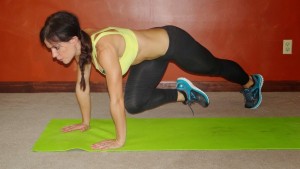
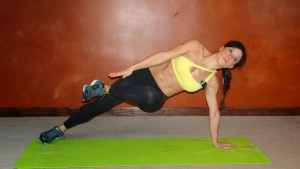
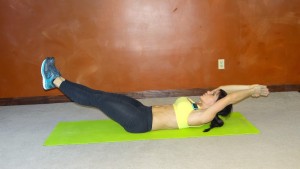
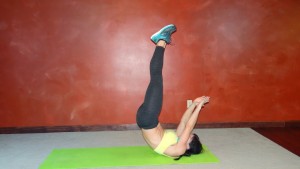
Set your Interval Timer for 5 rounds of 10/50.  


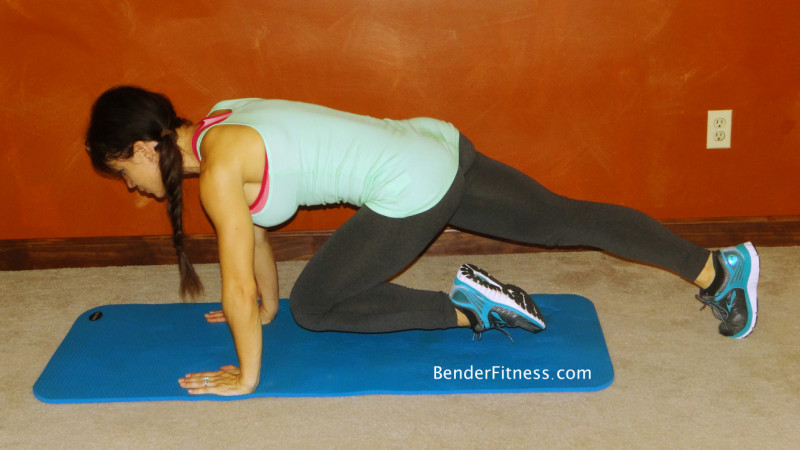
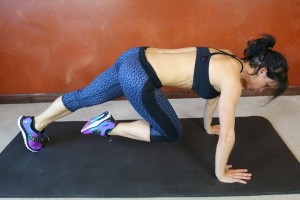
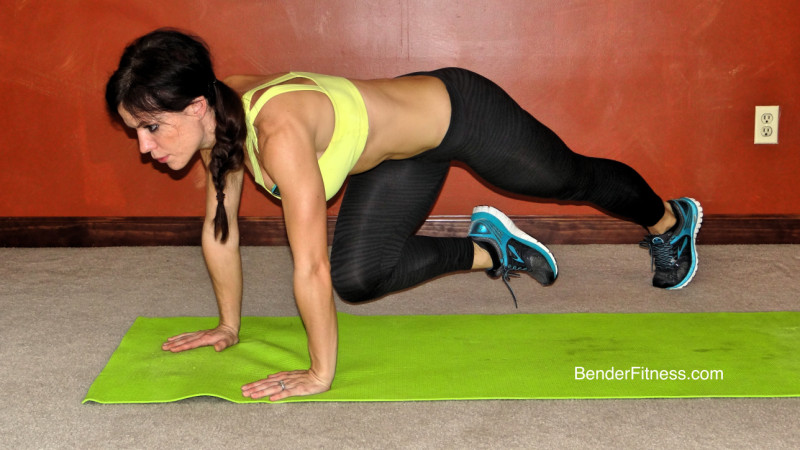
1. Mountain Climber

2. Heel Tap Abs

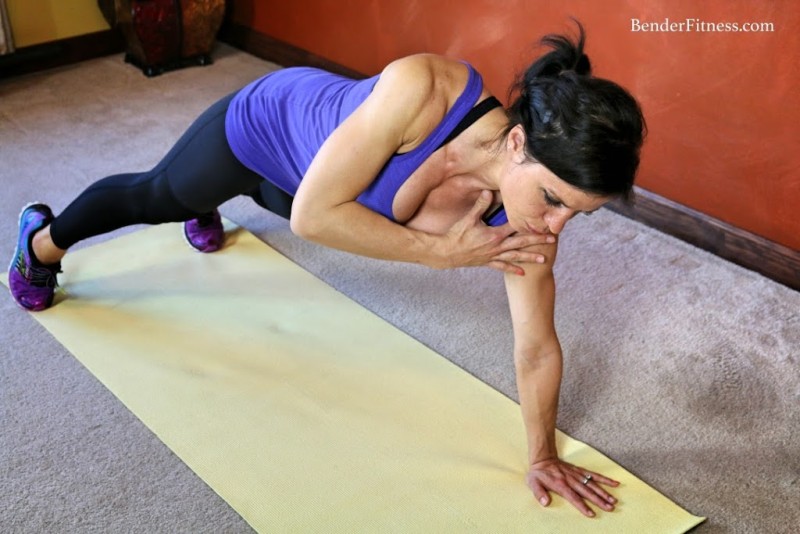
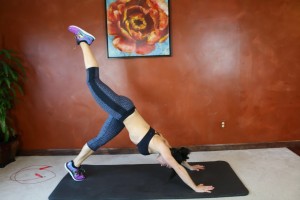
3. Single Leg Pushup

4. Bicycle

5. V-Ups


Repeat 1-5X

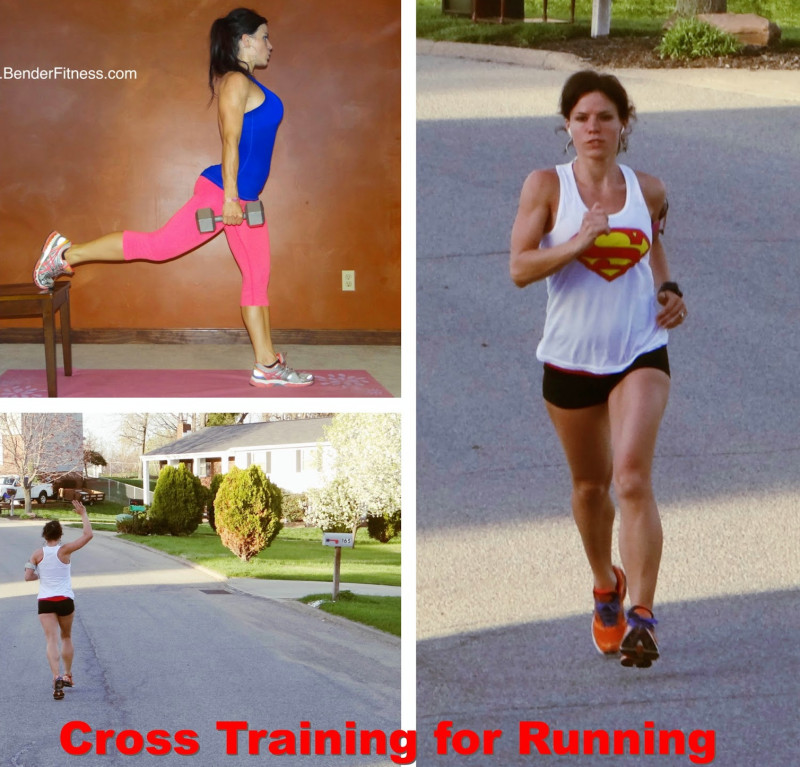
How Often Should I Cross Train for Running?

Standard
Please follow and like us:
Pin Share

The theory of specificity training states that to become better at a sport you must train in that particular sport/skill. Runners train by running, swimmers train by swimming, bikers train by cycling. 

So why cross train?

Research has shown that cross training improves oxygen use and running economy. 

Improved Running Economy means that you can run faster over a given distance, or maintain a specific pace for a longer period of time. Go faster, go longer, and use oxygen more efficiently: I don’t know any runners who would turn that down. 

Additionally, cross training can correct muscular imbalances caused by training for a specific sport, help prevent injury and improve strength and endurance. If you sustain a running related injury, cross training can help you maintain your fitness as you let your body heal. 

If your primary training focus is Running:

If you are training for a specific running event you can complete cross training three times per week. You can avoid overtraining by reducing your weekly mileage by 25-30%, and replacing it with cross training (Runners World: Cross Training). 

Runner’s World recommends keeping your heart rate at or above 70% of your maximum heart rate during cross training. This means you should be sweating and working during your cross training workouts. 

As with a regular running program, be alert for signs of overtraining (listed below). 

Jesse’s primary focus is running, and he cross trains 2-3X per week with BenderFitness workouts. This month we are also implementing a stretching program to help improve his flexibility. Flexibility is important for runners because it helps maintain proper biomechanics and protect your knees, hips and joints.  

If your primary focus is Fitness:

If you run/race because you enjoy it, and you workout to stay fit, you can cross train between 3-5X per week and run 3-6X per week. Pay attention to the overall volume of your training. Workouts should last 60-75 minutes maximum (with the exception being long run days), including both running and cross training. 

For example, if I am doing a 15 Minute HIIT workout and a 30 minute run I will repeat the HIIT 1-2X to keep my total workout time to 60 minutes (30 minutes HIIT, 30 Minutes Running). I do not run and cross train every day. Some days I do running only, and other days I solely cross train. 

The key here is making sure you are alert for the signs of overtraining (which are listed below), and making sure you take at least 1-2 full rest days per week. Including a yoga day will also benefit your overall health and running ability. 

Each person handles training differently and it is imperative to listen to your body. Over-training will not benefit you, it will injure you. 

Signs of Over-Training

1. Elevated Resting Heart Rate. Take your heart rate in the morning before you get out of bed. Do this over the course of several days, and figure out the average. If you notice an increase in your resting heart rate it is a sign that you need to ease off and take a rest. 
2. Increased Fatigue: If you are completing the same types or runs/workouts and noticing that your effort is much higher and you aren’t performing to the same level it’s a sign of overtraining. 

-For example: I repeated an interval run 2 weeks in a row. The second week I felt that I was working much harder, buy my average pace was nearly a minute slower than the week before. It was time for a rest break.

3. Injuries/Illness: If you notice your self getting injured or sick more often it can be due to overtraining without allowing your body enough rest. 

4. Extensive Muscle Soreness: If you are sore for more than 72 hours take time off and allow your body to heal. Muscles tear during your workout, and re-build (increasing strength and endurance) when you rest them. If you repeatedly tear the muscle without allowing it to re-build you will not achieve optimal results from your workout. 

*These are just a few of the signs of over-training. Pay attention to how you are feeling, and don’t feel guilty if you need to take a day off. Training does not benefit you if it comes at the cost of your health. 

Article:

Improving Running Economy Through Strength Training

Full Body Workout: Sweat & HIIT

Standard
Please follow and like us:
Pin Share
Hi Everyone!
 
This is a throwback workout! We are filming new workouts today. My dad made a surprise trip out this weekend, so I am a bit behind schedule with filming/posting, but Jesse and I got in a great run this morning.
This workout is a full body, fat burning workout. I was dripping sweat like crazy! As always, be sure to warm-up and cool down before and after the workout. 
 
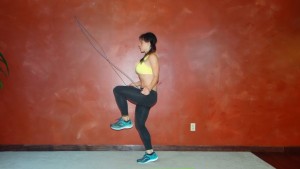
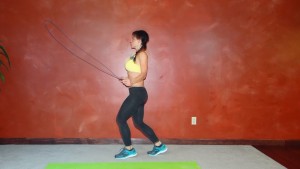
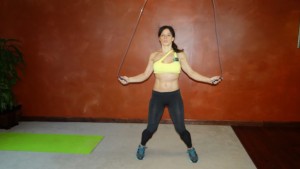
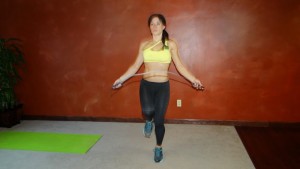
This workout begins with a 5 minute Jump Rope Cardio Blast. Personally, I find jump rope very challenging. It’s easier for me to run hard for 5 minutes, than it is to jump rope. It’s important to challenge yourself. Push yourself to go at a challenging pace and get your heart rate up. Pushing your body to work in a variety of ways will make you stronger. 
 
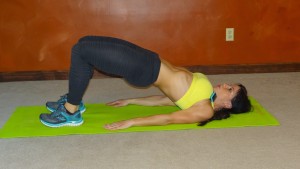
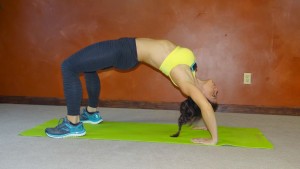
You can repeat this workout up to 3X. The last exercise I did was a Backbend Lift, but I also show an alternate option: Bridge Glute Squeeze. Only do the back bend if you are physically ready for it. Also, take your time getting up after this exercise, and march in place or do a cool-down between rounds to allow your blood pressure to adjust. 
 
Some people are prone to dizziness after quick positional changes. Always listen to your body and adjust accordingly. Marching in place, or doing cool down exercises can help your heart rate return to normal. 
 
I did one round of this workout, and followed it up with a 4.5 mile run outside with Jesse. 
 
It has been a crazy week of work. Eating and making healthy food choices is harder for me when I am tired. My body looks for outside energy sources and craves higher calorie food options. Overall I was feeling “blah” and bloated going into this workout, but after doing it I felt so much better. Sometimes, when you least feel like working out your body needs it most.  
 
Have a great day!
Melissa
 
 
Fit Fashion: My one shoulder sports bra is from Affitnity.com, and you can get 15% off your entire order with the code BenderFitness at checkout.


Click the link to get your own Gymboss Interval Timer!

 1. Jump Rope
2. High Knees Jump Rope
3. Skier Jump Rope
4. Jumping Jacks Jump Rope
5. Singe Leg Jump Rope (alternating)
6. Speed Skater Hop
7. Warrior Lift (right)
8. Warrior Lift (left)
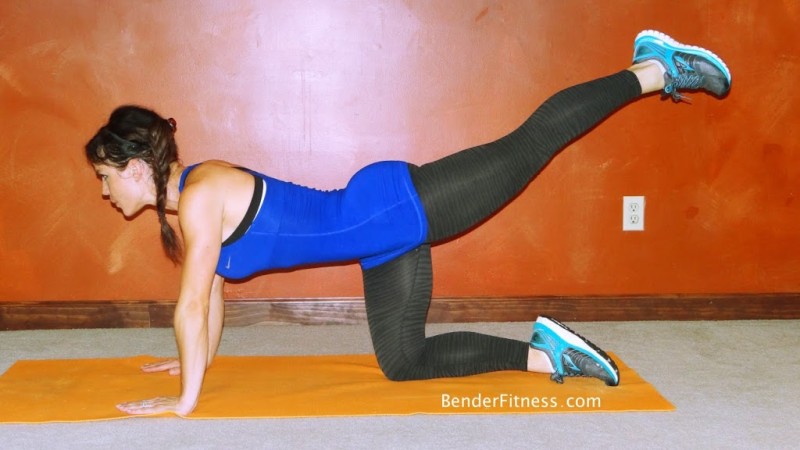
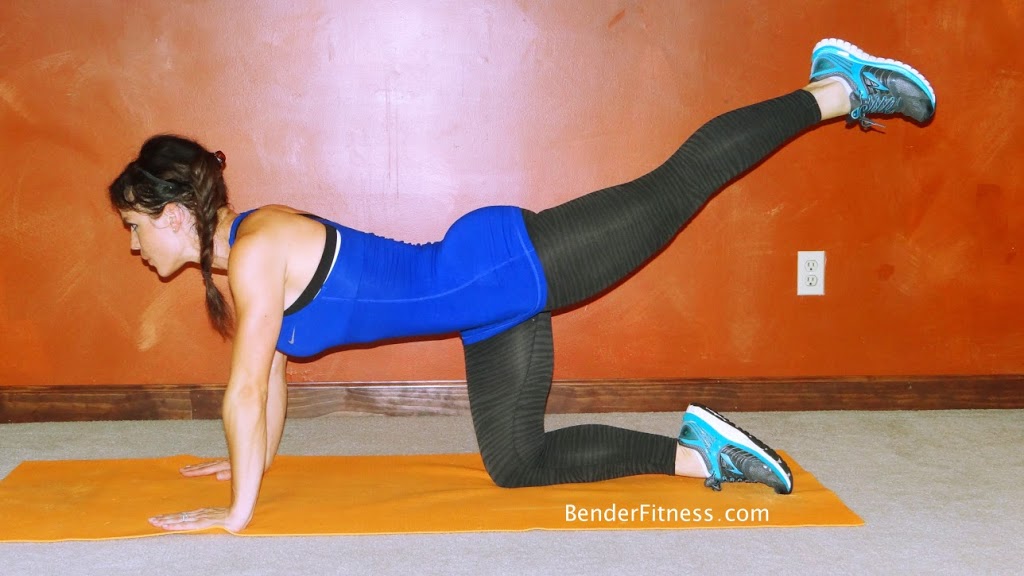
9. Table Kick (right)
10. Table Kick (left)
11. Mountain Climber
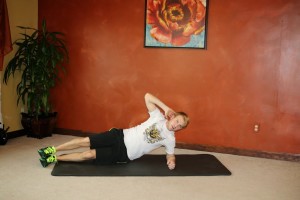
12. Side Plank Heel Tap (right)
13. Side Plank Heel Tap (left)
14. Leg/Hip Lift
15. Backbend Lift or Bridge Glute Squeeze

Repeat 1-3X

***Be sure to cool down after the workout!***

Jump Rope
High Knees Jump Rope
Skier Jump Rope
Jumping Jack Jump Rope
Single Leg Jump Rope (alternating) 
Speed Skater Hop Part 1 (Alternating)
Speed Skater Hop (Part 2)
Warrior Lift
Table Kick
Instagram Tutorial Here: Table Kick
Mountain Climber
Side Plank Heel Tap
Instagram Video Tutorial Here: Side Plank Heel Tap
Leg/Hip Lift: Part 1
Leg/Hip Lift: Part 2
Glute Squeeze Bridge
Backbend

20 Minute HIIT: Full Body Fat Burning

Standard
Please follow and like us:
Pin Share

Hi Everyone!

Are you ready for today’s 20 Minute HIIT Workout? This is a full body workout that will keep your heart rate up, and your body burning fat during and after the workout.

This workout uses 20 different exercise moves. You will have 10-seconds of rest in between each exercise. Remember to always push yourself. You want to get in as many reps as you can during each 50-second interval.

My allergies are going crazy right now, so I was feeling very tired during this workout. At times I really struggled to push myself, but I kept going. Remember, if you need to take a break that’s okay! Just get right back into it as soon as you are ready.

Have fun with today’s workout!

Melissa

Set your interval timer for 20 rounds of 10/50.

  1.  Burpee
  2.  Leg Scissor Abs
  3. Chair Taps
  4. Superman
  5. High Knees
  6. Walking Pushups
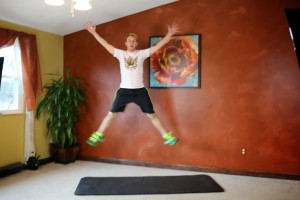
  7. Jumping Jacks
  8. Side Plank Abs (right)
  9. Surfer Jumps
  10. Side Plank Abs (left)
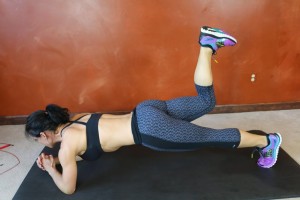
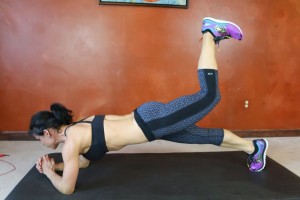
  11. Forearm Plank Leg Jump
  12. Double Kick Back (right)
  13. Lunge Jumps
  14. Double Kick Back (left)
  15. Mountain Climbers
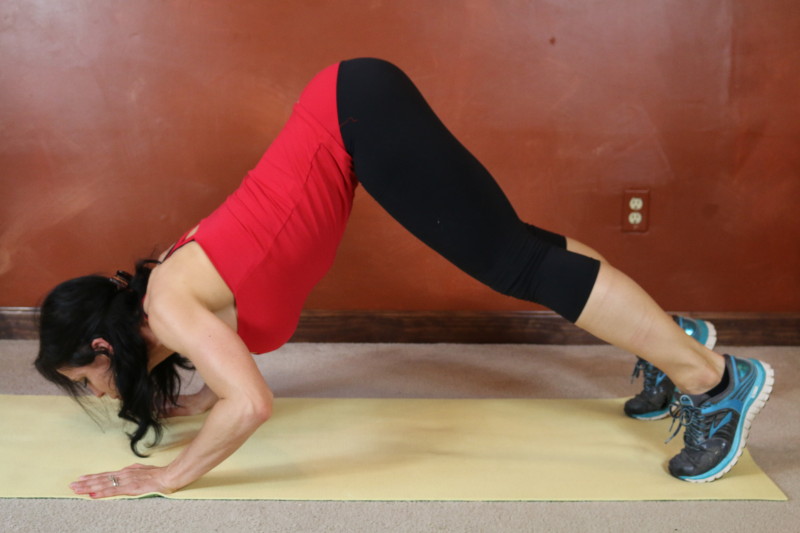
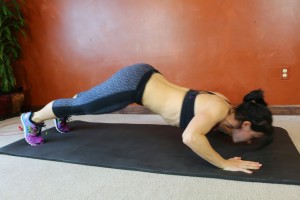
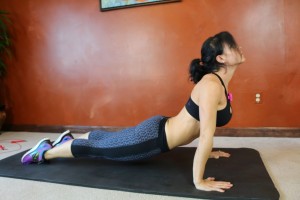
  16. Down Dog Pushup
  17. Single Leg Lateral Jump (right)
  18. Pendulum Leg Swing with Chair
  19. Single Leg Lateral Jump (left)
  20. Pump Handle Abs

Repeat 1-3X

Full Body Workout Challenge

Standard
Please follow and like us:
Pin Share


Hi Everyone!

I have been super busy this week, getting my website ready to transition. The transition is done! I am loving the new look, and I hope you are too! If you scroll down on the left side of the page there is a section labeled: Popular. If you click the different links in that section it will bring you to workouts in that category: Core, Glutes, Arms, etc.

I have been doing a lot of work to get the site up and running, so I am behind on filming new workouts. Tomorrow I am getting back on schedule with filming, and my newest BodyRock Boot Camp workout will be posted on BodyRock.tv.

Below is a breakdown of the workout I did last night. It was fun, and challenging.

If you scroll down you will also see a pull-up tutorial video I shot when I was training for my NPC Bikini Competition. Seeing this video a great motivator for me!

I am ready to clean up my diet, and see my abs looking like that again! I felt super strong and healthy when I was doing my competition training. Let’s train & eat healthy together! I hope you enjoy this workout (sorry there isn’t a video!) There will be a new workout video tomorrow evening.

Let me know how many times you make it through the workout, and what you think of the new site!

Melissa


Full Body Workout Challenge

  •  5 Pull-ups (See Tutorial Video Below)
  • 10 Hanging Leg Raises (Instagram Tutorial: Hanging Leg Raise)
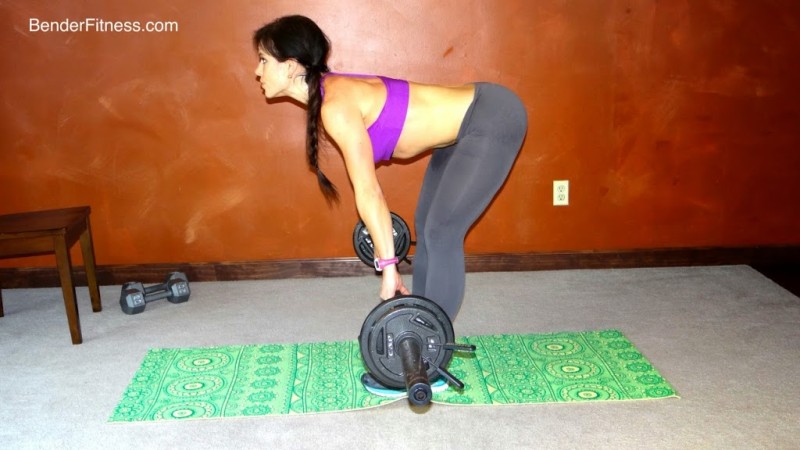
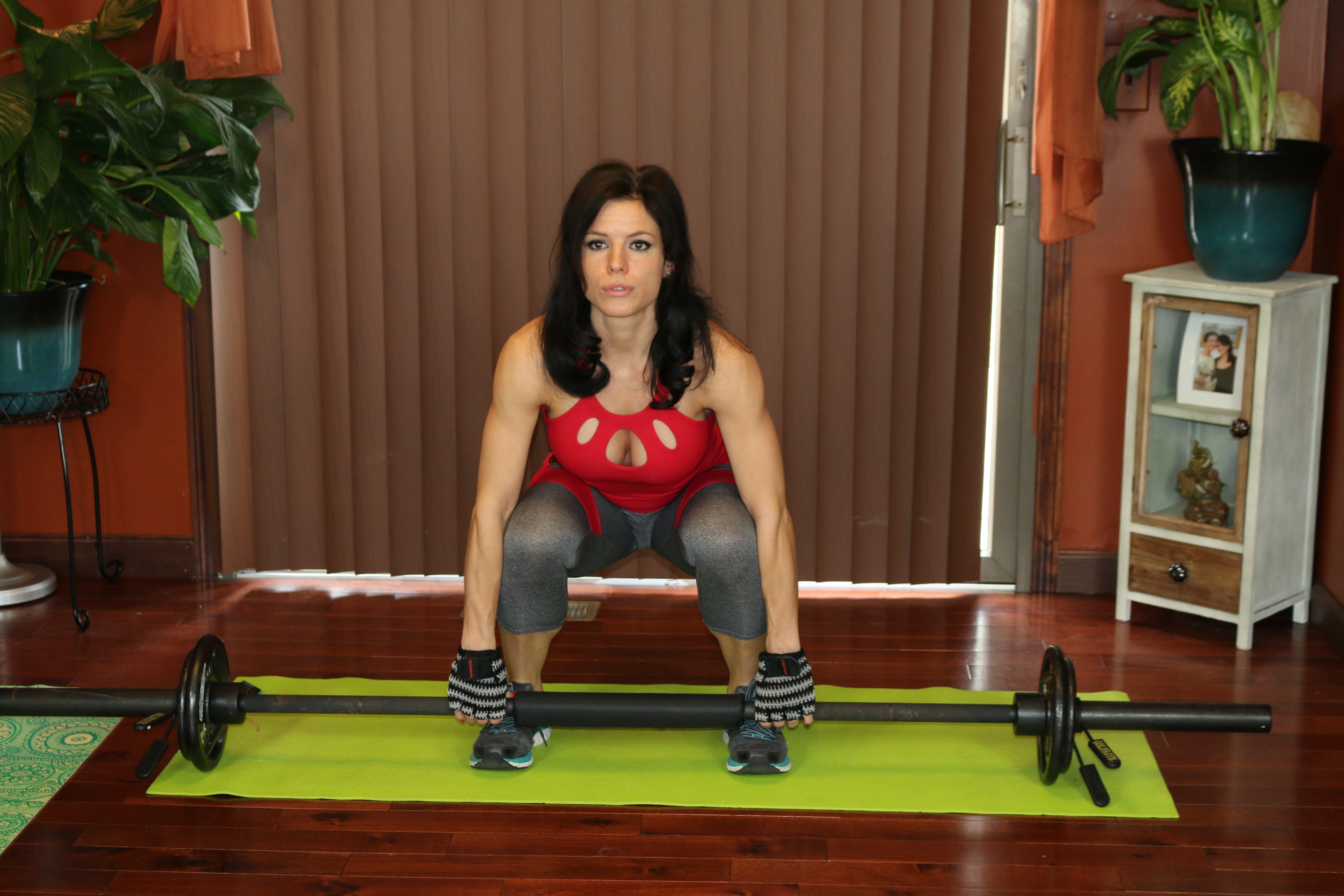
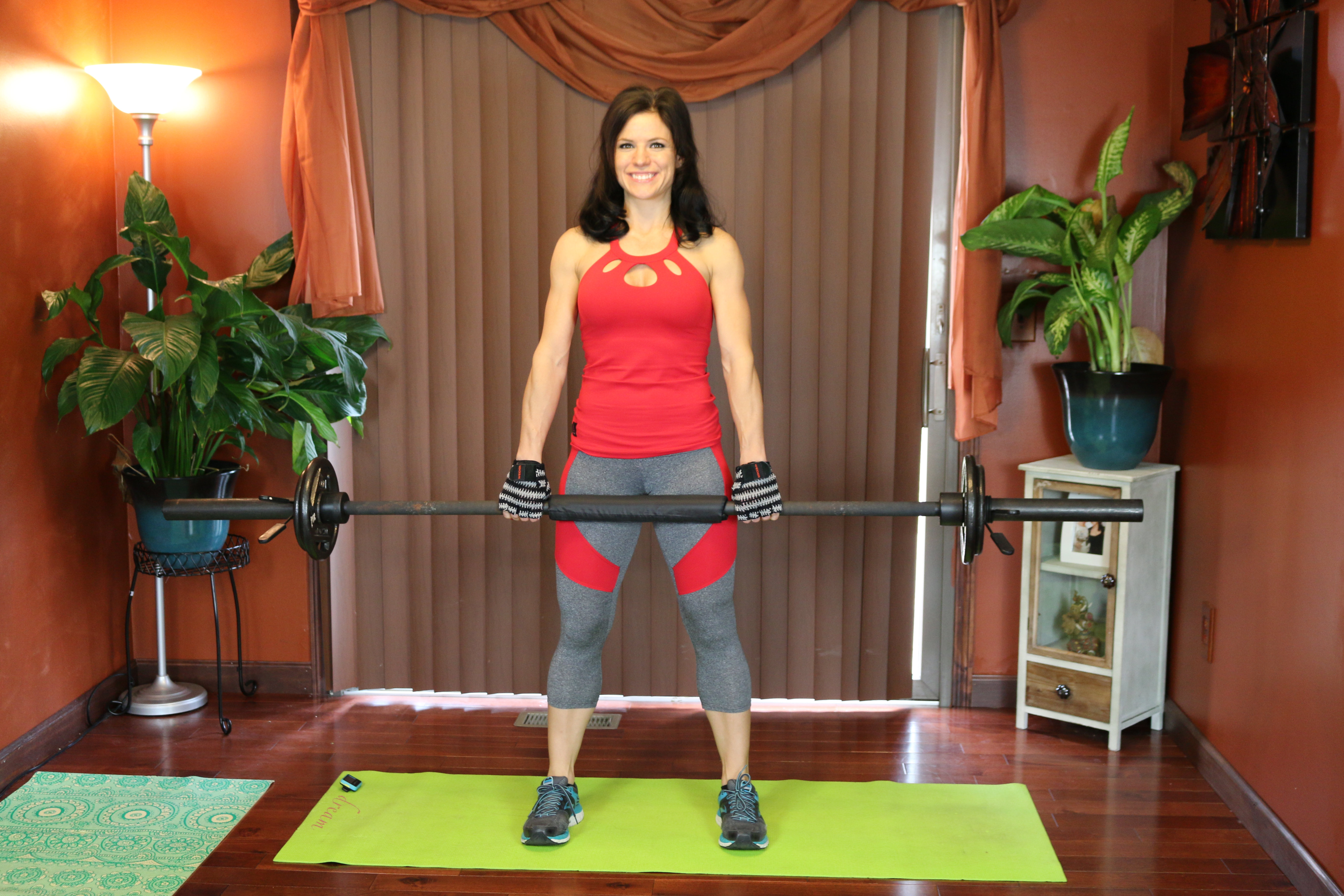
  • 10 Deadlifts (See Photo Below)
  • 10 Burpees
  • 10 Romanian Deadlifts (Instagram Tutorial: Romanian Deadlifts)
  • 5-Minute Jump Rope (Instagram Tutorial: Jump Rope)
  • 5 Pull-ups
  • 10 Hanging Leg Raises
  • 10 Deadlifts
  • 10 Burpees
  • 10 Romanian Deadlift
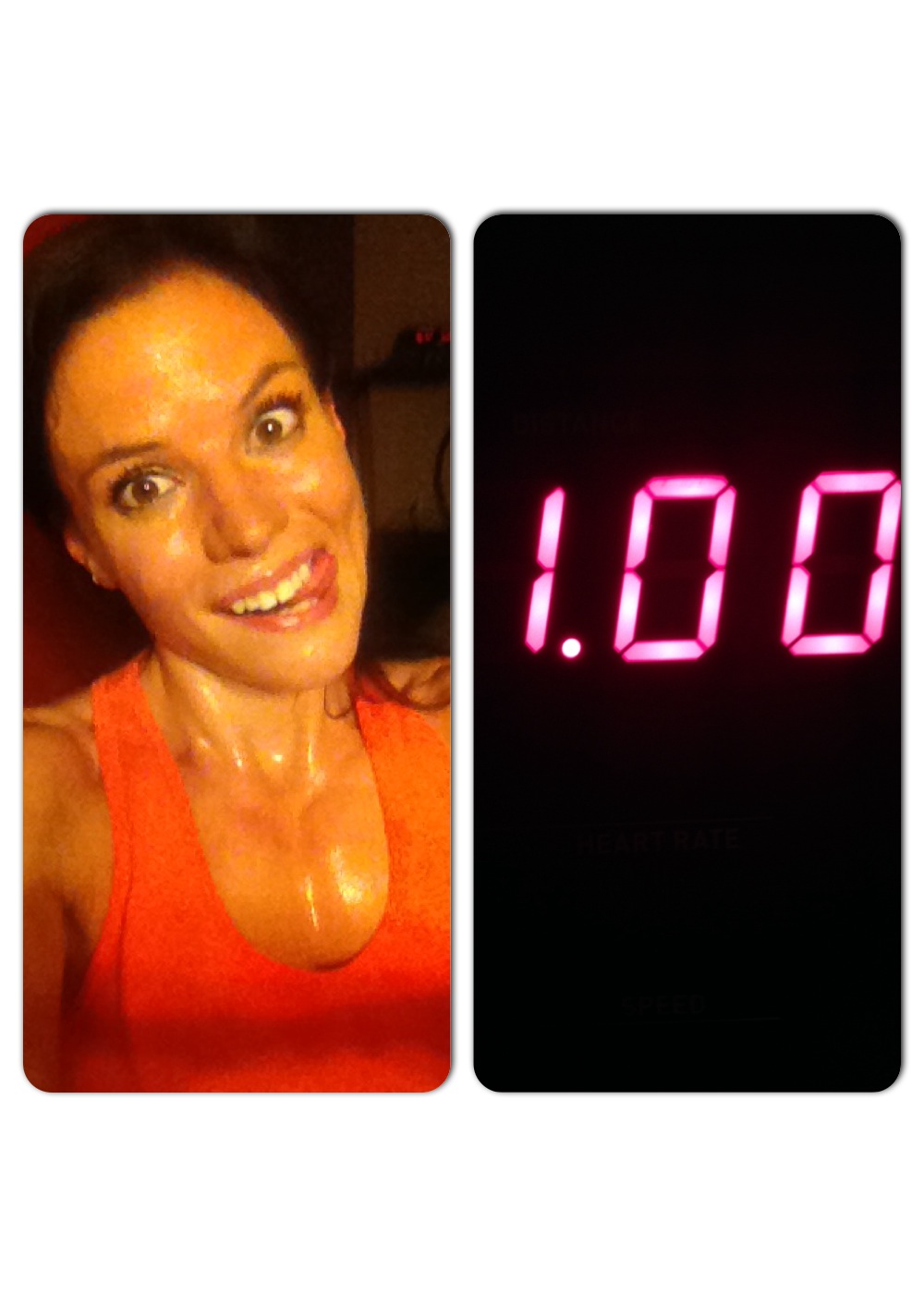
  • 1-Mile Run at a challenging pace (It took me 6 minutes, 44 seconds) or Repeat 5-Minute Jump Rope

Repeat 1-3X

photo-6

1 Mile at a Challenging Pace. Tough!
 

**For Running a Challenging Pace you should be breathing heavy, and going slightly slower than a sprint.


IMG_0037

Deadlift: Part 1

IMG_0039

Deadlift: Part 2


New Site!

Standard
Please follow and like us:
Pin Share

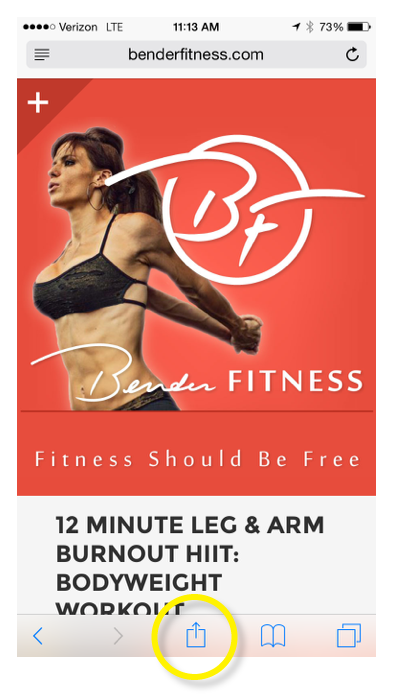
Hi everybody!  Bender Fitness has a new look!  I hope the new site makes it easier for you to find everything!  If you are using a phone or other mobile device, be sure to click the  plusin the upper corner for searching, workout programs, and previous posts.

Also, if you have an iPhone you can now add an icon for Bender Fitness.  Simply tap the button circled below, then tap “Add to Home Screen!”  I hope you like the new site!

iphone

12 Minute Leg & Arm Burnout HIIT: Bodyweight Workout

Standard
Please follow and like us:
Pin Share
Hi Everyone!
 
It’s time for a new workout! This one is quick, but intense. I was dripping sweat by the end of it. You don’t need any equipment for this routine. 
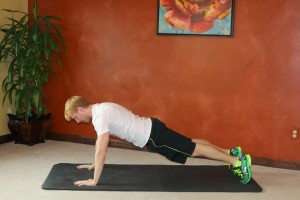
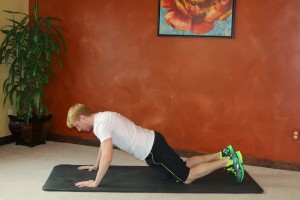
 
This workout combines different Plyometric moves and Pushup variations. The intervals are shorter so really push yourself to get in as many reps as possible without sacrificing form. If the pushups become to intense and your form starts to suffer you can switch to the plank variations of each exercise. 
 
I hope you enjoy this workout! I am off to work!
Melissa


Equipment: Gymboss Interval Timer set for 24 Rounds of 10/20. 

1. High Knees
2. Sumo Pushups
3. Squat Jumps
4. Walking Pushups
5. Lunge Jumps
6. Single Leg Pushup (Alternating)
7. Plie Jump
8. Shoulder Tap Pushups
9. X-Jump
10. Supergirl Pushups
11. Heel Tap Squat Jump
12. Heel Tap Pushup

Repeat 2X=1 Round

Complete 1-3 Rounds
Optional: 30 Minutes of Cardio


Legs & Core Workout: Body Weight Sculpting

Standard
Please follow and like us:
Pin Share
Hi Everyone!

This workout is low impact on your joints, but challenging. It is focused on strengthening and sculpting your midsection, butt and thighs. You can repeat this workout 1-4X. 

I went through this workout once and ran 4 miles on the treadmill at incline .5 in 31 minutes and 39 seconds. I want to make sure I’m not to tired come race day. 

You can do this alone or pair it with cardio. 

Have fun! Don’t forget to tag me on Instagram, Twitter or Facebook(@BenderFitness and  #BenderFitness) if you’re following along! 
Melissa
Don’t forget to check in on FacebookInstagram, or Twitter!


Equipment: Gymboss Interval Timer set to stopwatch for time. 

Reps:
Beginner: 10 reps
Intermediate: 15 reps
Advanced: 20 reps

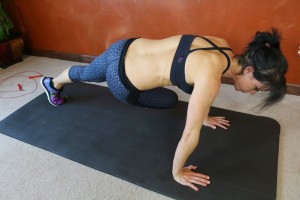
1. X-Plank
2. Hydrant Extension (right)
3. Hydrant Extension (left)
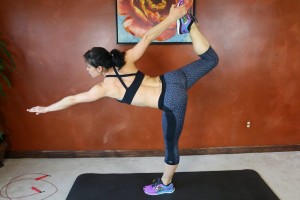
4. Lunge to Warrior III (right)
5. Lunge to Warrior III (left)
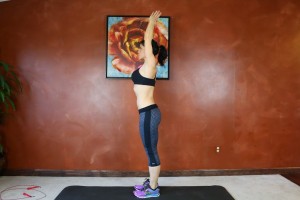
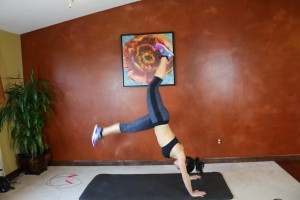
6. Down Dog-Plank-Up Dog
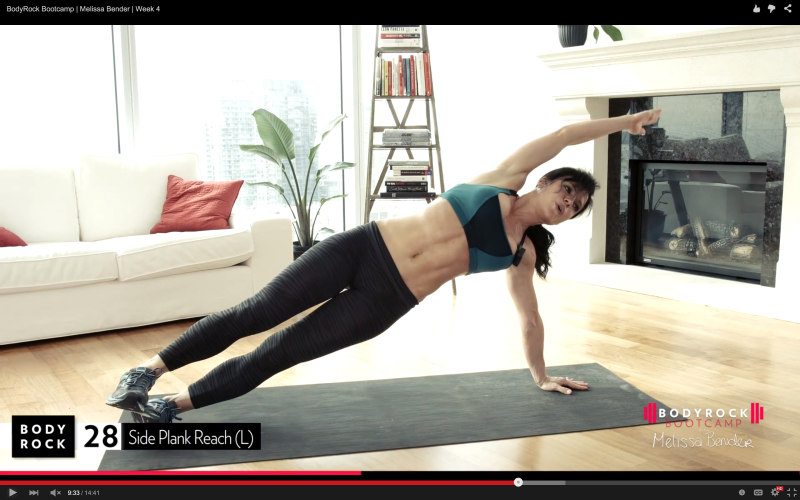
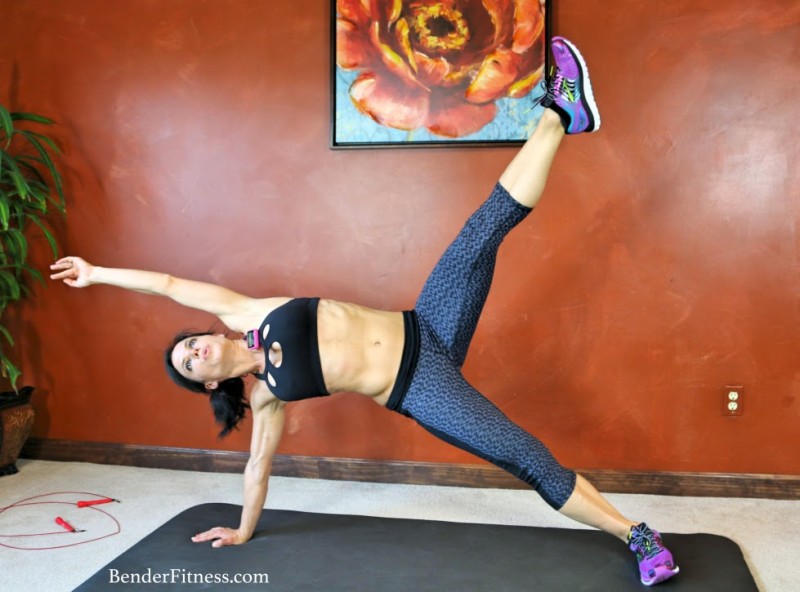
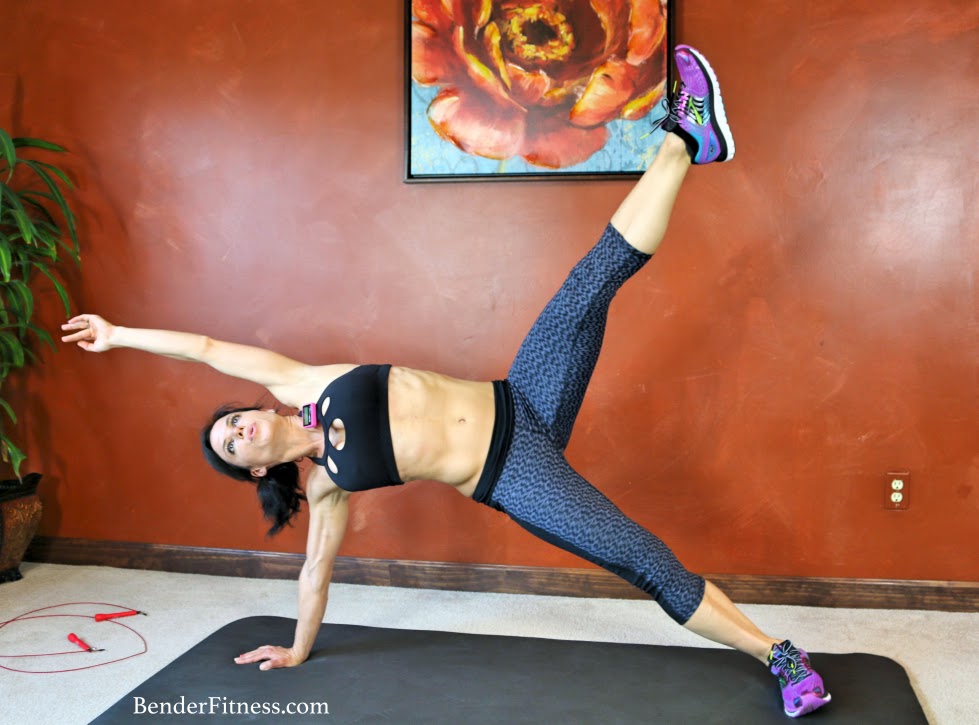
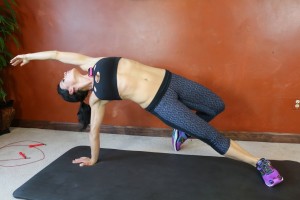
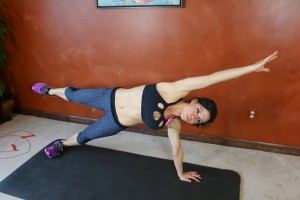
7. Modified Side Plank Reach (right)
8. Modified Side Plank Reach (left)
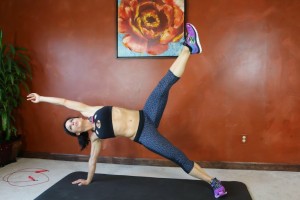
9. Leg Series (right)
10. Leg Series (left)
11. Crossed Twisting Sit-up (right)
12. Crossed Twisting Sit-up (left)

Repeat 1-4X

BodyRock Bootcamp | Melissa Bender | Week 3 Workout Schedule

Standard
Please follow and like us:
Pin Share


Hi Everyone!

This is the schedule for Week 3 of my BodyRock Boot Camp Workout series. My 10-Week Series with BodyRock.tv is one workout per week, so I have put together a list of workouts that you can combine to make a full week’s schedule. 

I will also be posting new workouts this week. If you are looking for something new you can follow along with those workouts. 

Body Rock Boot Camp Week 1 Workouts
BodyRock Boot Camp: Week 2 Workouts

Have fun! I am filming new workouts today, so check back later!
Melissa

BodyRock Boot Camp: Week 3 Workouts
Click on the Workout Title for the Full Workout Breakdown

Day 1: 21 Minute HIIT: Full Body Workout

Equipment: Gymboss Interval Timer set for 16 rounds of 30/50. 


Day 2: Tighter Tummy Sculpt Workout or Active Rest Day

Equipment: Gymboss Interval Timer set for 15 rounds of 10/50


Upper Body Exercises: 8-12 reps
Lower Body Exercises: 15-20 reps


Day 4: Body Rock Boot Camp-Week 3 Workout


Repeat 1-3X


Set your Interval Timer for 15 rounds of 10/50.  

Day 6: Active Rest Day


Equipment: Gymboss Interval Timer set for 15 rounds of 10/50. 

Lean Muscle Stretch & Fat Burn: 20 Minute Home Workout

Standard
Please follow and like us:
Pin Share

Hi Everyone!

Today’s workout is a different type of challenge! It utilizes movements that require strength and stretch your muscles at the same time. This is a great way to build lean muscle while maintaining your flexibility. I also incorporated cardio bursts throughout the workout to keep your heart rate up and burn fat. 

I found this routine challenging, and I hope you do too! Push yourself throughout to do the most reps you can with good form. With workouts you get out what you put in, so you really want to challenge yourself. The goal is to challenge your body, work up a sweat, and increase your heart rate. 

Flexibility is also important for all of your workouts because it allows you to utilize your full range of motion during every exercise you do. This means you are using your muscles more fully during each exercise. This workout utilizes each plane of motion to help you achieve muscular balance and strength throughout your body, while maintaining bio-mechanical alignment. 

I followed one round of this workout with a 30-Minute run outside. 

Have fun with this one!
Melissa 


Equipment: Gymboss Interval Timer set for 15 Rounds of 30/50

*30 Second Cardio Burst Between Each Exercise: Jump Rope or High Knees

1. Dive Bomber
2. Heel Press Plank-Right
3. Heel Press Plank-Left
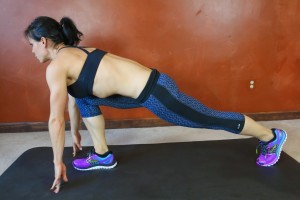
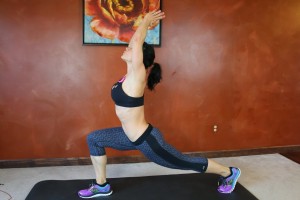
4. Runners Lunge to Warrior Stretch-Right
5. Runners Lunge to Warrior Stretch-Left
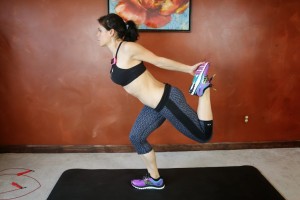
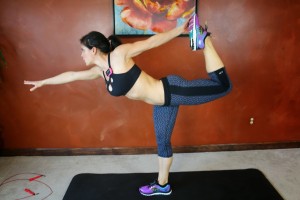
6. Single Leg Squat to Dancer-Right
7. Single Leg Squat to Dancer-Left
8. Side Plank Kick-Right
9. Side Plank Kick-Left
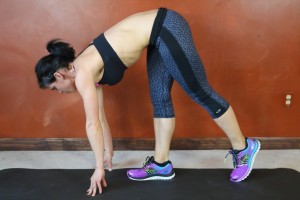
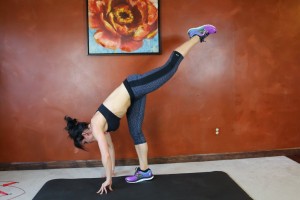
10. Forward Fold Lift-Right
11. Forward Fold Lift-Left
12. Down Dog Hop-Right
13. Down Dog Hop-Left
14. Knee Cross Side Plank-Right
15. Knee Cross Side Plank-Left

Repeat 1-3X
Optional: Pair with 30 Minutes of Cardio

Dive Bomber: Part 1

Dive Bomber: Part 2

Dive Bomber: Part 3

Heel Press Plank: Right

Heel Press Plank: Left

Runner’s Lunge to Warrior Stretch: Part 1

Runner’s Lunge to Warrior Stretch: Part 2
Single Leg Squat to Dancer: Part 1

Single Leg Squat to Dancer: Part 2

Single Leg Squat to Dancer: Opposite Side

Side Plank Kick: Part 1

Side Plank Kick: Part 2

Forward Fold Lift: Part 1

Forward Fold Lift: Part 2

Forward Fold Lift: Part 3

Down Dog Hop: Part 1

Down Dog Hop: Part 2 (For Modification Skip Part 3)

Down Dog Hop: Part 3

Knee Cross Side Plank: Part 1

Knee Cross Side Plank: Part 2


The Sweaty Sixteen: 22 Minute HIIT Full Body Home Workout: Body Weight Boot Camp

Standard
Please follow and like us:
Pin Share
Hi Everyone!

Jesse is back with a brand new Boot Camp Workout! This is a full body workout, with fat burning cardio bursts to keep your heart rate up throughout the workout. Our Boot Camp class found this routine challenging, and I hope you do too!

Remember, with all interval workouts the goal is to get in your maximum number of repetitions during each round. Intervals allow you to work at your own pace, and find the push that is right for your body. You want to get your heart rate up, increase the rate of your breathing, and work up a sweat!

This week I have been increasing my running mileage and transitioning back to East Coast time & an early morning work schedule. I stuck to running the last two days, but I will be filming a new workout tomorrow. 

I will also be writing about the Beginner Running Schedule I created for Rose from MyChangeforaTen.com, and my own running schedule as I re-incorporate it back into my routine. 

In the mean time try this workout and check out my BodyRock Bootcamp Week 2 Workout Schedule. I hope you all enjoy Jesse & his workout! He certainly kept me entertained while I was filming him!

Have fun!
Melissa


Equipment: Gymboss Interval Timer set for 16 Rounds of 30/50

*30-Second Cardio Burst of Choice Between Each Exercise

1. Temple Tap Abs
2. Superman & Push-up
3. Alternating Supine Bridge Knee Flexions
4. X-Jumps
5. Hip Drop & Side V-Up (right)
6. Tricep Dip & Plank
7. Side Lunge Squat & Leg Lift (right)
8. Lunge Jumps
9. Hip Drop & Side V-Up (left)
10. Spiderman Push-up
11. Side Lunge Squat & Leg Lift (left)
12. Jump Squats
13. Full Circles
14. Rotating L-Sits/Tables
15. Goddess Pose Lifts
16. Burpees

Repeat 1-3X

Temple Tap Abs


High Knees (Cardio Burst)


Jumping Jacks (Cardio Burst)


Superman + Pushup: Part 1


Superman + Pushup: Part 2


Superman + Pushup: Part 3


Superman + Pushup: Part 4


Superman + Pushup: Modified Pushup


Alternating Supine Bridge Knee Flexion: Part 1


Alternating Supine Bridge Knee Flexion: Part 2


Alternating Supine Bridge Knee Flexion: Part 3


X-Jump: Part 1


X-Jump: Part 2
Hip Drop to Side V-Up: Part 1
Hip Drop to Side V-Up: Part 2


Hip Drop to Side V-Up: Part 3
Tricep Dip to Reverse Plank: Part 1

Tricep Dip to Reverse Plank: Part 2
Side Lunge Squat & Leg Lift: Part 1


Side Lunge Squat & Leg Lift: Part 2


Lunge Jump: Part 1


Lunge Jump: Part 2


Spiderman Pushup: Part 1


Spiderman Pushup: Part 2


Spiderman Pushup: Part 3


Spiderman Pushup: Part 4


Chair Pose: Modification for Jump Squat


Jump Squat: Part 1


Jump Squat: Part 2


Full Circles: Part 1


Full Circles: Part 2


L-Sit to Table: Part 1


L-Sit to Table: Part 2


L-Sit to Table: Advanced Modification


Goddess Pose Lifts: Part 1


Goddess Pose Lifts: Part 2 (Alternating Heel Lift)


Goddess Pose Lifts: Advanced Modification


Burpee: Part 1


Burpee: Part 2


Burpee: Part 3


Burpee: Part 4


BodyRock Bootcamp | Melissa Bender | Week 2 Workout Schedule

Standard
Please follow and like us:
Pin Share


Hi Everyone!

Welcome to Workout Week 2 of my BodyRock Workout series! 

If you haven’t checked out Week 1 yet, you can find it here: BodyRock Bootcamp Week 1. One workout from the full 10-Week Workout series is being released weekly at BodyRock.tv

Blogging in San Francisco while Rose & Nicole Check out my Newest BodyRock Workout!


Here is a suggested workout schedule for Week 2 to incorporate the newest workout (video below) into your week! You can click the link for the full workout breakdown, or follow along with the videos. 

You can choose to follow the schedule below, pair this workout with the new workouts I am releasing this week, or add it to your normal workout routine. Remember, you want to make the workouts fit into your schedule. 

Have fun!
Melissa

Week 2 Workout Schedule


Repeat 1-3X

Repeat: 1-3 Times


Repeat: 1-3 Times


Repeat 1-3X


Repeat 1-3X


Repeat 1-3X

Day 6: 30 Minute Yoga Flow or Active Rest Day with Gentle Stretching


Repeat 1-3X