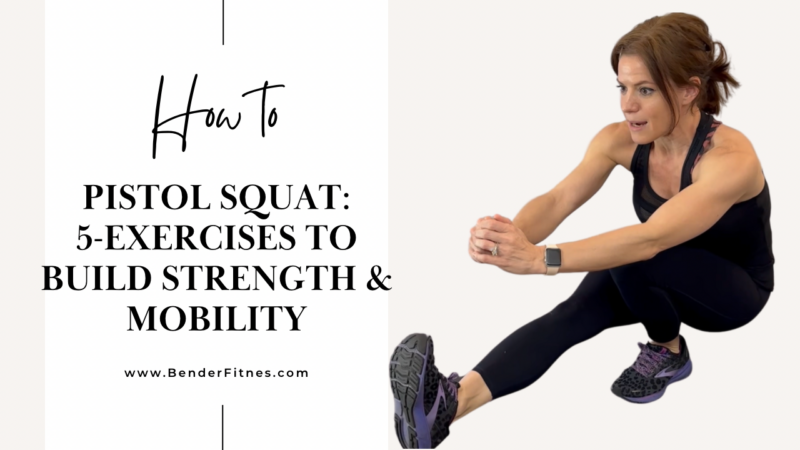
How To: Pistol Squat – 5 Exercises to Build to a Pistol Squat – with Progressions

Standard

Hello Everyone!

Welcome to today’s tutorial: How to Pistol Squat. This has been a popular video request. A lot of people want to master a single leg/pistol squat, but they don’t know where to start. If this is a skill you’ve wanted to accomplish you have come to the right place!

Benefits of Pistol Squats
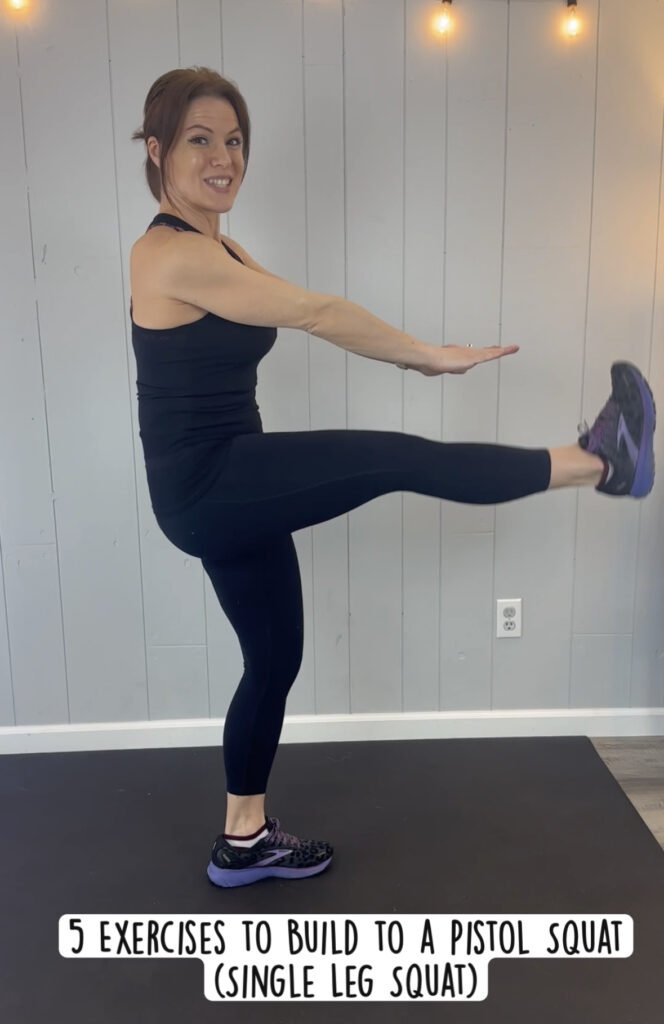
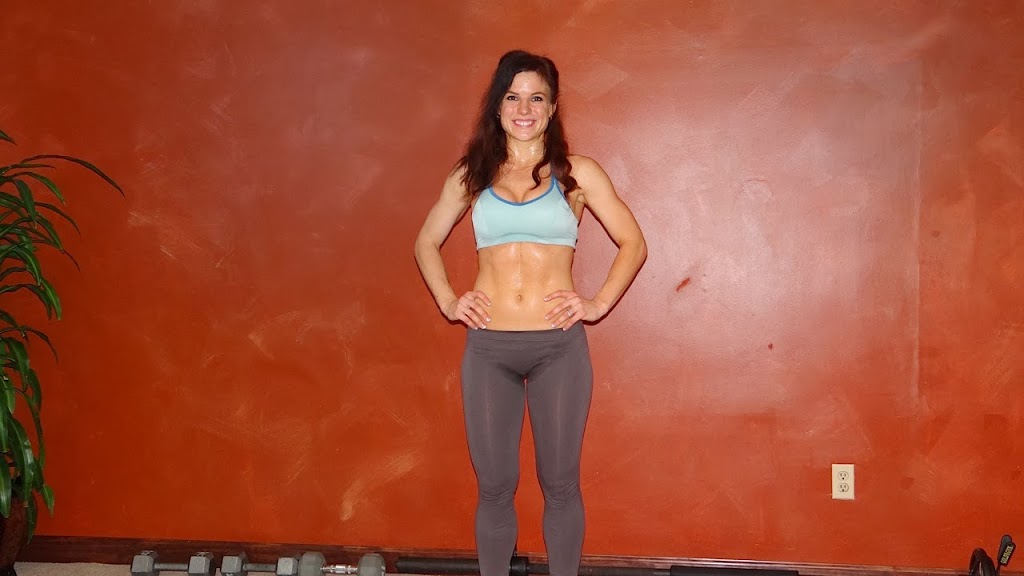
Pistol squat photo tutorial: single leg squat

Pistol squats are one of the best exercises you can do for your lower body. They are very effective for building strength through the glutes, hamstrings, quads, calves, core, hip flexors and hip adductors. They also help to decrease muscular imbalances, improve balance, and increase functional mobility.

Why You Can’t Pistol Squat and How to Fix It:

A lot of people ask me why they can’t pistol squat. There are three main components of a pistol squat:
1. Strength

2. Balance

3. Mobility/Flexibility

In order to pistol squat you need to work on all three of these areas. In the video below I will take you through five exercises, with progressions to help you build the strength, balance, and mobility needed for this skill.

You need to have enough single leg strength to lift your entire body. While there are many ways to build lower body strength, I demonstrate some effective techniques, with transferable skills in this video. We are focusing on single leg exercises to also improve balance while building strength.

Often, I see people who have the physical strength and balance to complete this skill, but they don’t have enough mobility and range of motion. Keep in mind, each of these skills can be improved on, but it takes time and practice. You should also practice each skill on both legs.

Flexibility and Balance fluctuate. Some days balance skills will feel easier than others. Balance and flexibility can be impacted by how much sleep you got, and even how hydrated you are, but the best way to progress these skills is by practicing.

You need to be consistent in going through these skills, but the feeling of accomplishment that you feel when you achieve your first pistol squat will be worth it! There is a mental benefit that comes with working on a difficult skill. Enjoy the progress and notice each gain along the way.

The Video Tutorial:

  1. Seated hip Flexor lift: builds strength and mobility through the core, quads and hip flexors.
  2. Single Leg Sit to Stand: builds strength to lift your body weight with one leg. Progress this skill by eventually sitting and standing from lower surfaces.
  3. Elevated single leg squat: Builds strength, and the elevation allows you to go more deeply into the squat to progress your range of motion.
  4. Supported single leg squat: puts together each component of the movement while using support.
  5. Deep Yoga Squat: Improves mobility and flexibility necessary for the full movement. Progression: add the leg lift, and eventually practice the full movement from this position.


I hope that you find this video helpful! I would love to hear how you progress with your goals and through each exercise. Are there any other exercises that you would like to see a video tutorial for? Let me know in the comments.

Melissa

You can find me on Social Media: @BenderFitness and on Facebook: @MelissaBenderFitness Pinterest: Pinterest.com/BenderFitness TikTok: @BenderFitness 

If you want to help support BenderFitness so we can keep bringing you new workouts, your donation is greatly appreciated: https://www.patreon.com/BenderFitness.

Shop BenderFitness recommendations on Amazon (we get a small commission, but it doesn’t change the price for you!): https://www.amazon.com/shop/benderfitness

Shop BenderFitness Gear: https://my-store-c67ce6.creator-spring.com
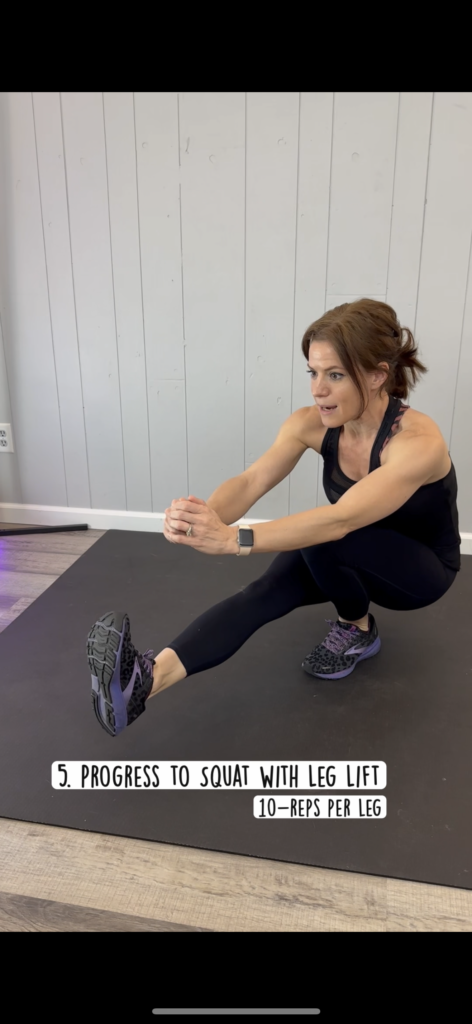
Pistol squat photo tutorial: single leg squat

Moving into 2021: Exercise, Motivation and Getting Rid of Barriers

Standard

Hi Everyone!

The end of the year is traditionally a time of reflection. We look on the year past, and set goals for the year ahead. The 2020 pandemic has made this an exceptionally challenging year.

Like many, I found myself struggling through 2020 with less energy and motivation. There were times when the barriers felt stronger than my ability to surmount them. I dealt with episodes of sadness, low energy and melancholy. I felt like a faded version of myself. I had to hit pause, and step back for a while. I focused on family and my own needs, and clawed my way back toward normal.

Once I found some equilibrium I had to take a hard look at my barriers the past year. Living during a global pandemic has significantly impacted the way I normally do things, and I have had to re-evaluate and adapt.

Here’s a trick to successfully setting goals: First you identify your goal, second you assess any barriers to the goal, and third you adapt and adjust your plan.

So, what does that look like in action?

Goal: Film more workouts in 2021.

Identify Barriers: One of my barriers to filming new workouts has been our home setup. We live in a split-level home and my filming studio is on the same floor as the bedrooms, bathrooms, kitchen, etc. With kids and no option for babysitting due to the pandemic, this hasn’t been working for the past year. I try to film, setup lighting and equipment, get interrupted over and over again, and eventually get so frustrated I would give up.

Adapt for Success: We have a finished area downstairs. It doesn’t have the best lighting so I never considered it as a filming studio. The wall colors are warm and cozy, and we have a low drop ceiling that would prevent me from jumping. I decided that those obstacles were surmountable, so we are painting, removing a section of the drop ceiling, and establishing a new studio area for filming workouts. My goal is to be able to get down there by myself so Jesse can take care of the kids and I can film uninterrupted.

Our renovation project isn’t complete yet, but we have a great start on it!

Make your goal measurable: I wouldn’t be a very good Occupational Therapist or fitness trainer if I didn’t make my goals measurable. Film more workouts in 2021 is a general goal, but it has no measure for progress or success.

Measurable Goal: My goal is to film three new workouts per week in 2021. I plan to release new workouts every Sunday, Tuesday and Thursday.

So I’ve addressed the goal. adapted for the barriers and made a plan/schedule to help myself succeed. This technique can be applied to any goal.

You might also enjoy this article Setting Goals You Will Actually Achieve:

I would love to hear about your goals this year. Share your plan in the comments below.

Over the past month I have been incorporating exercises from my Original 30-Day Workout Challenge. Great job to those of you who joined me for the challenge:

Melissa

PS You can find me on Social Media: @BenderFitness and on Facebook: @MelissaBenderFitness and Jesse is on Instagram: @BenderCrosby1

PPS If you want to help support BenderFitness so we can keep bringing you new workouts, your donation is greatly appreciated: https://www.patreon.com/BenderFitness.

How to Build Lean Muscle While Decreasing Body Fat: Tips for Exercise, Diet & Supplements

Standard

Written By: Jonathan Shoop

Hello everyone! It has been far too long since I wrote last. Let me start by saying I hope everyone who reads this is doing well and is enjoying life! I am not an medical doctor, please consult with your physician before beginning any exercise or supplement routine.

Today I want to write about the topic of building muscle mass without gaining fat. If you follow my directions and are diligent about exercising, diet, and supplementation then you should actually be building lean muscle and DECREASING body fat! Yes I said it. Build muscle AND lose fat at the same time. Now I know what some or most of you have heard… that it is impossible to do that without using anabolic steroids. Or that to gain muscle you must go into a “gaining phase” and that will likely include gaining fat. Well I’m here to tell you that those ideas are simply untrue.

Let’s start with exercise. Resistance training is CRUCIAL to gaining muscle tissue. Whether it be lifting weights, Melissa’s at home workouts, circuit training, or other bodyweight exercises. Putting strain on your muscles everyday is what’s going to be what causes microfiber tears on your muscle tissue. These microfiber tears are what we will then go back and repair using proper diet and supplementation, resulting in… muscle growth!

yoga with weights

My suggestion for someone who lifts weights is to lift 4-6 times a week for no less than an hour at a time. You need to push yourself everyday and keep track of how much you are lifting to help keep the progress going in the following months/years. I would then also throw in a 2-3 high intensity cardio workouts (no longer than 30 minutes) after lifting or on your “off day”. Melissa has a variety of workouts for you to do on this site so I will leave it to you to find the ones you like.

If you are doing Melissa’s workouts, you can stick to one or two a day but I would really push you to shoot for 45-60 minutes.

Now comes nutrition and supplementation. First of all and most importantly, you need to be keeping track of the amount of calories that you eat throughout the day and the amount of calories you burn. This is absolutely CRITICAL to obtain the best and quickest results. Melissa and I actually met through our use of the website myfitnesspal.com – this is a great resource for logging what you eat throughout the day as well as inputting your exercise.
cauliflower

If you are overweight and needing to lean up, set the setting of how active you are throughout the day one notch lower than what it would suggest for you. If you are trying to gain muscle and have trouble doing so, go with what they suggest. This is the amount of calories you burn normally in a 24 hour period with no exercise. When you exercise, try using a heart rate monitor or something else that keeps track of your activity/calories you burn. You need to add those calories back into your daily amount, this will give you more to eat, but you need them to build that muscle!

In terms of calories, I would suggest starting with what myfitnesspal.com suggests for your overall calorie intake and then adding your exercise calories. Do this for 2 weeks and monitor your weight during that time period. What we are looking for is a baseline number for your calories. If you’ve lost or gained weight during that time period and being diligent with keeping track and being on point with your consumption and expenditure of calories, you should adjust it from there depending on the gain or loss. If your weight has stayed the same during that 2 weeks then that is perfect. That is your maintenance calories (the amount of calories your body needs to maintain weight). Our goal is to gain muscle, for this I would add 250 calories into your daily consumption on top of your maintenance amount. If the weight isn’t coming on after 2-4 weeks of doing this, keep increasing your calories incrementally every 2-4 weeks. Gaining muscle takes time and patience. Keep at it and keep pushing yourself and expectations in your workouts!


protein-2B2

The supplementation side of it is what is going to help you maximize your efforts! Think about it this way, with a car, you can get from point A to point B. The difference is how quickly you can get there and your gas mileage. You want to get there fast and you want to get there efficiently. This is the whole point of sports nutrition supplements. They will help you get there faster and with greater efficiency.

There is a plethora of information and products to take on the market. I have been a consultant for various nutrition stores throughout my years of working out and have chosen to carry specific products from specific companies because of their quality and results.

Here is a quick rundown of what I take/recommend for someone who works out 3+ times a week for 30-90 minutes.

*Note from Melissa: Be sure to check any supplementation program with your doctor. Each individual has different needs and tolerances. It is important to customize your program. If you have questions, ask a professional and be honest about your health history.*

Before a workout:

60-90 minutes before workout: Depending on size of the person: A meal consisting of 2 eggs and about 20-30 grams of carbohydrates such as fruit or oatmeal. If you do not have time because of work or waking up so early, that is OK but I would suggest then a quick protein shake of whey isolate or egg white protein.

15-30 minutes before workout:

  • Thermogenic, fat burner, or preworkout drink – something that will get you going and help you crank out that workout. Be careful with your own tolerance to stimulants and do not combine them unless you have done it before.
  • Along with any of those stimulants take 10 grams of branch chained amino acids. (BCAAs for short, they consist of Leucine, Isoleucine, and Valine). This helps protect your muscle tissue from being used as energy, helps with recovery, and helps fight fatigue during the workout. I like BCAA Fuel.

After the workout:

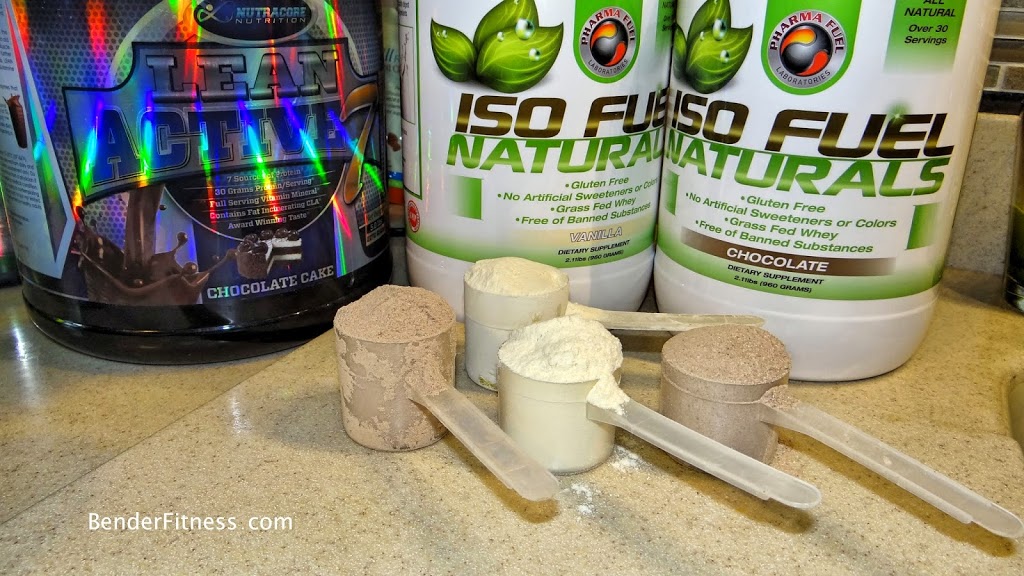
  • Take 20-50 grams of protein from egg whites (my favorite is Muscle Egg flavored egg whites) or a whey isolate protein (Isolate Fuel or Iso Fuel Naturals) – again, the amount is dependant upon the weight and dietary needs of the individual.
  • Glutamine complex 6-10 grams – my favorite is Glutaplex. This helps speed up the repair of muscle tissue which helps with growth and also cuts down soreness.
  • Depending on dietary needs you can also take 20-40 grams of carbohydrates such as berries, oatmeal, or a powdered carbohydrate like Carbalean by Nutracore.

Everyday essentials:

  • Liquid or powdered form complete multi-vitamin. Don’t waste time or money on hard tablet form multi-vitamins as these are hard to digest, may upset your stomach, and your body only absorbs about 10% of a hard tablet multi-vitamin.
  • Essential fatty acids, EFAs, fish oils, or krill oil. Essential fatty acids are the best thing for your heart health. EFAs help lower blood pressure, raise good HDL cholesterol, and lower bad LDL cholesterol.
  • CLA – conjugated linoleic acid, from safflower oil. This is a fatty acid that helps your body to burn white adipose tissue. White adipose tissue is the fat around our midsections. I get mine from Pure Life Nutra because it is composed of only safflower oil, resulting in high purity and concentration. (purelifenutra.com)
  • L-carnitine – this helps speed up your body’s ability to burn fat. I get mine from Pure Life Nutra because of it’s purity.


If you have any questions or would like help choosing a supplement regiment, feel free to email me at: totalnutritionmansfield@gmail.com
Thanks and I hope you make those gains!!!

Jon-3

Jon Shoop

You can read more about Jon and his background in Nutrition, Health, Fitness and Competition Training at: http://totalnutritiontyler.com/jon-shoop-store-owner/
 
If you would like to place an order or get more information please message him at: 
You can follow Jon on Instagram and twitter at: @jonshoop

6 Tips for Becoming a Runner & Starting a Running Program

Standard

6 Tips for Becoming a Runner & Starting a Running Program
by Jesse Bender

When discussing running, one of the most common questions I receive is, “How do I become a runner or how do I even start?” My mind floods with positive responses; I’ll attempt to be precise.

There is no set-pace that a person must run to be considered a “runner.’ If you push yourself on a regular basis to ambulate faster than a walk with a pace that is slightly difficult, you are a runner. Do not let anyone ever tell you otherwise.

The Pre-Tip List for Becoming a “Runner”

There is only one Pre-Tip: We all hear that we should consult a physician prior to engaging in any new difficult physical activity. If you suffer from any joint pain, heart complications, back-problems, medication side-effects, or have not participated in cardio training of any sort within recent memory, I STRONGLY suggest consulting your physician prior to running/hiking/bungee jumping/cycling/Zumba/weight training/etc. anything that will elevate your heart rate.

Once you receive the green-light from your doctor, it’s time to kick the tires and light the fires!

1.) CONSIDER YOURSELF A RUNNER!

As stated above, there is no predetermined distance, pace, or race that must be completed by a human in order for them to be considered by other humans a “runner.” The moment you make the  true mental decision to start running, then you are a runner. This switch of a mind-set is imperative to you starting and sticking to a running regimen. Literally, tell yourself, “I am a runner now! I start (enter day) at (enter time)! ” and stick to that day and time!

2.) FIND THE RIGHT PAIR OF (ACTUAL) RUNNING SHOES:

“Well, Mr.Smarty-runner, what is considered an actual pair of running shoes and why do I need them?” Running shoes are any shoes designed and created for running. Many shoe companies have products that are designed for Fitness, Walking, Cross Training, or Hiking. These shoes are not horrible for you but, should be utilized accordingly and not for multiple miles of running either on a treadmill or outside. Most shoe companies (Nike, Reebok, Adidas) have designated “Running” shoes. These shoes are created to withstand the rigors of hundreds of miles of running and are designed to provide shock absorption, ankle support, traction so you do not slip, and breathable for your feet.

When I said to buy the right pair of running shoes I mean that to it’s literal sense. You must find the pair of shoes that fits you most comfortably and provides you with the correct amount of support for your specific step-type or strike-pattern (Neutral, pronation, supination).  Do not worry about what other people are buying or their looks. Only your foot can decide! With the correct pair of shoes, you will avoid injury and increase your running capabilities with greater ease. I strongly suggest buying your first pair of running-shoes from a running specialty store or a sporting goods with knowledgeable staff that can help you learn what type of shoe is right for you.

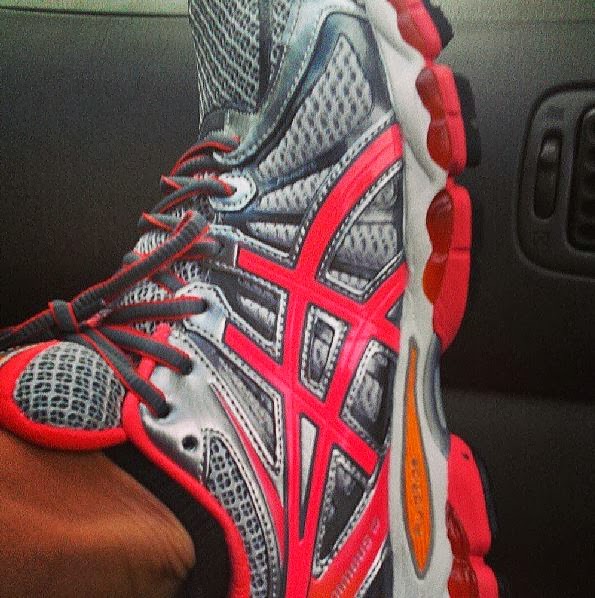
Some brands I recommend to try-on are: Brooks, Saucony, Mizuno, Asics, New Balance, and Nike!

new-shoes

Asics Gel Nimbus

3) FIND THE RIGHT RUNNING AREA

Running is extremely therapeutic, rewarding, and dangerous. Yes, I said dangerous. Many beginning runners do not understand the safety strategies that can save your life. The first step to staying safe while running is to find a safe area to run in. Whether you are running on streets or trails, be aware that other people may and will probably not be looking for runners.

Find an area to run in that has minimal traffic, low possibility of crimes, well-lit, and provides you the ability to summon others should an emergency arise. Many state parks or small neighborhoods can provide a very safe running environment. Also, try your best to choose an area that provides you with some flat spaces and as well as hills to run on. Varying terrain will ensure you to efficiently progress as a runner. These all sound nerdy, but take it from a runner who has been hit by two-cars,  almost hit by traffic on numerous occasions, bit by multiple dogs, and been chased down by “seedy” strangers under a bridge. Pick a safe place to run that isn’t too difficult for you.

jesse running buffalo creek

Jesse Running a Half Marathon (13.1 Miles)


4) CHOOSE A TRAINING PLAN

There are a plethora of beginner-runner schedules, Apps, and programs in books! No matter the media form you choose, pick a training plan for beginners such as a “Couch to 5k.” Having a set schedule for you to know what and when to run, walk, rest, etc. is essential to improving in any respect as a runner. Consistency is the most imperative factor of anything done in life! Running is no different, and a pre-determined schedule will significantly aide you in your journey.

You might like: Running for Beginners.

5) DO NOT BE ASHAMED TO WALK

Running is a building process! You do not say you are a runner and beat yourself up because you didn’t crank-out a 7 minute mile your first crack at it. You have to build your cardiovascular system, pulmonary system, and even nervous system to properly handle rigorous activity for prolonged periods of time. Running is the ideal example for improving ones self through consistent work. Not many other sports or activities rely so heavily on your own dedication and progress.

When you begin running and you find it difficult to breath, or you feel the pace is too much to handle, then stop! Don’t stop moving, but, stop the pace that has you breathing so heavily. Most importantly when you are beginning, you do not want to push yourself to the brink. Working to hard to fast will lead to injury or difficulty sticking with running. The best way we coach people to build all of their capabilities to run for any distance is to mix walking and running. Try walking for the first 3-5 minutes of a run in order to elevate your heart rate closer to a running pace. Then, try running for 2-5 min switching walking and running until you’ve reached your time or distance goal for that day. Luckily, most beginner running programs (as mentioned above) will have walking or “active rest” breaks built into the regimens.

6) RUN FOR FUN…WITH A FRIEND

As per most things in life, it’s better with someone! Running is no different. Try to find a person who is at or near your running capabilities to run with. You do not need to run with them every time but, having scheduled runs with other people will help you stay more consistent and accountable with your own training. Plus, running can get very boring from time to time. Having a running-buddy to talk with and share motivation/complaints with is extremely fun! Not to mention, running with someone helps keep you safe.

half marathon mel monty jesse

Melissa, Monty & Jesse: Race Day Pals

I hope these tips are helpful in the slightest for you! Please, leave us any running/fitness questions or comments for future posts and videos!

NEXT RUNNING ARTICLE:

SAFETY TIPS FOR RUNNERS/WALKERS!

Don’t Drop Out of the Race! 5 Ways to Decrease Your Risk of Dying Early

Standard
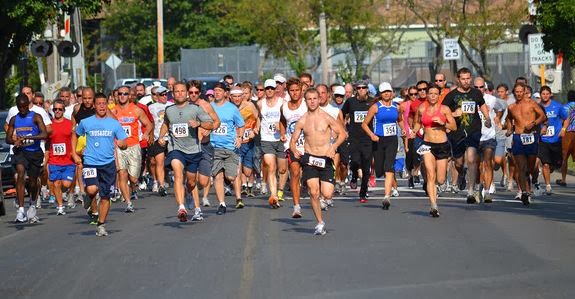
Pittsburgh Cure Sarcoma 5K

Did you know that you can decrease your risk of dying? You can take action to improve your health and decrease your risk of preventable death. 

In the United States alone, up to 40% of annual deaths from each of the five leading causes of death could have been prevented. You can actively make changes to decrease your risk of dying from:
1. Heart Disease 
2. Cancer
3. Chronic Respiratory Disease
4. Stroke
5. Unintentional Injury

In Healthcare we focus on the Three Levels of Prevention:
1. Primary Prevention: healthy people make changes to their lifestyle to decrease the risk of developing a disease or sustaining an injury. 
2. Secondary Prevention: treating an existing illness or risk factor to prevent further complications or progression of the disease/injury. 
3. Tertiary Prevention: teaching people to manage long term health problems to prevent further decline and maximize quality of life. 

As a Fitness Blogger and an Occupational Therapist, I am actively trying to promote the Primary Prevention Level of Healthcare. If I can help improve even one person’s health, happiness and quality of life than I have done something with my life that I can be proud of. I share workouts and nutrition tips, but there are other changes you can make to improve your health and extend your life. 

What are you willing to do for a healthier life? You’re on my blog, so that means you are probably already exercising, or interested in starting a fitness program. That means you are moving in the right direction!

5 Steps You Can Take to Decrease Your Risk of Dying from a Preventable Disease:

1. Exercise Consistently: Exercise decreases your risk of everything from Alzheimer’s to Diabetes, Stroke and Cancer. Those who exercise consistently are more likely to be at a healthy body fat percentage, which further decreases your risk of dying from a preventable cause. Exercise helps control Blood Pressure, and regulates Blood Sugar and Release of Hormones. 

Maintain strength, cardiovascular health and flexibility to keep your body in optimal health. While you are at it consider signing up for a 5K to support an important cause: Pittsburgh Cure Sarcoma 5K


2. Provide Your Body Proper Nutrition: A poor diet limits the amount of nutrients you are consuming. Choosing a variety of nutrient dense foods provides your body with the proper sustenance to maximize it’s ability to function at it’s optimal level. Eating a balanced diet also promotes a healthy body weight and muscle/fat ratio. 


3. Decrease Your Risk of Accidental Death: Wear your seat belts and helmets! Do not misuse drugs (prescription or otherwise). Educate yourself on any risk factors involved with your job or hobbies and take action to improve your safety. 


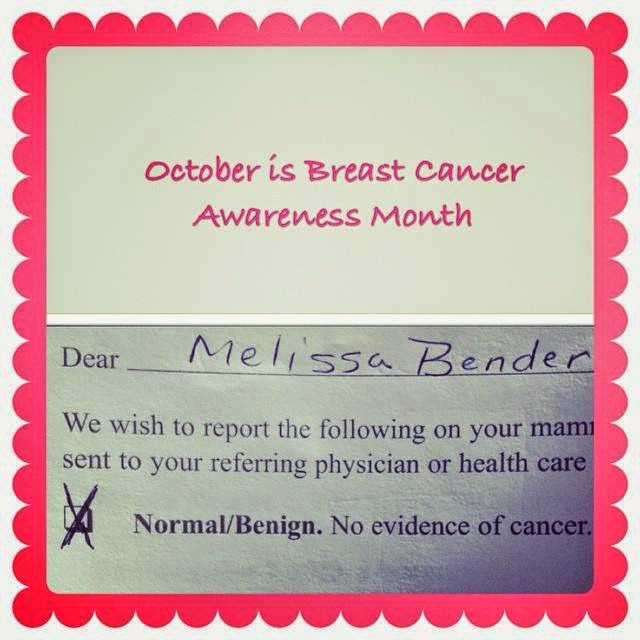
4. Complete Regular Screenings to Monitor Your Risk of Developing an Illness: Biometric screenings, Regular Checks of Blood Pressure, Complete recommended Cancer Screenings. 


5. Limit Exposure to Hazardous Materials: Avoid tobacco use, second hand smoke, and exposure to chemicals. 


Taking care of your body doesn’t only decrease your risk of dying, it also improves your quality of life. You’re worth the effort! What healthy habits have you incorporated into your life? If you’ve made a change or want to share you story comment below, or tag me on Facebook, Twitter or Instagram (@BenderFitness)

Sources:Up to 40 percent of annual deaths from each of five leading US causes are preventable

Potentially Preventable Deaths from the Five Leading Causes of Death — United States, 2008–2010

Everything You Need to Know About Protein Supplementation

Standard
Everything You Need to Know About Protein Supplementation
Written by: Jon Shoop


Hello Melissa Bender’s fans and followers! 

My name is Jon Shoop, I am a sports nutritionist and own some nutrition stores in the United States. Melissa and I have been working together for a couple of years with vitamins and supplements for her personal health and fitness. 

As many of you know, she really has enjoyed and benefitted from the supplements I’ve sent her and my recommendations on what to take and at what time of her daily schedule. I have been in the supplement industry for over three years with countless client success stories and thousands of people’s feedback on different supplements. With so many different opinions and thoughts on what to take and when, it can be extremely confusing and eventually can become frustrating. 

Melissa has asked me to start writing about some different topics for her blog to hopefully benefit all of you out there who may not know all that much about the numerous supplements on the market. This is my first blog post for her and I am excited about it! 

Sidenote: I am not a doctor, consult with your physician before starting any exercise or supplement regimen, especially if you have pre-existing conditions.


The first topic we wanted to cover is protein supplementation:


Protein is the main building block of muscle tissue. 

A complete protein source has all 20 amino acids in it. Protein can come from animal sources such as beef, milk, chicken, eggs, most protein powders, and every other animal you can eat. It can also come from plant sources such as peas, brown rice, and quinoa. All animal sourced protein has all 20 amino acids while the various different plant proteins contain some, but not all 20 amino acids. If you are looking for a complete protein source go with an animal sourced protein such as whey, casein, egg, milk, or beef. Or you will need to find a plant based protein that has a blend of different plants so as to combine their different amino acid profiles, such as a protein that contains both pea and brown rice will give you all 20 amino acids when combining those two plant sources.


Different people have different protein needs and requirements. 

Generally speaking, someone who is active and works out 3+ times a week typically needs a higher protein content throughout the day. Also, diet and goals play a big role in quantity of protein needed. 

For example, someone who is trying to lose weight would be sufficient at getting 0.8 grams of protein per pound of body weight. Let me illustrate further: a 200 lb man is trying to lose weight. He would be fine at getting 0.8 X 200 = 160g. So a 200lb man getting 160g of protein per day is a fine amount. 

For someone trying to gain weight, they should shoot for 1-1.2g of protein per pound of body weight. For example a 200 pound man would be good with: 1-1.2 X 200 = 200-240g of protein needed. You can use those numbers to find out your protein requirements. 

Another good rule of thumb I like to use is 1 gram of protein per pound of DESIRED body weight. For example, a 200 lb man wants to lose 50 lbs and get down to 150lbs, so he starts by making sure he gets 150g of protein daily.


I also have a few recommendations on when and what types of proteins to take. 

Proteins breakdown at different rates in our body’s digestive system. This is due to certain proteins being comprised of shorter or longer chains of amino molecules. A fast digesting protein for example is whey protein. A longer and slower time releasing protein source is casein.

Typically I am faced with two different scenarios of people who supplement protein:

The first of which is the person who just takes a protein shake after workouts and at no other time of the day. For this person, a whey protein isolate is a very good choice. The reason why this is a good choice for this individual who just has a shake after workouts is because after workouts we have a critical time frame to help our body’s recover and repair from what we just put it through for maximum uptake. To accentuate this time frame of recovery, a whey isolate protein is the best option. Whey isolate protein is very fast digesting and absorbs quickly into the bloodstream so this is why specifically whey isolate protein is best for this type of person.


The second scenario is of the person who has a protein shake for snack or meal replacement and/or after workouts. For this scenario I would recommend a blended (multi-sourced) protein. The first and main ingredient of the compound being a whey isolate protein, blended with some egg and casein protein in it as well. I call these blended proteins, “dual use” types because they are going to be good after workouts because of whey isolate as it’s main ingredient. The second aspect of this type of protein is its versatile function throughout the day when used as a meal replacement or snack. 

You as the consumer would want something more whole-food like that takes longer to breakdown and digest, keeping you more full for longer, as a normal meal would. Milk, egg, casein, and some plant proteins are all going to be slower digesting proteins than whey isolate. The slower the digesting the longer it will keep you full. So when a blended protein has whey isolate, egg, milk, and/or casein proteins in it, it makes a good option for someone who just wants one protein that is a good fit for all their uses.


I hope this was informative and helped clear up any questions you amazing people have in regards to your protein supplementation! The next topic will be up to you guys so ask away and I will pick one or more questions or topics to discuss in each article.

Thank you for your time, if you have any more questions feel free to reach out! Stay tuned for more articles.

Jon Shoop

If you liked this article you might also enjoy:


You can read more about Jon and his background in Nutrition, Health, Fitness and Competition Training at: 


If you would like to place an order or get more information please message him at: www.facebook.com/tnmansfield

If you have questions for Jon post them in the comments below, or on my Facebook page: www.facebook.com/MelissaBenderFitness

How to Eat Clean: 5 Tips for Success

Standard
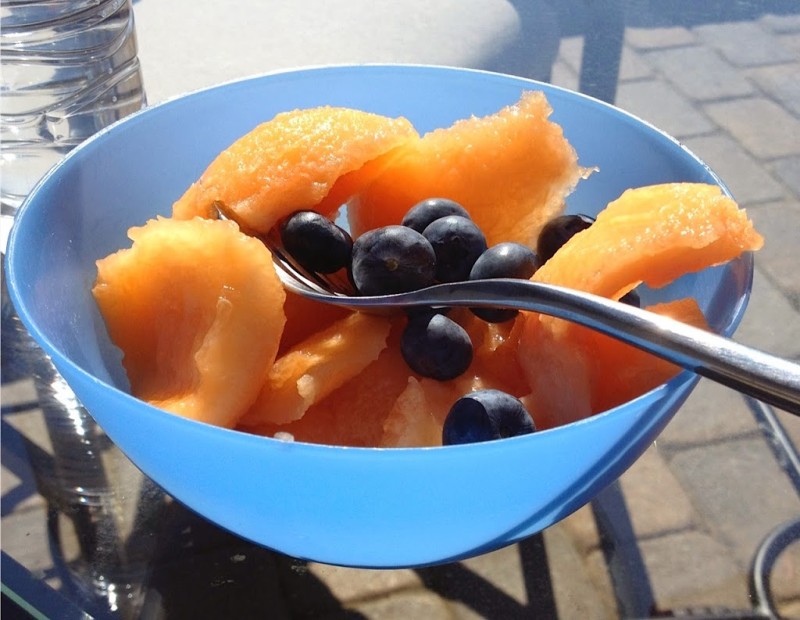
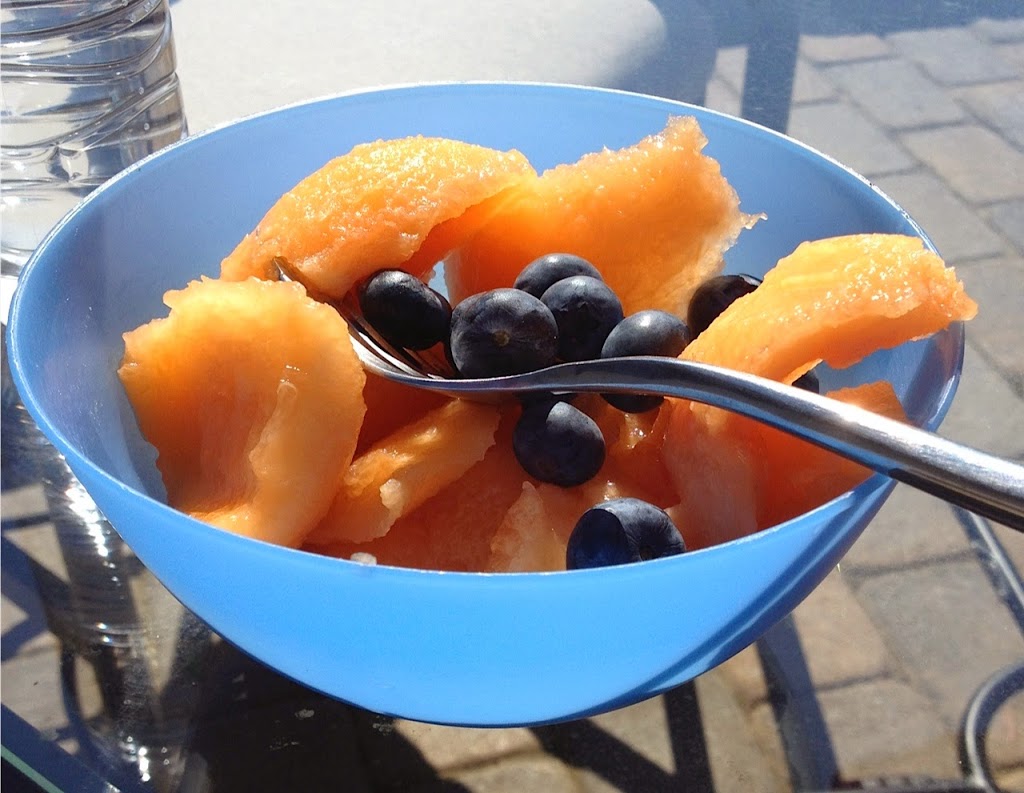
Clean Eating. It’s a phrase many people throw around, but when you talk specifics with people it turns out it means something different to everyone.  For example, to a body builder the fruit in the picture above might not be “clean” because it has sugar in it.  
 
Everyone approaches clean eating differently. If you want to lose weight caloric expenditure must be higher than caloric intake (this is true no matter what you eat. Binge eating “clean” foods is still binge eating.) I also want to stress the fact that there is no evil food. There are foods that are higher in nutrients and foods with low nutritional value. 
 
This is my approach to clean eating. The more closely I stick to eating clean the better I feel, and I see much more definition in my body. I have been re-focusing on incorporating these techniques into my diet, and I am already seeing results. Check out 5 Rules to Improve Your Nutrition and Diet for more healthy eating ideas. 
 
Clean Eating means eating food which is minimally processed, and as close to it’s natural state as possible. Eat whole foods: lots of veggies, lean meats, nuts and fruit. At it’s heart, this is the key to clean eating. 
 
This means that you have to put a little bit more preparation and planning into your food choices. 
 
1. Prepare: If you are hungry you often want to grab the first thing that’s available. Keeping healthy options on hand will improve your chances of success. 
  • Cook in Bulk: Prepare extra food ahead of time. On Sundays I cook a large baking dish full of chicken (sometimes fish), and a dish full of vegetables. I can use these in my lunch, on a salad, in pasta, or as an easy addition to any dinners I might cook during the week. 
  • Plan for Healthy Snacking: If you are a snacker keep food items on hand that you enjoy and can eat in appropriate portion sizes. Raw Almonds or other nuts, Fruit, Greek Yogurt, etc. You can pre-portion out ingredients for your favorite smoothie.
  • Choose Foods that you Enjoy: You are not going to stick to a meal plan if you don’t like what you are eating. Don’t be afraid to experiment with healthy variations of your favorite recipes. Pinterest can be a gold mine of fun and healthy recipe ideas. You can check out my “Healthy Delicious” Pinterest Board here for some fun ideas. 

2. Portion: Making healthy choices doesn’t make you exempt from eating realistic portion sizes. Just because an item is healthy doesn’t mean it’s low in calories. Two of my favorite foods in the world are Natural Peanut Butter and Avocados. Both foods have tremendous health benefits. Neither is a low calorie food. 

  • Check Portion Sizes: When you are first getting used to portion sizes don’t be afraid to measure. Keep in mind that measuring is a tool. If measuring food is a trigger to compulsive eating behaviors for you, please skip this one. Having a healthy relationship with food is more important than having an exact portion size. 
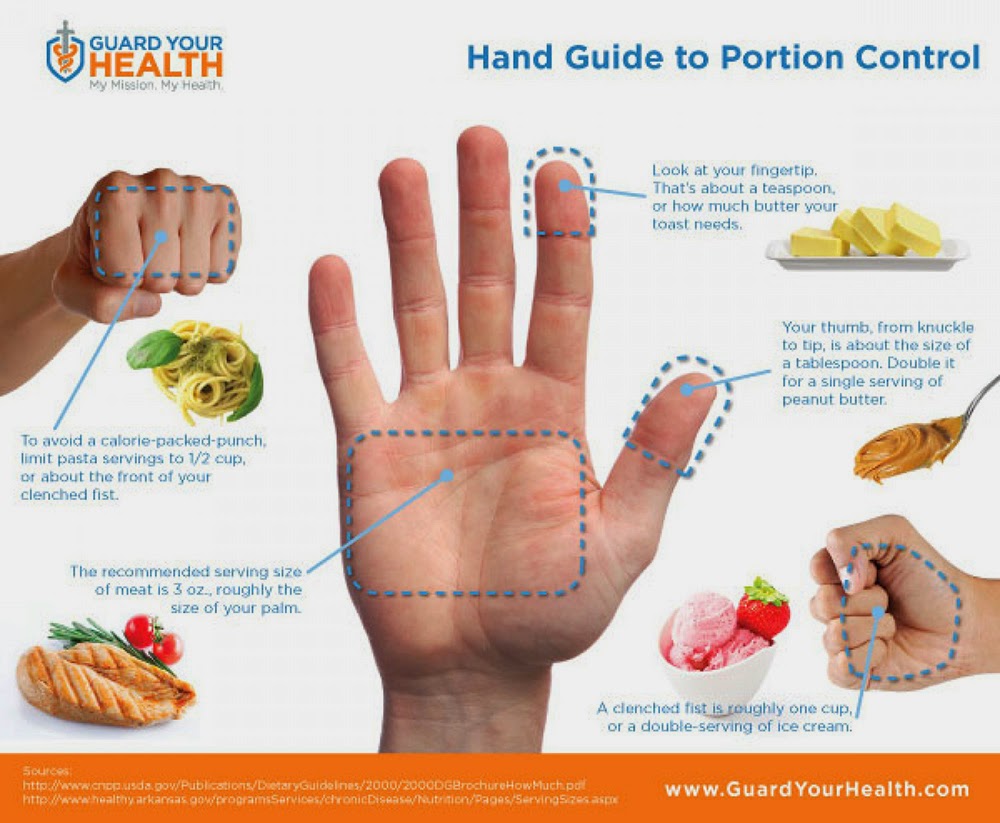
  • Approximate Portion Sizes: Meat/Protein should be around the size of your palm, or the size of a deck of cards. One serving of cheese is about the size of your thumb. Vegetables should fill about half of your plate or two cupped hands. 
 
3. Check Labels: Take a quick peek at the ingredient list. I also check the sugar and sodium content of pre-packaged foods. Many otherwise healthy foods are overloaded with additional salt and sugar. (This is especially true of dried fruits and trail mixes. Dried fruit is already high in natural sugars, and many companies add significant amounts of sugar to the fruit during the drying process.)
  • Look for ingredients you recognize. For example, I prefer Peanut Butter where the only ingredient is Peanuts.
  • Ingredients are listed in order of quantity. Whichever ingredient is listed first is present in the largest quantities. If sugar is the first or second ingredient it’s a red flag to me that the food item is not as healthy as it may seem. 
 
4. Organic/Gluten Free/Grain Free does NOT Automatically Mean Healthy: Just because it has a label, doesn’t mean it’s healthy or low calorie. Cookies are still cookies, even if they are organic and gluten free. It doesn’t mean you can’t enjoy them, but remember the term “organic” or “gluten free” does not make it a magic cookie. Keep your portion sizes reasonable. 
 
5. Stick to the Basics: Incorporate protein, carbohydrates, healthy fats, and proper hydration into your diet. 
  • Try to include a vegetable at every meal. For me, the easiest and fastest option is fresh spinach.  I put spinach in salads, smoothies, wraps, sandwiches, pastas, spaghetti sauce, or as a side dish. 
  • Eat Carbohydrates: They are necessary for your body and brain to function correctly. You can get your carbs from fruits and vegetables, from grains or from a combination of both. Food=Fuel. 
  • Eat Lean Protein: Protein helps keep you full throughout the day and helps your body build muscles. 
  • Eat Healthy Fats: Healthy fats have been scientifically proven to improve endurance during workouts. They also help your hair and nails look their best. Healthy fats decrease your risk for a plethora of diseases (heart disease, stroke, and hypertension just to name a few!) Olive oil, avocado, coconut, nut butters, and nuts are great sources of healthy fats. 
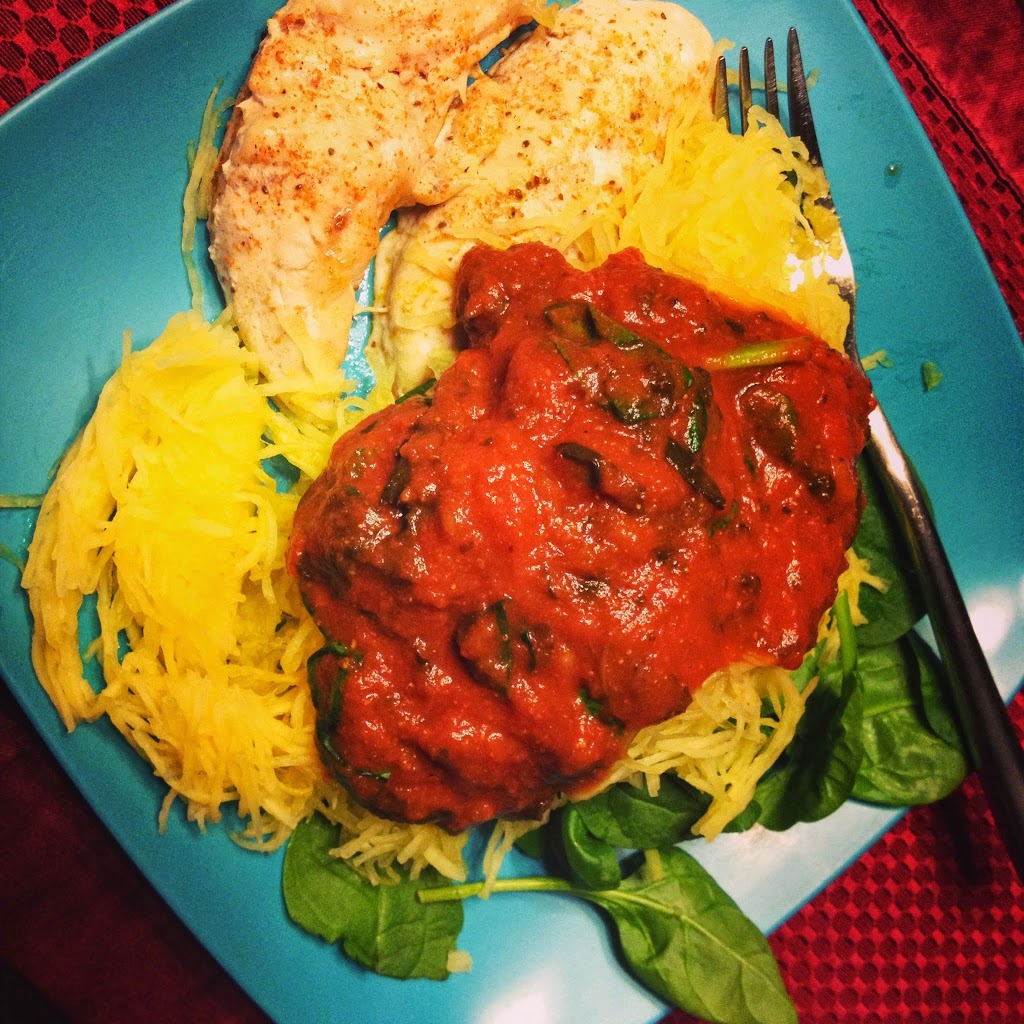
Spaghetti Squash over Fresh Spinach with Tomato & Spinach Marinara Sauce and Chicken.

There is no secret to healthy eating. The trick to it is finding a healthy approach that works for you. I don’t eat whole foods all the time, but I make sure they are the foundation of my diet. Today I ate a donut (gasp!) and I don’t feel guilty, or that I had to “earn it” or “work it off.” I don’t eat donuts every day. I do eat vegetables, fruits, nuts and lean meats every day. I exercise and try to make healthy choices.

Sneak Peek Workout Tutorials! Quick Exercises you can Add to Any Workout Routine

Standard

Hi Everyone!

I have been sharing Sneak Peek Workout Tutorials on my Instagram account for a while now. It’s about time that I put them together on my blog. 

These are some great exercise moves that you can add to any workout routine, or do alone as an exercise challenge.  

I separated the different exercises into: Core/Abs, Lower Body, and Full Body/Compound Movements.  Have fun, and focus on good form!

Enjoy!
Melissa

Abs/Core:


Side Plank Double Kick
Side Plank Elbow Tap Hip Lift


V-Up Hop  Spiderman with Stability Ball 

Twisting V-Up

 Oblique Plank 

Hip Lift Hook

 Crunch and Tap with Dumbbell

Legs/Lower Body:

Stability Ball Pull (Leg/Hamstring Curl)


Plank Lunge ReachWarrior III Crunch

Plie Jump with Lateral Lift


Squat to Lunge 

  Elevated Hip Thrust 

 Warrior III Kick 
Prone Heel Tap

 Goddess Twist

 Pendulum Squats 


Romanian Deadlifts

 Curtsy Lunge 

Full Body/Compound Movements:


Man Maker Burpee 

 Burpee Tuck Jump 

Warrior III Curl 
Table Top Knee Touch 

 Down Dog Hop


Pull-up with Hanging Leg Raise 


Plank Crunch Squat 
Bear Complex 
Chatarunga  
Plank Down Dog to Knee Drop Plank Chatarunga Hold Plank Pop Up 

5 Rules to Improve Your Nutrition and Diet

Standard


Hi Everyone, 

The new 30 Day Challenge starts tomorrow. We are going to be doing some awesome workouts! To get the best results from your workout program it’s important to pair them with a good nutritional plan. 

So what does a good nutritional plan look like? It varies a bit from person to person. Your nutritional plan should include foods that you enjoy. 

That said, there are some aspects that should be included in your diet. Don’t be afraid to explore and figure out what works best for you.  Here are some rules that I try to stick to when deciding what to eat. 

1. Learn to Recognize Portion Sizes: This is by far the one I have the hardest time sticking to! I eat several meals (5-6) throughout the day, so it is especially important to be aware of portion sizes when you do this. Otherwise you end up with 5-6 huge meals and an excess of calories. 

If you aren’t sure what a portion size looks like measure it. Three foods that I find shocking when measured are cereal, granola and trail mix. I keep a little sandwich baggie with a 1/4 cup portion size inside my bag of trail mix and granola. It’s an easy visual cue to show me what a portion size is with these foods (otherwise I might eat them 3-4 handfuls at a time). You don’t have to do this with every food, but if there is something you know you tend to overeat measure it out until you learn to recognize the portion size. 

Remember, you don’t have to limit yourself to just one serving with every food, but being aware can help you make healthy choices throughout the day. 

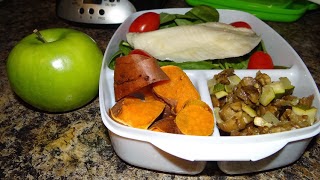
Spinach salad with Fish and Cherry Tomatoes, Sweet Potatoes, Eggplant and Zucchini, Apple


2. Eat Vegetables: Incorporate them into all of your meals. When you fill your plate, aim to make half of that vegetables. I start almost every day with an egg sandwich with fresh baby spinach on 100% whole wheat bread. Sometimes I add hummus or peanut butter (yes, I do love PB with a lot of strange things), sometimes I skip the bread and have eggs with fresh spinach.

Vegetables are full of nutrition and fiber, and most of them are naturally low in calories. The more colors you incorporate into your day the bigger the variety of nutrients you are consuming. Vegetables will help keep you full longer, and help prevent overeating. An added bonus of crunchy vegetables (carrots, celery, etc) is that they take longer to chew, which can help your body recognize satiety (fullness) signals more quickly. 

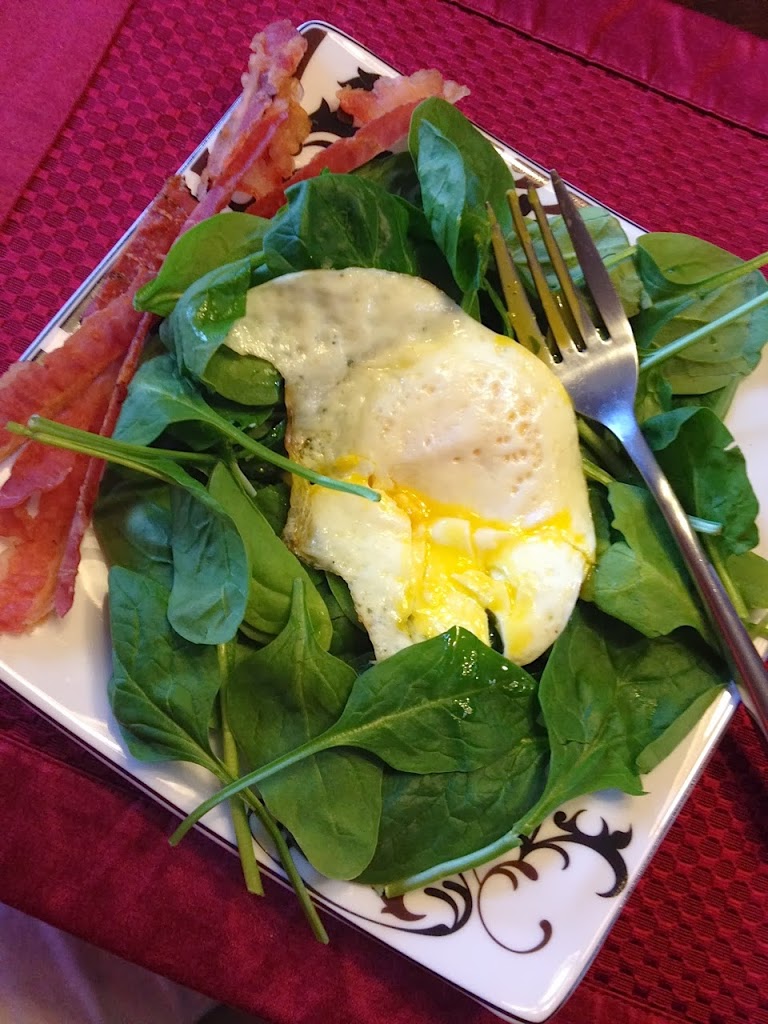
Egg, Spinach and Bacon

Some Recipe Ideas: Apple OmeletVegetable Grilled Cheese, Chicken Vegetable SoupVeggie Wrap, Green Smoothie, Chicken Vegetable Rice SoupGrilled Eggplant Sandwich, Filling Green Endurance Smoothie

3. Eat Protein: Protein will help your muscles grow stronger and repair more quickly. It also helps keep you full and satisfied throughout the day. Research is variable on the amount of protein you should consume per day. However, most people trying to build lean muscle aim for 1 gram per pound of desired body weight. 

 
One serving of meat should be approximately the size of your palm or a deck of cards. Leaner cuts of meat are typically lower in saturated fat. 
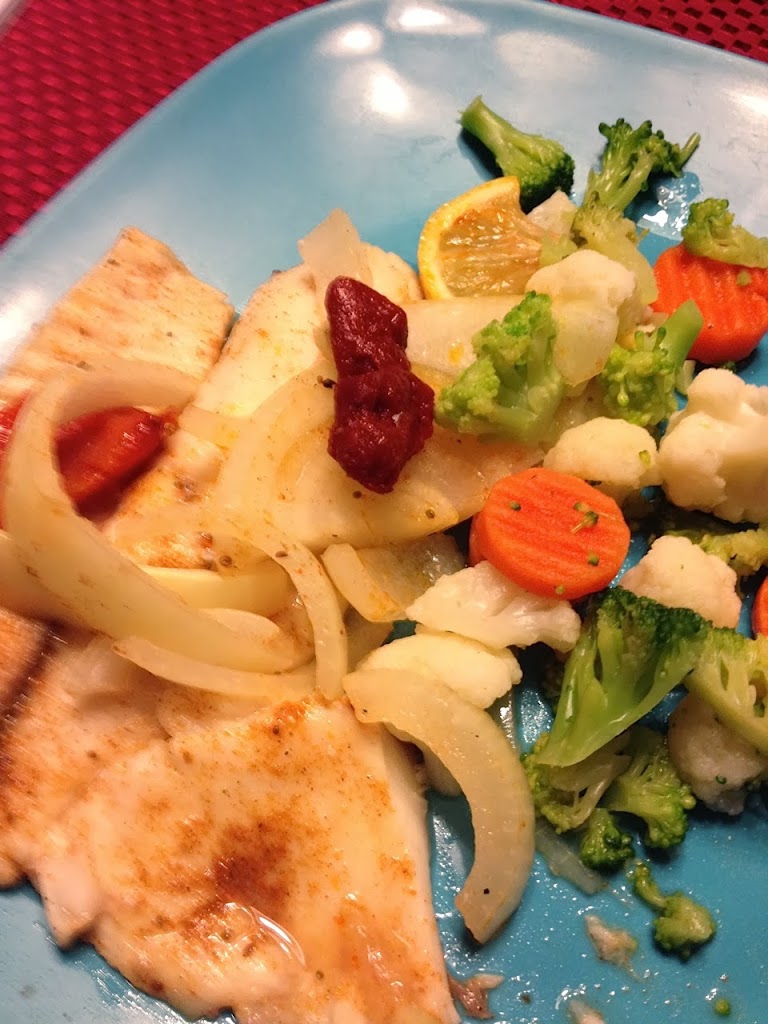
Baked Fish and Vegetables

 
4. Satisfy Your Sweet Tooth: Whoa! Did I really just say that? I sure did. I keep dark chocolate chips in my freezer at all times. If I have a major sweets craving I have a few chocolate chips (remember rule #1 about portion sizes!) 

Remember, you can satisfy your sweet tooth while eating clean. Get creative, and try to steer yourself closer to fruits and away from overly processed sugars. 

If you let the cravings build without ever appeasing them it can lead to binge eating of very unhealthy items. Also, a “diet” will only work if it is a lifestyle change that you are able to stick to. For most of us that means we need to incorporate in some sweets. Don’t be afraid to try some healthy versions of your favorite dessert. You just might like it!

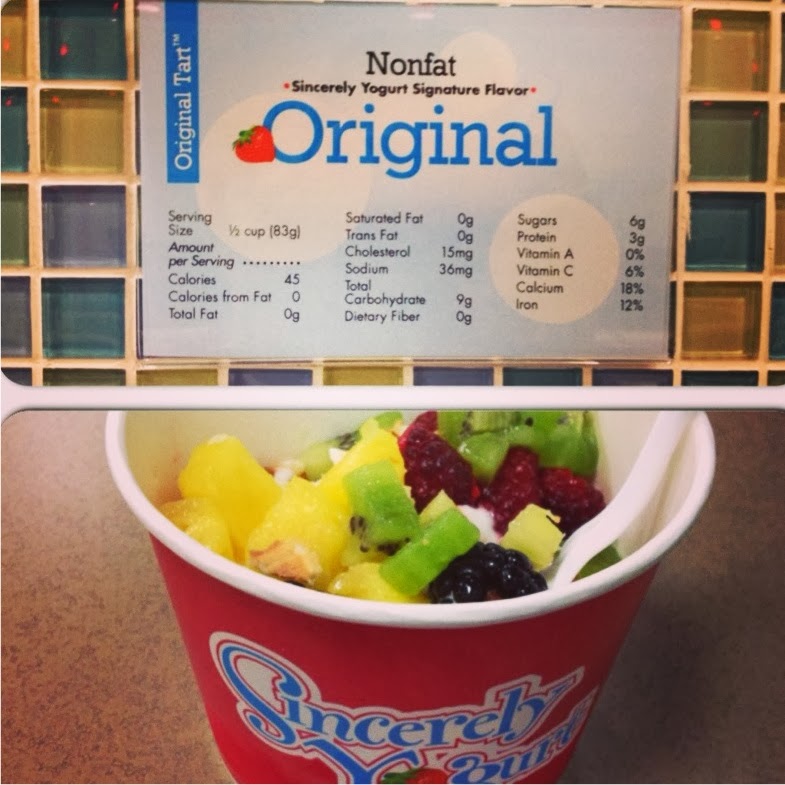
I’m a big fan of Sincerely Yogurt. I stick to the Original Flavor, which is refreshing and delicious, and I top it with fresh fruit. Jesse usually gets the chocolate. 


Some Recipe Ideas: Peanut Butter Oat Stuffed Baked ApplesProtein Chocolate Frappucino, Chocolate Peanut Butter Cupcakes, Frozen Banana Bites

5. Log Your Food: Try keeping a written or photographic log of your food. Snapping photos of everything you eat, or writing it down can help you be aware of what you are putting into your body. It can also help you identify if there are certain foods that trigger you to over eat. On the flip side, it can be a great tool to tell you when you aren’t eating enough. Eating to much and eating to little are BOTH detrimental to your health and fitness. Food is fuel for your body. To little food and you catabolize your muscle, which increases your body fat percentage. To much food and you become sluggish and consume extra calories which can lead to weight gain. 

Remember, contrary to what you can find on Pinterest, Calories are NOT little creatures that sew your clothes tighter in the night. Calories are simply a measure of energy. 1 Calorie = 4.184 Joules. Calories measure the amount of potential energy that a food item has. It takes your body a certain amount of energy just to pump your blood! One gallon of gasoline has about 31,000,000 calories. You wouldn’t fill up your gas tank with gasoline, and then start pouring the gas into the back seat. You also wouldn’t be able to drive your car on an empty tank. Fuel your body with what it needs. 

This doesn’t have to mean counting calories! Many people find counting calories useful, but it can become something that people get hung up on or start doing compulsively. If you are one of those people it’s probably better to just skip number 5. Having a healthy approach toward food will get you results faster, and keep you saner than counting calories. I log my food at the end of the day when I am done eating. That helps me keep the log as a tool for learning, and not something to get fixated on. 

I hope you find these tips helpful! See you tomorrow for Day 1 of the new 30 Day Challenge!

Melissa


How to Use a Foam Roller to Decrease Post Workout Soreness

Standard


Hi Everyone!

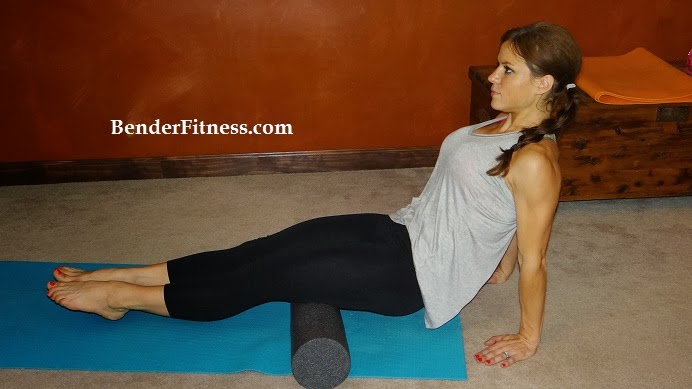
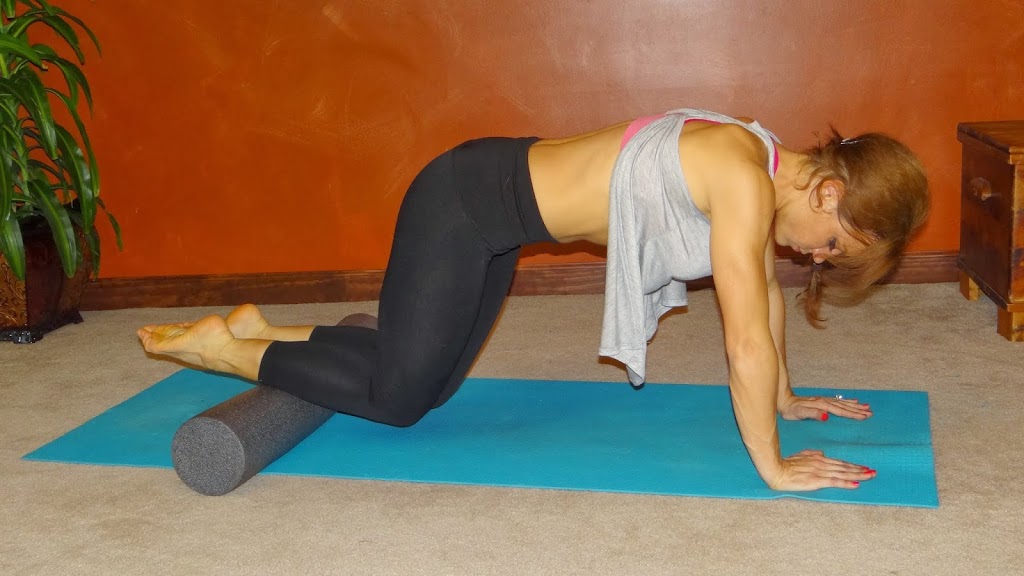
In this video I demonstrate how to use a foam roller to decrease pain in your shins, hamstring, calves, quads and shoulders. 

Foam rolling is a great way to give yourself a deep tissue massage. Foam rolling can breakdown scar tissue and adhesion’s that build up within your muscles, increasing blood flow and improving muscle flexibility. Foam rolling immediately after a workout, and following it up with static stretching can help prevent the build-up of scar tissue in your body. 

Improving your blood flow does more than speed up the healing process, it also increases your bodies abilities to provide oxygen and nutrients to your body. It helps prevent shortening of muscles which can lead to bio-mechanical issues and repetitive strain injuries.  

This simple tool can improve the speed at which you heal, and help prevent injury, and you can reap the benefits with as little as 5-10 minutes of foam rolling. 

The first time you try it it might feel painful. Try to pause on areas that feel tight. These are the areas that need your attention most. 

The benefits of taking care of your body are plentiful, so take a little time for yourself and foam roll. 🙂

Melissa

Training to Race: What Kind of Runner are You?

Standard


Long runs give you a lot of time to think. As I was running, and trying to hit a specific pace for the first 5 miles of my run (which of course ended up being on a steady incline) I had a lot of time to ponder the type of training that I respond to best. 

Having had the opportunity to assist in coaching a high school cross country team, and watching Jesse and Shep coach together I have noticed that training needs to be individualized. 

One plan does not necessarily fit all. As an Occupational Therapist this idea is very familiar to me. All day long I modify different tasks to help people achieve their highest level of success and independence. This carries into my running and coaching. 

So what type of runner are you? You might recognize yourself in one of the descriptions below, or you might like to try out different methods and see which suits you best. If you are training for an event you should always incorporate easy runs, tempo runs, speed work, and hill workouts, but how you approach this workouts will vary. You may find that at different times in your training, the approach you prefer fluctuates. 

Pace Oriented: Many people respond to this type of training. This type of runner likes to know exactly what paces to hit, what their splits should look like, and focuses on achieving negative splits in their races (running the second half of the race at a faster pace than the first half). These runners often demonstrate an uncanny ability to mentally crunch numbers and vacillate accurately between miles, kilometers, meters and yards. They know exactly what their pace should be in each measure in order to hit their goal time in a race. 

If this describes you, the best way to structure your training is based on these goals. You might like Runner’s World’s Pace Calculator and Pace Wrist Band Creator which tells you what your times should be for each mile to hit a given goal time. 

Training: Incorporate pace related goals into all of your training. You should know your paces for the following:
 Easy: (talking) pace.
Race pace: The pace you can maintain for a race. 
Tempo pace: Comfortably hard, but sustainable for an extended period of time, typically 3-6 miles. 
VO2 Max pace: Your hardest working pace. The pace at which you are breathing hard and taking in the maximum amount of oxygen. 

Each type of run should have a numerical value/pace attached to it. 


Effort Oriented: Some people respond better to training which focuses on their perceived effort during exertion. Studies have shown that the RPE (Rate of Perceived Exertion) is a very accurate rating scale which can be used individually to determine how hard you are working. The Borg RPE scale is rated up to 20, however, a simpler scale of 1-10 is generally sufficient. 

Effort oriented runners will often focus on maintaining a certain level of effort in their races. For example, when running up hill their pace slows down as the level of effort goes up. Similarly, when going downhill they don’t relax, they keep their physical level of effort the same. 

This type of runner may respond well to training with a heart rate monitor, or may prefer to rely on their own physical experience of the pacing. 

The RPE scale is as follows:

0-1 No Effort. 
2-3 Light Exertion (stretching/warm up). 
4-5 Medium Exertion (you should still be able to talk comfortably). Easy Pace running. 
6-7 Moderate Exertion (harder breathing, able to carry on conversation in shorter bursts). Comfortably pushing, you are working hard, but know you can go harder. It feels good to know you don’t have to go harder. 
8-9 Hard Exertion (breathing heavy, able to say only a few words at a time. You should wonder how long you can maintain this pace due to increased level of effort). Race Pace. You are working hard, but you can maintain this pace/effort. 
10 Maximum/Hardest Level Exertion (as hard/fast as you can go. You should not be able to speak. Typically you can only maintain this pace for up to 1 minute). Sprinting. 

Training: Focus your training based on effort. Although you may still have a time goal for a specific event and know your goal paces, maintaining a certain level of effort is more important to your success than pushing to hit your miles at a specific time. 

Competitive Spirit: This type of runner responds best to running with a partner or group with a similar level of ability. In races this person is motivated to push as hard as they can to beat those around them. Training with others motivates them to run harder and faster so they can always be their best. 

Training: Train in a group, but be sure not to over do it! Easy days should still be easy, not a competition for who has the fastest easy pace. 🙂 

So what type of runner am I? 

I prefer effort based running. Time based goals make me feel anxious. If I don’t hit my goal times I feel like I failed at my workout. Instead of getting motivated, I become discouraged. 

I ran the same course 2 times over the course of a few weeks. The first time I did it I was aiming for a comfortable pace (based on effort) and I felt amazing the entire time. The second time I did it I had a pace goal: hit a certain pace for each of the first 5 miles of the run, followed by 5 miles of recovery. 

The results: in the goal pace run my average pace was 25 seconds slower than on my easy effort paced run!

Why? For me the problem was mental, and it happens pretty consistently when I focus exclusively on time. 

When I focus on effort my thought pattern is: “You can hold this pace forever!” or when the watch beeps that I ran a mile “That was easy. You can do that again 5 more times no problem!” 

When I focus on time my thoughts go something like this: “Oh God! I need to pick up the pace or I’m not going to hit my time!” Look at watch. “I’m not going to hit it this time, what the heck makes me think I can do this pace for 13.1 miles if I can’t even hit it on this mile in practice.” The anxiety affects my breathing, and takes away the joy and feeling of strength I normally get from running. 

Note: As with all of my workouts variety is the spice of life. I like to switch up my training, and try different goals. Don’t be afraid to challenge yourself in new ways. If one way isn’t working for you or giving you the results you are looking for don’t give up! I will continue to have pace based goals in some of my training, and I will get better at achieving them. I don’t want to lose my love of running so I will use more than one training technique. 

Happy Training!
Melissa


The Secret to Achieving Your Goals….Determination, Refusal to Give Up, and a little Planning

Standard


Hi Everyone,

I was reading about Diana Nyad’s successful 115 Mile swim from Cuba to Florida today. This was her fifth attempt. She did at the age of 64, what she was unable to achieve on her first try at 28. Fitness is a lifestyle with no age limit. It takes work and time. It is worth it. Check out the article about Diana’s success here

There is more to this story than physical achievement. There is determination, commitment, refusal to give up, and strength of spirit that is not dimmed by embarrassment, shame or disappointment. 

Did the first 4 attempts to complete this swim hurt? Physically, she survived Jelly Fish Stings, asthma attacks, cuts, scrapes, cramping, and on her fifth trial swimming for 53 hours. Pain is a given, and after the first four attempts and 35 years Diana knew it wouldn’t get easier. 

The mental fortitude it takes to attempt something you know will not be easy, and that you may fail is difficult in the best of conditions. Diana undertook this knowing that the world was watching. 

So which of your goals are you putting off due to fear of failure, embarrassment, or difficulty? 

Make a list of these goals. (If you have trouble staying on task or finding focus select one goal to focus on at a time. 

Now write down two actions you can take toward making each goal a reality. Write down two blocks to your goal. What has stopped you from reaching your goals so far? Finally, write down two ways you can overcome whatever is blocking you. If you want to share your goals you can do so in the comments section below, or on my facebook wall

Use this list as a plan/guide to achieving your goals. Update it as needed. Don’t let anything (even yourself) stop you. 

I have a lot of interests and goals. You all know most of my fitness goals, so I am going to share a goal from another area of my life. I love singing. I used to sing constantly, and record songs for fun when I was bored at home. I wanted to lay on a piano and sing blues songs. 🙂

I rarely sing anymore. (Don’t worry, this blog will still be about fitness, not singing!) When I see a great musical performance there is a part of me that hurts because I miss it. 

Goal: Start singing again. 

Actions: 
1. Sing at least one a Capella (without music) song per day. 
2. Buy a recording program for my computer. 

Blocks:
1. Fear. I have been told a million times that my voice is to operatic/not mainstream. 
2. I don’t play an instrument, so my song writing is limited to vocals and lyrics.  

Overcome:
1. I’m singing for my own pleasure, and recording songs because I enjoy it. Also, I generally don’t care what other people think as long as I am happy with my own choices. This should extend to singing as well. 
2. I don’t need to play an instrument to enjoy singing. This is not really a valid excuse. However, I do want to learn to play guitar and piano. Those can be separate goals. 

Whatever your goals are, fitness or otherwise, you can achieve them. It may not be easy, but you can do it if you put in the time and effort. Don’t give up, and don’t stop doing the things you love. Those are the things that bring happiness and passion to your life. 

Melissa

PS I attached links to a few songs I recorded several years ago. Listening to them reminded me of how much I loved recording songs. “Wanting Me” is a duet/collaboration I did with my best friend from High School, Lenny Boss. “Spider Webs” is an a cappella cover of my favorite Joan Osborne song. “At Last” is one of my favorite classics by Etta James. 


Bean Salad: Easy, Quick and Healthy

Standard

Hi Everyone!

I was in a rush the other day so I threw together a healthy, bean and vegetable salad to keep in my refrigerator as a quick side (or meal). 

I used a combination of canned and fresh vegetables. If I had more time I would have run to the grocery store and used all fresh vegetables, but I needed something I could throw together quickly. 

You can be creative with this recipe, and use any vegetables you like. Usually I throw in some black olives, but I didn’t have any on hand. 

Vegetables should make up approximately 50% of your meals. If you’re not getting that amount it helps to start planning ways to add vegetables to your diet. Remember, vegetables are high in fiber, so you will need to increase gradually to prevent stomach discomfort. 

Ingredients: (All canned items can be substituted with fresh veggies)
1 can snow peas
1 can cut green beans
1 small can sliced mushrooms
1 can sliced carrots
1 can kidney beans
3 Roma tomatoes (diced)
1 cucumber (cut and sliced in half)
Fresh thyme, basil and oregano
3 tablespoons Italian Dressing (or flavor to taste)

Optional ingredients:
Olives
Feta Cheese
Salt and Pepper

Combine all ingredients in a large bowl. Stir or shake (I use a bowl with a snap on lid and shake to ensure the ingredients are combined, and everything is coated with the spices). 

Packing Lunch for Healthy Success

Standard
Hi Everyone,

I am giving you a sneak peek into my lunch box for tomorrow. This meal took less than 5 minutes to put together (the chicken was left over from dinner last night). 

Planning your lunch, and putting it together the night before can help you successfully make healthy choices even when you are on the go. You are ensuring that you have something healthy that will give you energy for the day, and prevent mindless snacking, or poor meal choices. 

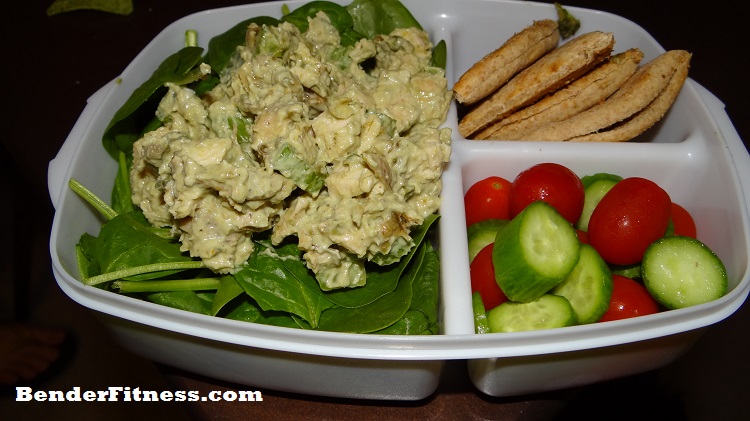
For lunch tomorrow I am having Avocado Curry Chicken Salad, fresh spinach, mini cucumbers, cherry tomatoes, and a whole wheat sandwich thin. I will also bring an apple, and plenty of fresh water. You can click on the link above for the recipe. If you’re not a fan of spices, leave out the curry. 

A little bit of preparation will save me time and stress tomorrow morning when I am heading out to work. Plus, I know that I have a healthy and delicious meal that will give me energy during the day. 

I would love to see what you are packing in your lunch! Post a picture on my facebook page: www.facebook.com/MelissaBenderFitness
See you tomorrow with a new workout!
Melissa

Veggie Wrap: Fast, Healthy, Delicious

Standard
Hi Everyone!

I have been veggie obsessed lately! Salads, sandwiches, wraps. I just can’t seem to get enough veggies. 

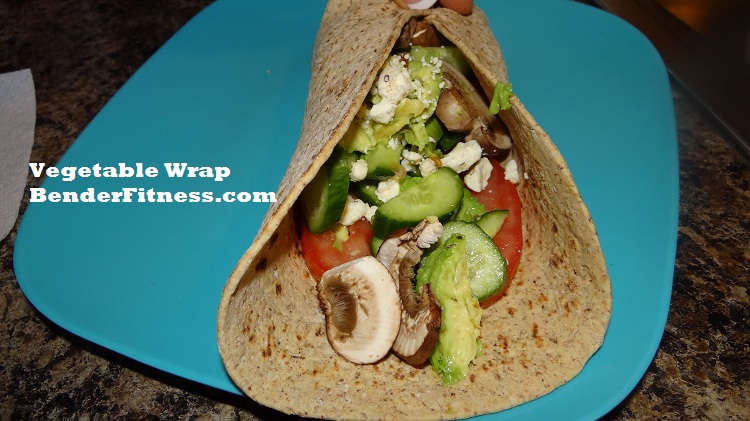
In honor of Earth Day I wanted to share some vegetarian recipes. This was my lunch yesterday (and very similar to my lunch and afternoon snack today!)

It’s easy, quick, healthy and filling. You can use any vegetables that you want, and if you leave off the feta it’s vegan. 

Ingredients: 
-Wrap of Choice (this is also delicious on Ezekial Bread or whole wheat)
-Sliced Tomato
-Baby Bella Mushrooms (sliced)
-Diced Avocado (hummus can be substituted)
-Mini Cucumber (sliced)
-Tomato Basil Feta Cheese (optional)

*I would have added fresh baby spinach, but I was out. Artisan Lettuce is also good. 

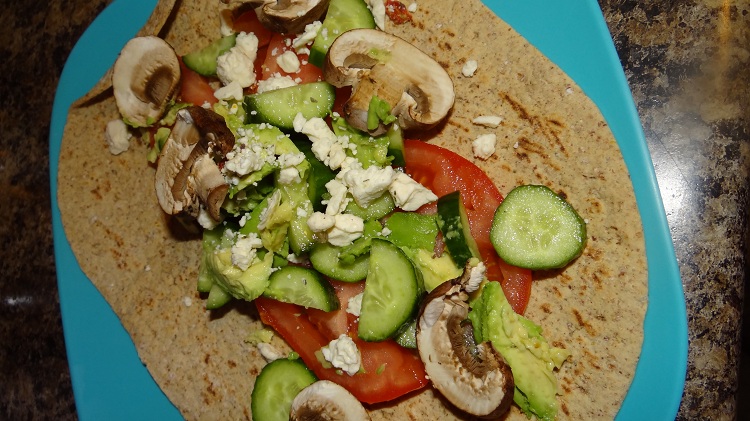
Add all of the veggies to your wrap, fold up and enjoy. 

Today I brought a large salad to work with most of the same ingredients, a whole wheat sandwich thin, and a triangle of spreadable cheese. I ate half of the salad for lunch, and had the rest on a sandwich with the cheese as an after work snack. It was delicious, satisfying, and best of all my stomach felt great after eating it! (As someone with food allergies/sensitivities this is a huge bonus!)

Enjoy!
Melissa

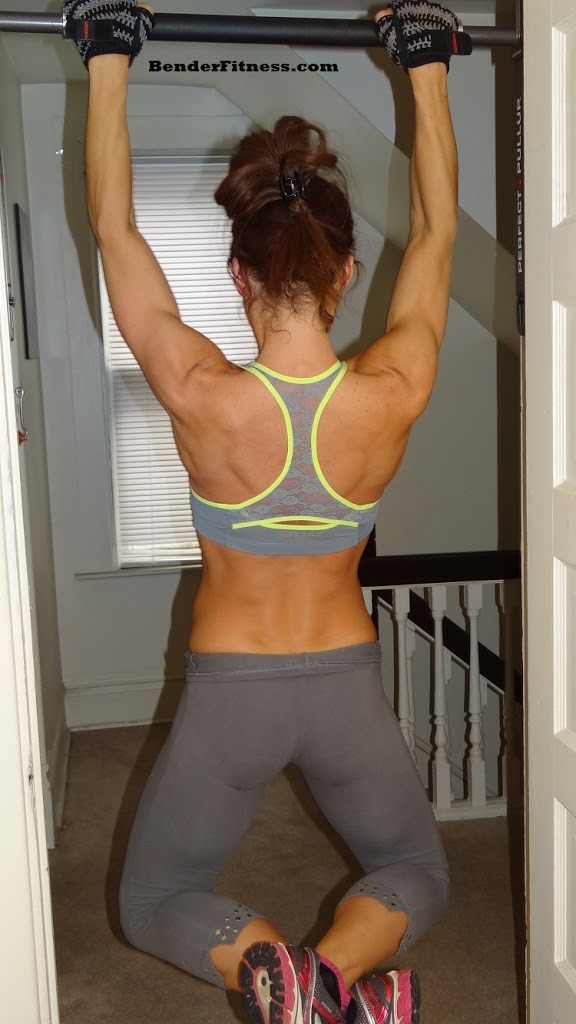
Building Up to a Pull-up/Increasing My Pull-Up Reps

Standard

Hi Everyone!

There will be a new workout tonight. In the meantime I wanted to share with you my pull-up routine. One of my New Year’s resolutions was to increase the number of pull-ups I can do consecutively. 

The video explains my routine, and also shows how you can build up to a pull-up. 

I accidentally deleted my first version of this video, so I immediately had to re-film. My arms were a bit tired for the second time through, but it was a nice challenge. 

You can also use an assisted pull-up machine at the gym, have a friend boost your legs, or place one foot on a chair to give yourself some additional support as you gain the strength necessary to do pull-ups. 

For years I thought it was impossible for me to do a pull-up. From the time I turned 12 until just a few years ago I would hang from the bar writhing, and struggling to pull myself up to no avail. With effort and training you can do it! Being able to lift your own body weight is an important and functional skill. Just think of all the action movies where people find themselves hanging on the edges of cliffs or buildings. Hopefully you won’t find yourself in that position, but if you do you want to be able to pull yourself up! 😉 

Have a great day! See you tonight with a new workout!
Melissa

PS Pull-ups are also great for ab development!

Setting Goals for Success: Fitness and Life

Standard


Hi Everyone!

I have mentioned in previous posts that I have several goals for this year. As the New Year started I found myself thinking of some of the things I would like to see happen in 2013. I am a firm believer in “putting ideas out in the world.” By that I mean, if you can’t imagine the possibility, you can’t make it happen. Write it down somewhere, tell someone, make a mental note…all of these are ways of putting your ideas out into the world. 

I believe in setting many small goals along the way to your big goals. If you understand (and celebrate!) all the stepping stones that lead to your goal you are much more likely to succeed. 

If you are following Josh’s journey in my Fitness Transformation Workout Series, you know that I had Josh start with a fit test. One of the goals I have set for him is to improve his number of reps when we repeat the fit test. He has also set goals like “drop a pants size, wear a medium shirt” and more. You can set a goal to touch your toes, or walk up a flight of stairs without getting winded. All of these “small” steps are big accomplishments on the way to your goal. 

These are the same techniques that I use to achieve goals that I set for myself. If you want an example check out Running Made Me Cry…How I Became a Runner

If you set goals solely for the long term you may be setting yourself up for failure. For example, if your long term goal is to lose 60 pounds, and you have “only” lost 5 pounds you might feel like you will never accomplish your goal. 

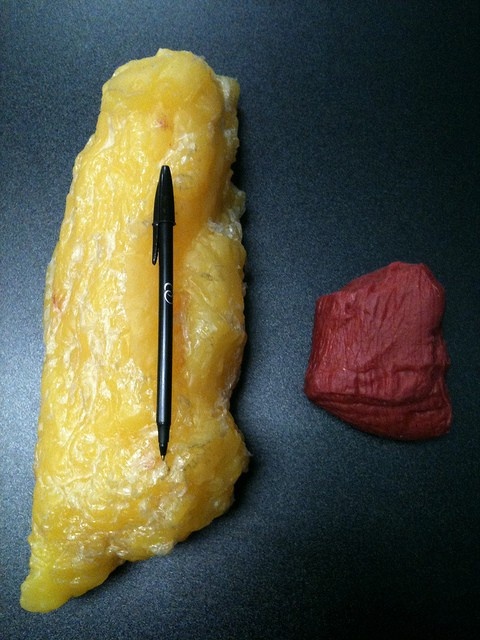
First, reality check. If you are exercising and putting on muscle while you lose weight a 5 pound weight difference can be MAJOR. Look at this photo:

5 pounds of fat vs. 5 pounds of muscle.

That 5 pounds is an accomplishment to be proud of! Especially if you are gaining lean muscle mass, as you lose fat. The scale might not change as quickly as it would on a crash diet, but your body composition and metabolism are making major positive changes. The physical results from crash dieting cause negative effects in the long term, and damage your metabolism. Slow weight loss is preferable because that typically means you are losing fat instead of muscle. Crash dieting generally decreases your lean muscle mass, and increases your body fat percentage. 


Take a look at the picture above. If you lose 5 pounds of muscle on a crash diet you are damaging your health, increasing the percentage of fat on your body, and decreasing your level of fitness. 

Some of my fitness goals for this year:
1. Compete in a Fitness Competition
2. Share more about my eating habits
3. Share more recipes
4. Eat less processed foods
5. Set a new 5K PR (personal record)
6. Improve my Flying Pigeon Yoga Pose
7. Write a book with my best friend
8. Set a new PR for pullups
9. Try a new fitness class
10. Spend more time outside (rock climbing, hiking, running, etc)

Those are just a few of my goals, but I hope to be able to share my successes with these goals along the way. I’d love to hear about your goals and successes, so comment here or leave me a message on my facebook page: Melissa Bender Fitness

Thanks for helping to motivate me to continue my journey for a fit, happy and healthy life! I hope I can return the favor. 🙂

Melissa

Have You Out-Run Your Running Shoes?

Standard

One of the greatest things about running, is that you don’t need a lot of equipment to get started. You need your body, and a pair of shoes. If you’re a female a great sports bra is another must have, but I will save the details of the best running sports bras to a future post. 

Shoes provide the foundation that you run upon, so it’s very important to be able to recognize when you are running on worn out shoes. What are the signs? 

1. Mileage: If you track your mileage, you can generally expect to replace your shoes every 300-400 miles. This varies depending on body weight, and the type of terrain you are running on. If you are pounding the pavement, you will need to replace your shoes sooner than if you primarily stay on the treadmill. 
2. Aches and Pains: You’re feeling new pains, aches, possibly even shin splints. It may be a sign that your shoes have lost their cushioning. If you feel more muscle fatigue than usual, or bilateral pain (pain on both sides of your body) it could be another symptom of running on shoes that are no longer providing support. 

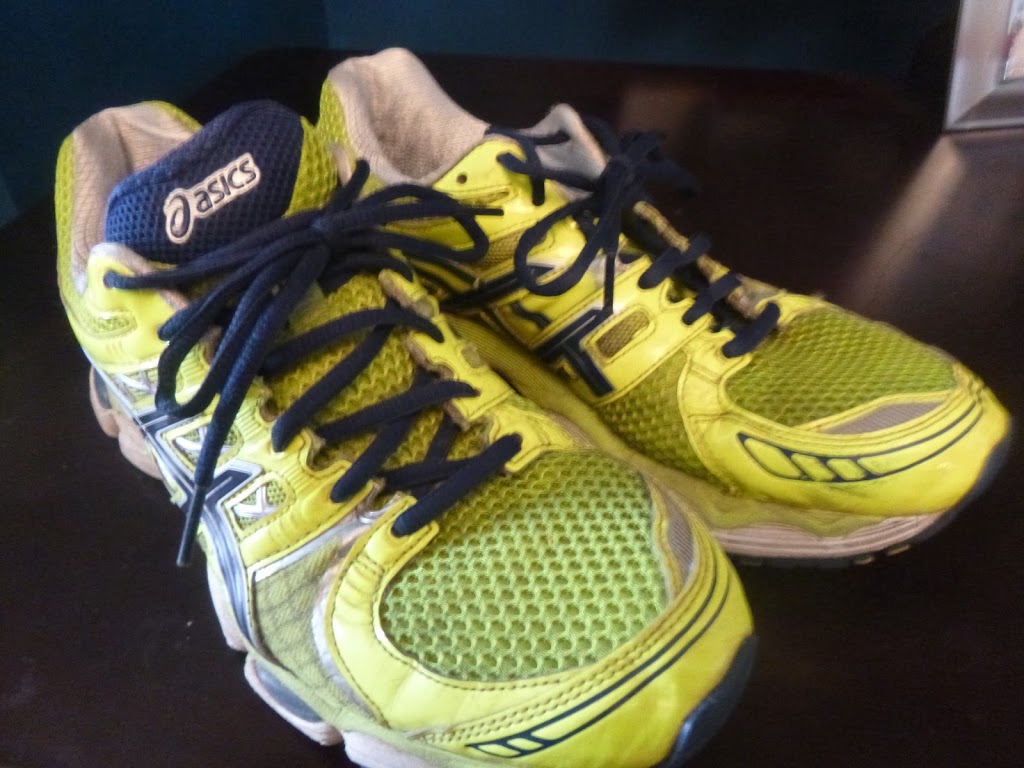
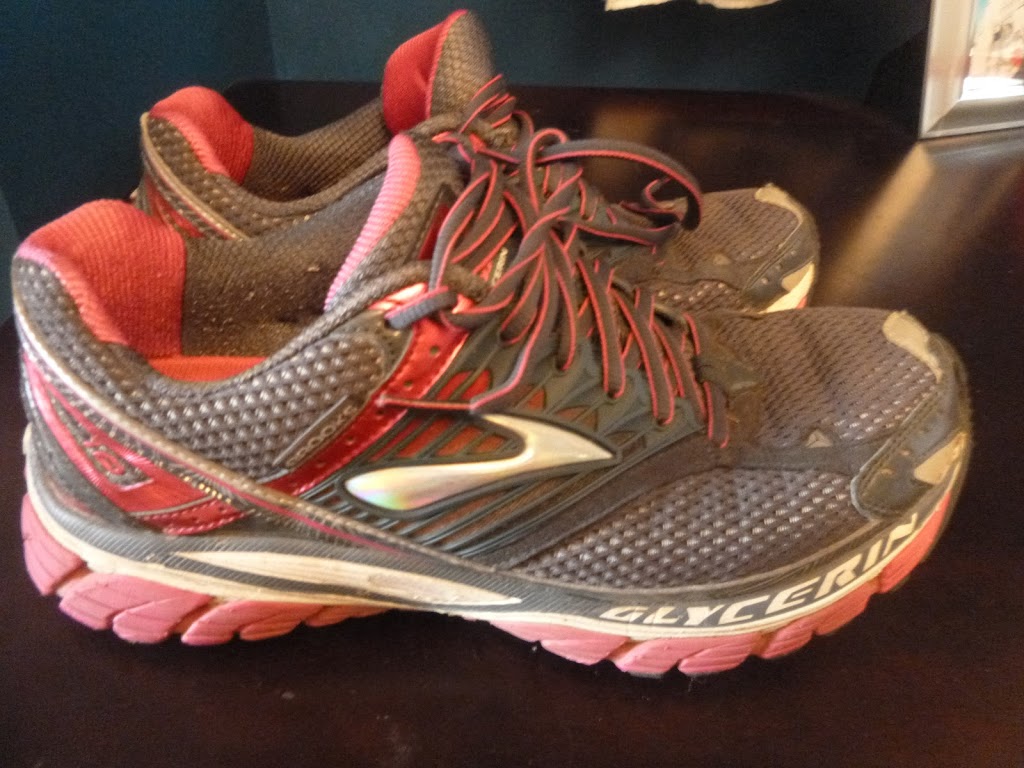
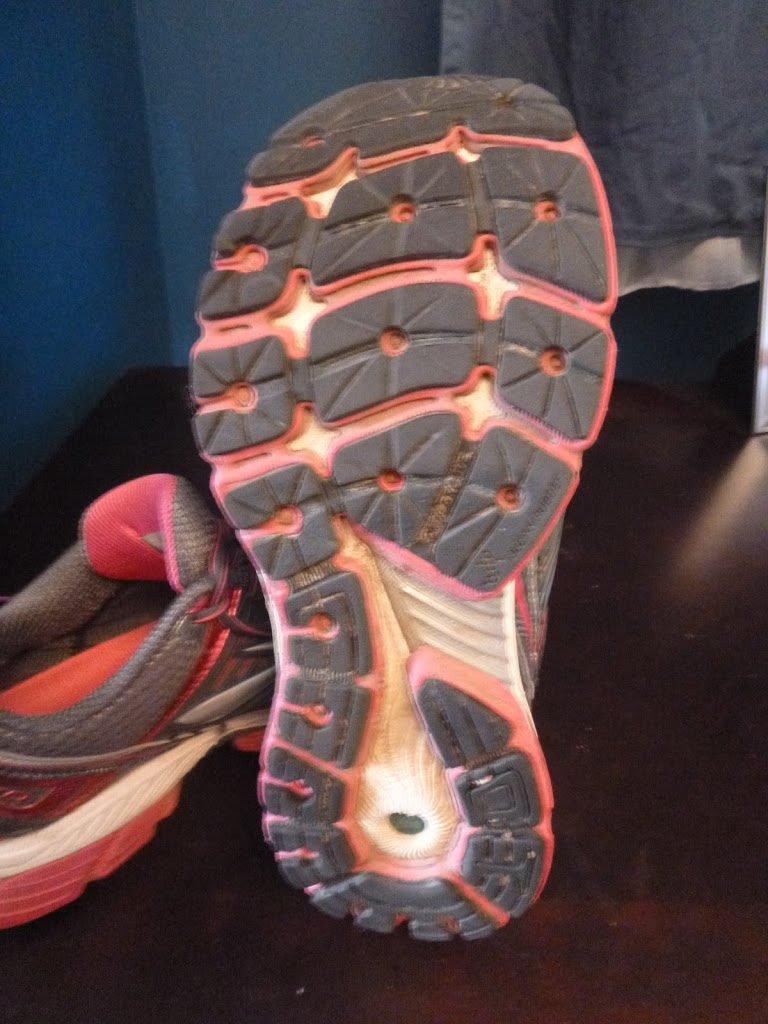
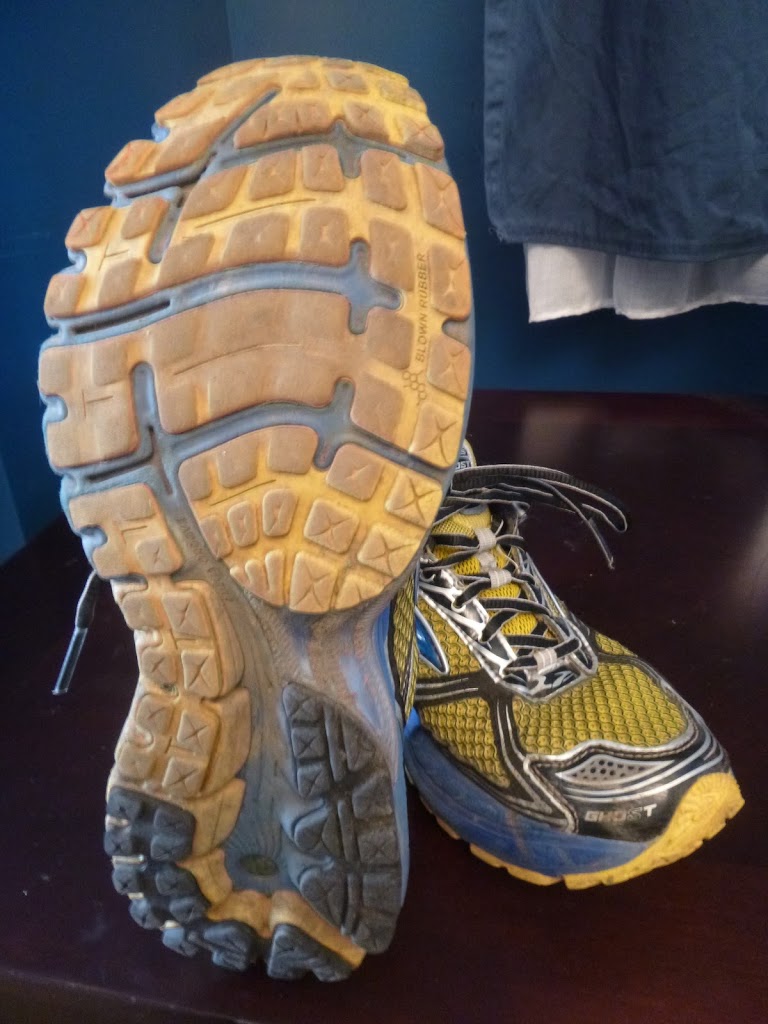
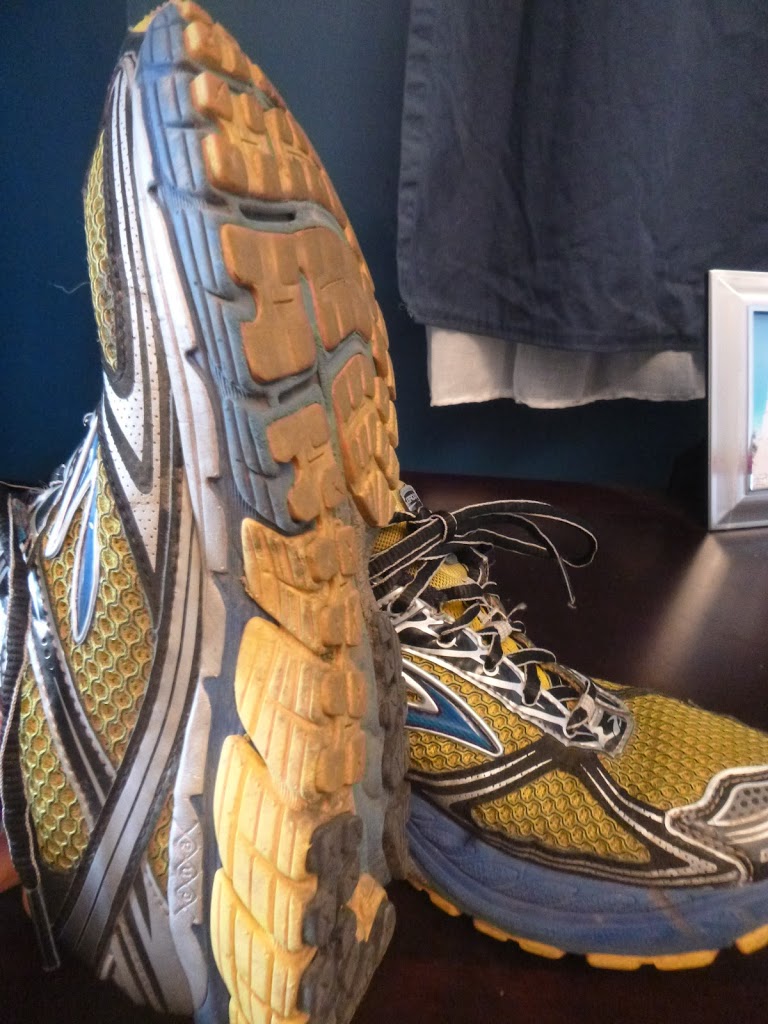
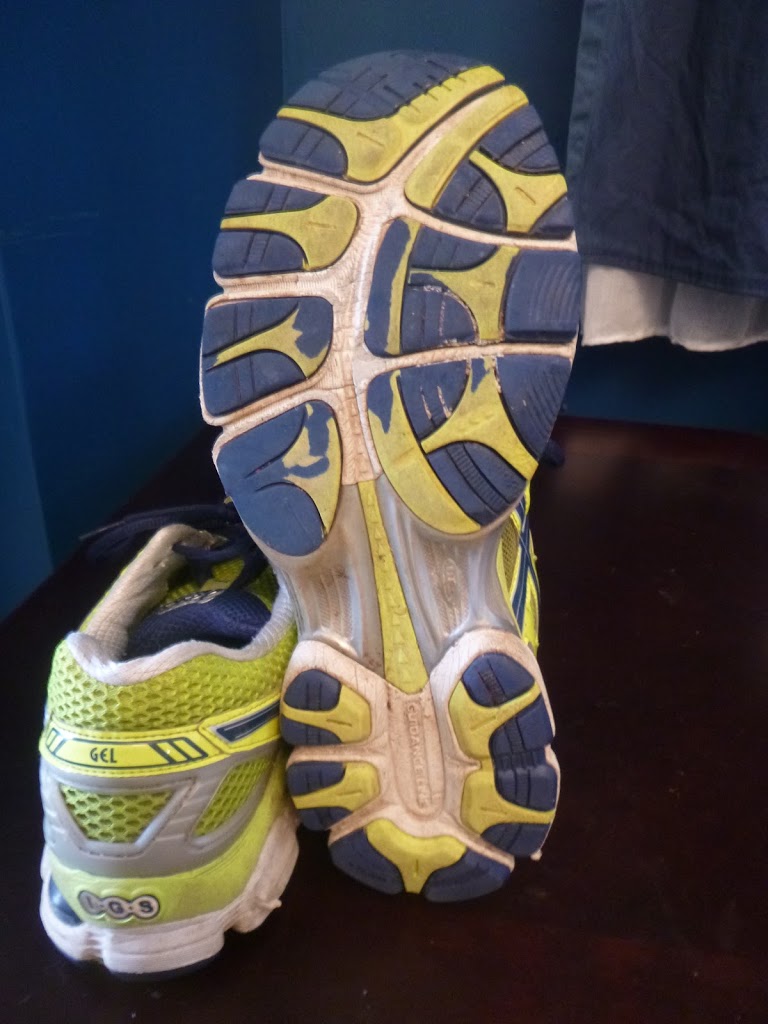
3. Your Shoes Show Wear and Tear: I’m not just talking about dirt, that’s a part of running in the great outdoors. I haven’t known any runners who have managed to keep their shoes sparkling and new once they start putting mileage on their shoes. The pictures below show some different shoes, and what you can look for with your wear pattern. Recognizing your wear pattern, can actually tell you a lot about your running style, and foot strike pattern. 

-Examine the soles of your shoe to see if there is any visible wear. Is the tread still visible on your shoe, or is it visibly worn down? This is a picture of the bottom of my running shoe. They still have quite a few miles left on them. I chose a sturdy shoe that can take a lot of wear and tear, as well as withstanding many miles.  

Compare this picture to the last one, and you should instantly recognize a major difference. These shoes are worn down, and need to be replaced. The wear pattern on the forefoot is immediately obvious. You can also tell from this picture that the runner has a mid to forefoot foot strike while running. The heel shoes virtually no wear. 

The heel isn’t the only place to look for wear and tear. Examine the side portion of the base of your shoe. You may notice tiny fine lines, and wrinkles in the cushion of your shoe. If there is significant wrinkling it is a sign that your shoes aren’t as supportive as they once were. 

It is also helpful to examine more than one pair of your old running shoes, if you are trying to determine your individual needs in a running shoe. Someone with a heel strike has different shoe needs than someone with a mid-sole strike. Also, you may pronate or supinate when you run. If you aren’t sure bring a pair of your worn down running shoes to your local shoe store and have them examine your wear pattern. They can perform a stride analysis, and recommend an appropriate shoe. You may want to stick some air fresheners in your shoe before handing them over. As a courtesy. 😉 

Hard Core Workout: Are you Really Strengthening Your Core?

Standard
Hi Everyone,

I did the workout below last night. As always the breakdown and video is at the bottom of the page. The focus of this one is tightening and toning your core. I talk about the importance of core strength all of the time. It’s an area that many people seek to see improvement, and it’s important for everything you do in life. Balance begins in your core, strength for lifting, proper running form and economy of movement. All of this (and more!) starts in the muscles of your abdomen. 

The abdomen is made up of the rectus abdominis (the muscles that go up and down the center of your abs, that most people refer to as the six pack), the internal and external obliques (love handle area), the serratus anterior (which runs slightly below your pecs, over your ribs), and the transverse abdominis (think built in corset!) That’s only the front part of your core!

To get a full core workout you also need to work the hip abductors, adductors, hip flexors, lumbar spine, eractor spinae, and the diaphragm. Other muscles that play a smaller role in core stability include the latissimus dorsi, gluteus maximus, and trapezius. Core stability is required to protect your lower back, during all lifting activities. 

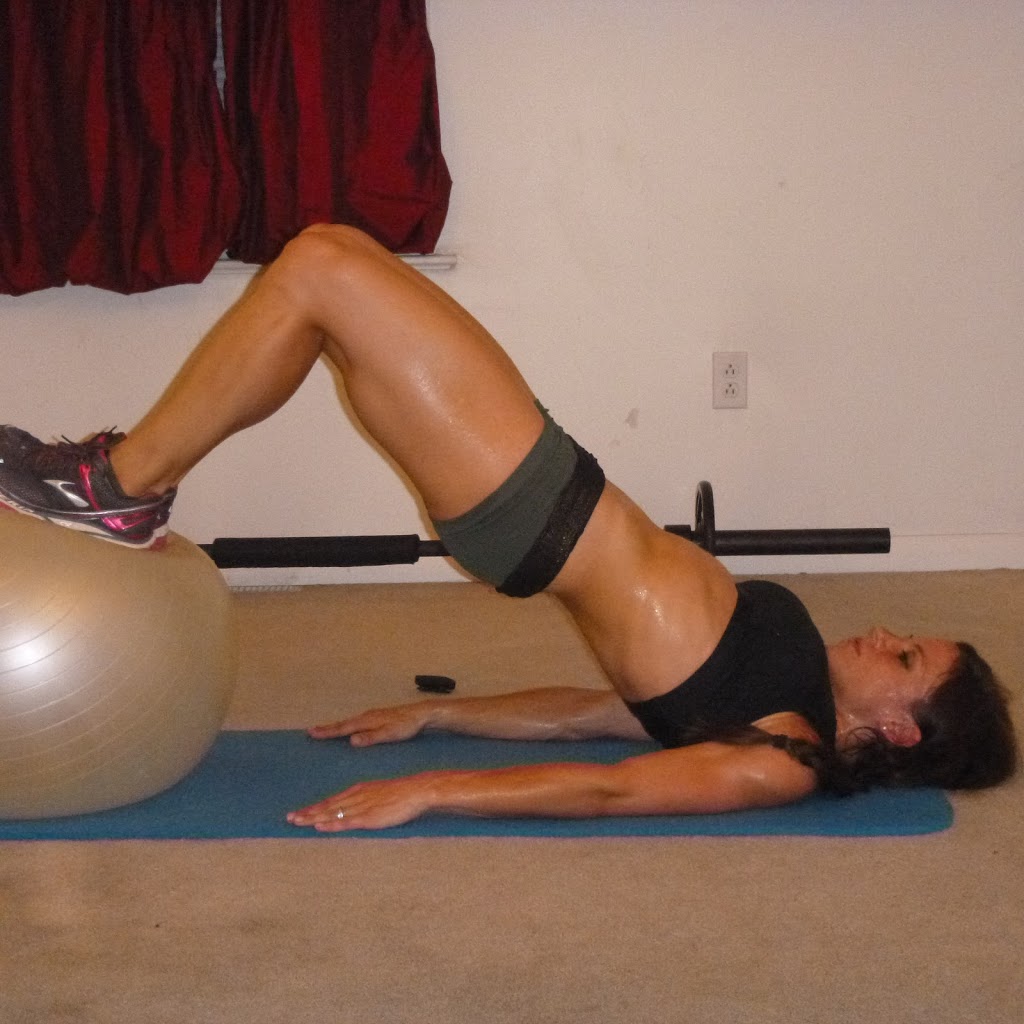
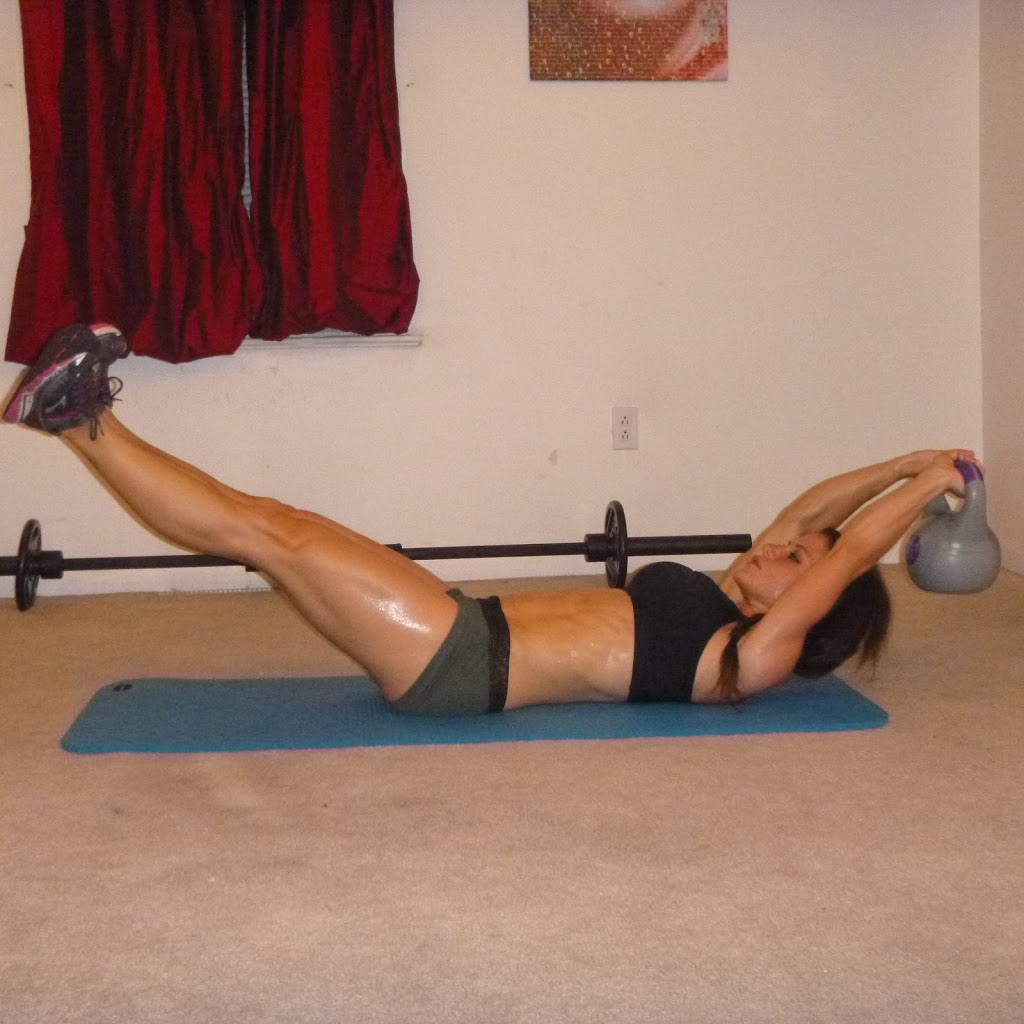
If you have been following my workouts you have probably noticed how many different exercises I do for the core. To truly work the core, traditional situps alone will not get the job done. You need to exercise and engage a variety of muscles from your hips to your shoulders. You should challenge your balance and strength in a variety of different ways. 

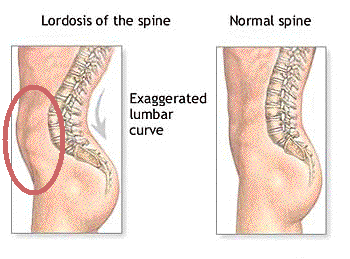
The other thing to keep in mind is that the muscles of your butt and legs affect the positioning of your pelvis. The picture below shows lordosis of the spine, which as you can see may cause your lower abdomen to bulge out. Working only the front of your abs will not work. You also need to exercise the muscles that support your back. 

When you do a core workout, take a moment to think about all of the different muscles you should be working. Are you strengthening each of these areas? You can try my core workout below, or any of my other Core/Ab Workouts. Let me know if you feel a difference in your core strength!

Have a great day!
Melissa


Beginner: 10 reps
Intermediate: 15 reps
Advanced: 20 reps

Repeat 1-3X

1. Hanging Leg Raise
2. Jump Rope
3. Heel Tap Ab Hold
4. Hip Lift
5. Sumo Pushup
6. Leg Raise Plank
7. Jump Rope
8. Ab Pull with Stability Ball
9. Butt Pull with Stability Ball
10. Mountain Climbers
11. Side Lunge Kick (right)
12. Side Lunge Kick (left)

Home Gym Must Have List: Top 10

Standard

Hi Everyone,

You all know that I do my workouts at home, or outside. I don’t belong to a gym, so I have made my home into a gym. While it is possible to get a great workout using body weight exercises, adding some equipment to your home gym can greatly increase the versatility of your workouts. You have probably noticed by now that I enjoy a LOT of variety in my workouts. 🙂 

This is my “Must Have” list for having a home gym that will meet all of your needs. If you have something else you use to workout with at home feel free to leave a comment! If you don’t have these items don’t panic! You can still have plenty of great home workout options. These items will just add to those options.

1. Interval Timer: I do a lot of HIIT workouts. My Gymboss Interval Timer is useful for timing exercises at home, and keeping track of interval workouts when I am running outside. It can be distracting to keep looking at your watch during workouts. With my interval timer I don’t have to slow down. I just keep going until the timer beeps. Bonus: it can also be used as a stop watch. 

2. Yoga Mat: I have a variety of yoga mats. They are perfect for any yoga, pilates, or floor work you are going to do. I am often asked if there is a difference in yoga mats (cheaper vs. more expensive). The best yoga mat I have ever used is a rubber yoga mat, which is of course more expensive. I loved the fact that my hands didn’t slip at all on this mat, even when I got sweaty. If you decide to get a rubber mat check to make sure you are getting one that is made from natural or recycled rubber. As far as thickness: thicker mats are more comfortable and provide some cushion and support for your joints and back. However, thicker mats are also more challenging to balance on. 

3. Kettle Bell and/or Dumbbells: I love the versatility you have with kettle bells and dumbbells. You can incorporate them into a variety of workout moves to increase the resistance and challenge of the exercise. They come in a variety of weights and sizes so you can select the one that is right for your level of fitness. 

4. Barbell/Free Weights: If you are looking to increase the amount of weight you use, owning a barbell and some free weights will be very beneficial. I have free weights that I can use individually (they have cut out areas for you to grip the weight), and I can put weights on my bar for a variety of exercises. My favorite weighted exercises are Squats, Romanian Deadlifts, Bulgarian Split Squats, and Good Mornings. I want to buy some heavier weights for my bar. Of course you can use weights for a huge variety of exercises. I like having options and the ability to switch up my routine. 

5. Ultimate Body Press Dip Stand: This is the brand I use, but other brands would also be effective. I love this piece of equipment for it’s versatility. I most often use it to work my arms, abs and chest. It is important to maintain variety in your workouts, and there is a lot you can do  with the dip station. 

6. Pull Up Bar: I have a door frame pull up bar. Pull ups, chin ups, and hanging leg raises are a great addition to any workout. This piece of equipment will help strengthen your back, shoulders, and arms. Also, if you enjoy rock climbing or bouldering it can help you increase your strength and endurance. (If you’ve never tried rock climbing before, check to see if there are any climbing walls near you. It’s a great fun way to stay active and fit!)

7. Stability Ball: I love my stability ball. It allows you to perform a variety of challenging variations of body weight exercises. Decline push ups, stability mountain climbers, and moves to intensify ab and butt workouts are just a few. Plus, sitting on a stability ball while you work or watch TV can help strengthen your core, and facilitate good posture. 

8. Jump Rope: A jump rope is an easy way to add cardio into your workout. You can add intervals, increase fat burning and cardiovascular endurance with this inexpensive piece of equipment. Not sure? Check out Health Benefits of Jump Roping

9. Bosu Ball: This is on my wish list. I love the Bosu Ball because it can increase the challenge of almost any workout move. You can add a balance challenge to lunges, squats, step ups, and core exercises to name a few. 

10. Resistance Bands: These are a great tool to increase resistance during your workout, without requiring the use of additional weights. You can use them to increase the challenge of a variety of exercises. These bands come in varying resistance, so you can grade your workout for your own level of fitness. 

11. Treadmill: I know, this is a top ten list. Consider this the bonus item. If you can afford it, and have room for it a treadmill is a great addition to your home gym. Preferably a model that has an incline feature. Treadmills can be great for running, walking, and interval workouts. Despite my best intentions in the winter months I often can’t force myself outside into the cold to run, so a treadmill is a great option. Also, if I want to be active, while keeping it low impact I will grab my kindle, and read while walking on the treadmill. You get better results when you focus on the workout instead of a book, movie or magazine, but if the alternative is laying on the couch and reading you are still benefiting by spending time on the treadmill. 

I hope you found this list useful. If you don’t have these items don’t worry about it. You can still get a great workout at home with just your body weight! These tools are not necessary, but they can be beneficial in increasing the versatility and challenge of your workout.